Romanesque Revival intercity train station serving downtown Chicago, now a shopping mall housing office, retail, and entertainment spaces
General Information
Individual businesses and restaurants within Dearborn Station may have separate operating hours
Individual businesses, offices, restaurants, and retailers within Dearborn Station may have their own pet restrictions.
Spring and Fall offer ideal weather for exploring nearby Printer's Row and the South Loop
Summer is popular for walking tours and sightseeing
Winter provides indoor access to shops, restaurants, and historic architecture
How to Get There
From Downtown Chicago (1 mi): Head south through the Loop via Dearborn Street or State Street, continue to Polk Street in the South Loop, and arrive at Dearborn Station located at the corner of Dearborn and Polk Streets.
Overview
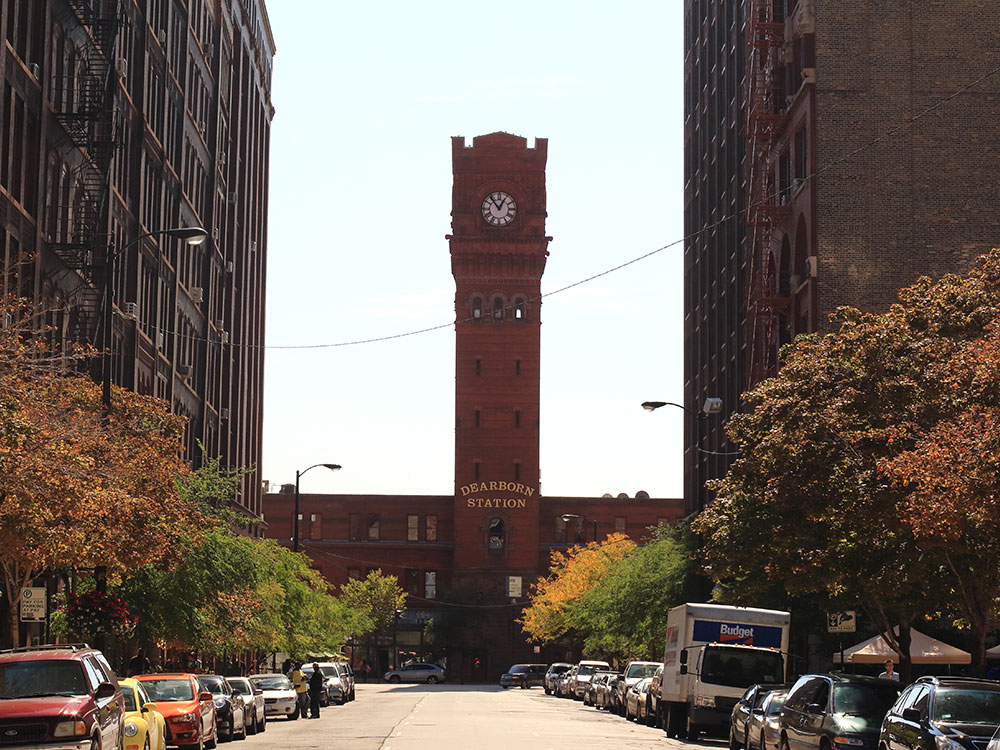
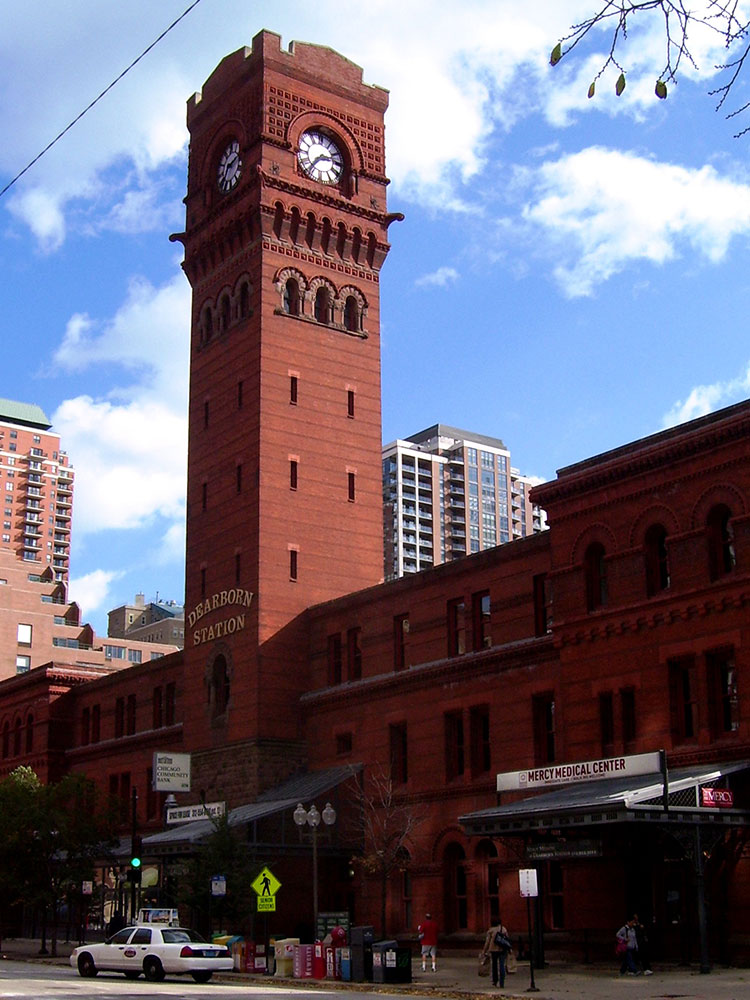
Dearborn Station (also referred to as Polk Street Depot) was, beginning in the late 1800s, one of six intercity train stations serving downtown Chicago, Illinois. It remained in operation through to 1971. Built in 1883, it is located at Dearborn and Polk Streets, adjacent to Printers Row. The station was owned by the Chicago & Western Indiana Railroad, which itself was owned by the companies operating over its line. The station is now a shopping mall housing office, retail, and entertainment spaces.
Description and history
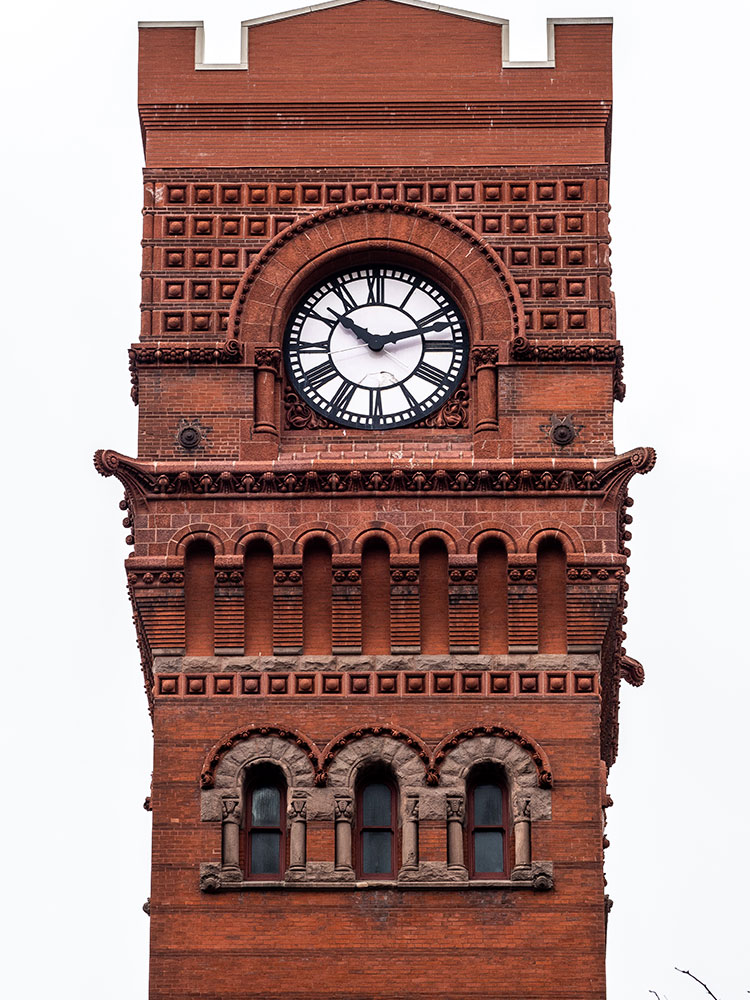
The Romanesque Revival structure, designed by Cyrus L. W. Eidlitz, opened in 1885 at a cost of $400 to $500 thousand (equivalent to $11.5 to $14.4 million in 2022). The three-story building's exterior walls and twelve-story clock tower were composed of pink granite and red pressed brick topped by a number of steeply-pitched roofs. Modifications to the structure following a fire in 1922 included eliminating the original pitched roof profile. Behind the head house were the train platforms, shielded by a large train shed. Inside the station were ticket counters, waiting rooms, and Fred Harvey Company restaurants.
Amtrak (the National Railroad Passenger Corporation) chose to consolidate its Chicago operations at the Union Station. The final intercity passenger train to depart Dearborn Station was the Grand Trunk Western Railroad's International Limited, which departed on April 30, 1971. The arrival of the Atchison, Topeka & Santa Fe Railway's San Francisco Chief and Grand Canyon from California on May 2 brought intercity operations at Dearborn to a close. The Norfolk & Western Railway's Orland Park commuter service, the Orland Park Cannonball, continued to use a platform at Dearborn until 1976.
By 1976, Dearborn Station's train shed was demolished and tracks were removed; the head house building was retained. The train station stood abandoned into the mid-1980s when it was converted to retail and office space. The former rail yards were converted for use as Dearborn Park.
This article uses material from the Wikipedia article "Dearborn Station", which is released under the Creative Commons Attribution-Share-Alike License 3.0