.jpg)
Park commemorates the completion of the first Transcontinental Railroad where the Central Pacific Railroad and the first Union Pacific Railroad met on May 10, 1869
General Information
Outside exhibits: Open daily during daylight hours
Motorcycle: $15 (covers driver and one passenger)
Individual (on foot or bicycle): $10
Youth 15 and under: Free
Annual Park Pass: $35
How to Get There
From Salt Lake City (83 mi): Take I-15 N to exit 365 for UT-13 N/UT-83 N toward Corinne/Promontory; follow UT-83 N for 29 miles, then turn left at the Golden Spike sign and continue 7.5 miles to the park entrance.
Overview
Golden Spike National Historical Park is a historical park located at Promontory Summit, north of the Great Salt Lake in east-central Box Elder County, Utah. The nearest city is Corinne, approximately 23 miles (37 km) east-southeast of the site.
It commemorates the completion of the first Transcontinental Railroad where the Central Pacific Railroad and the first Union Pacific Railroad met on May 10, 1869. The final joining of the rails spanning the continent was signified by the driving of the ceremonial Golden Spike.
Year Round: Auto Tours
Golden Spike National Historical Park offers two opportunities to drive the transcontinental railroad grade and see just what workers were building in 1869. The East Auto Tour is two miles long and allows visitors to see cuts, fills, and culverts. The West Auto Tour is seven miles long and is home to the "10 Miles of Track, Laid in one Day" sign where the Central Pacific Railroad built 10 miles and 56 feet of track on April 28th, 1869. The West Tour is regularly closed in the winter and the East Tour may be closed during inclement weather.
Things to Do
Visit the Site Where America Was Linked by Rail
Golden Spike National Historical Park preserves the location where the First Transcontinental Railroad was completed on May 10, 1869. At Promontory Summit in northern Utah, the Union Pacific and Central Pacific railroads met, creating a transportation link that transformed travel, commerce, and settlement across the United States.
Watch Historic Locomotive Demonstrations
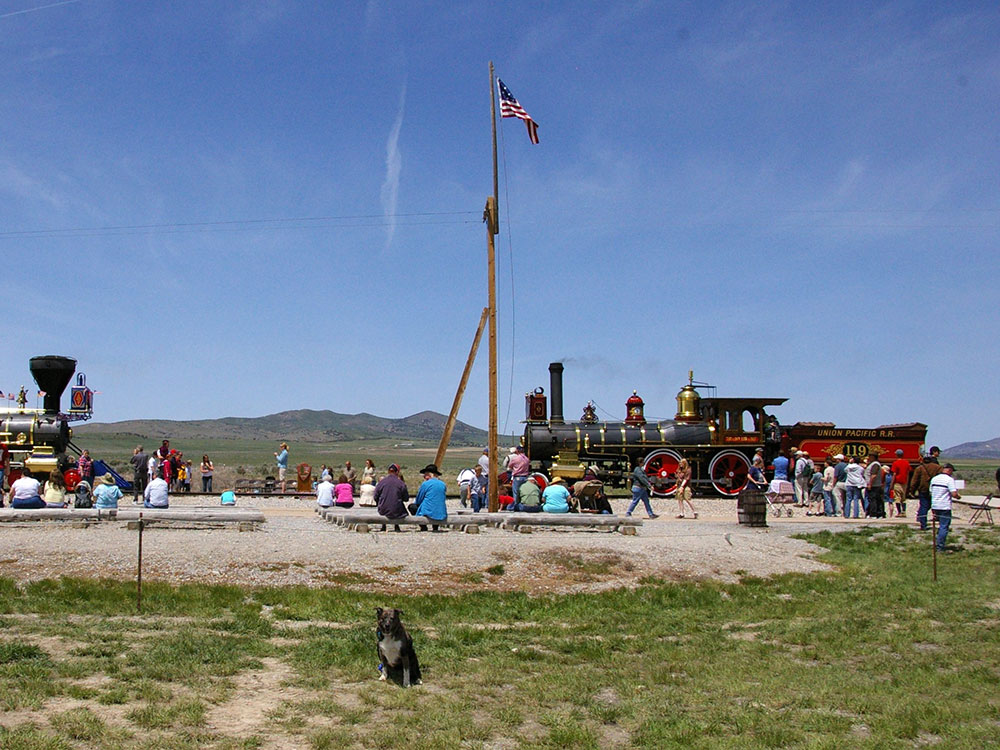
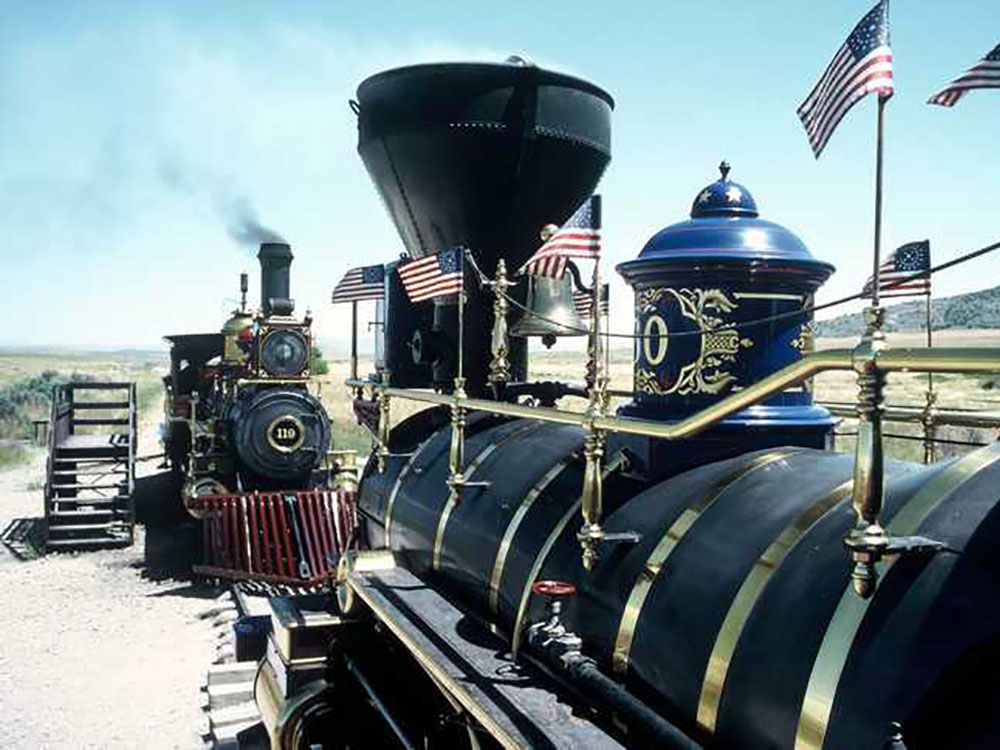
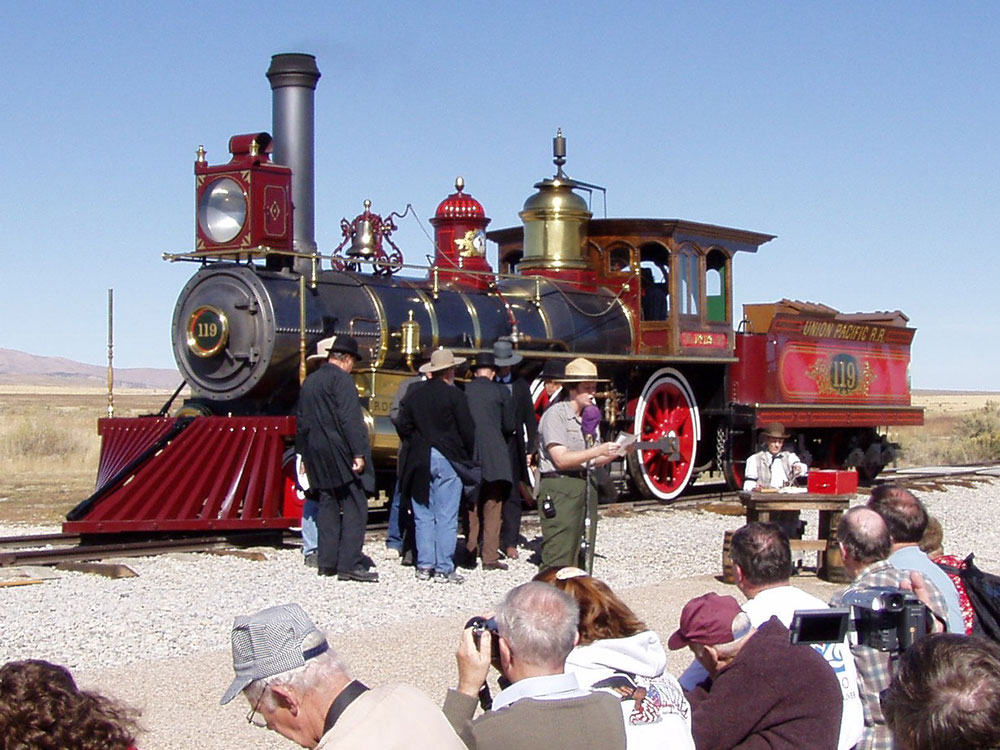
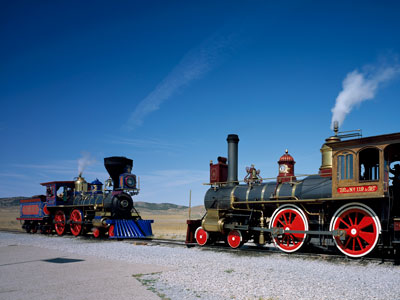
One of the park's most popular attractions is the operation of full-scale replicas of the historic Jupiter and No. 119 steam locomotives. Visitors can watch demonstrations and reenactments that bring the story of the Transcontinental Railroad to life while learning about nineteenth-century railroad technology.
Explore the Visitor Center and Museum Exhibits
The visitor center features exhibits detailing the construction of the railroad, the engineering challenges faced by workers, and the social and economic impacts of connecting the nation by rail. Interactive displays, artifacts, photographs, and educational programs provide insight into this pivotal moment in American history.
Walk Along the Historic Rail Grade
Visitors can follow portions of the original railroad grade and view remnants of the Transcontinental Railroad. Interpretive signs throughout the park explain construction methods, railroad operations, and the contributions of thousands of laborers, including Irish and Chinese workers.
Drive the Auto Tour Route
The park's scenic driving route passes historic railroad features, former construction camps, and interpretive stops across the landscape surrounding Promontory Summit. Visitors can explore the broad desert valley where one of America's most important transportation projects was completed.
Experience Wide-Open Landscapes and Wildlife Viewing
Golden Spike National Historical Park offers expansive views of the Great Basin landscape, including rolling hills, grasslands, and distant mountain ranges. Visitors may observe pronghorn, coyotes, raptors, and other wildlife while exploring the historic site.
Top Trails
Big Fill Walk
Length: Approximately 1 mile round trip
Elevation Gain: Minimal
Difficulty: Easy
This short walk leads visitors to one of the most impressive engineering features of the original railroad route. The massive earthworks known as the Big Fill demonstrate the scale of labor required to complete the Transcontinental Railroad across challenging terrain.
Promontory Auto Tour Stops
Length: Varies by route
Elevation Gain: Minimal
Difficulty: Easy
Although primarily explored by vehicle, the interpretive stops throughout the auto tour route offer short walks to historic railroad grades, monuments, and viewpoints that highlight important locations associated with railroad construction.
Golden Spike Ceremony Grounds Walk
Length: Approximately 0.5 miles round trip
Elevation Gain: Minimal
Difficulty: Easy
This accessible walk allows visitors to explore the location where the ceremonial Golden Spike was driven. Interpretive exhibits and monument markers help visitors understand the significance of the event and its lasting impact on the nation.
East and West Grade Exploration Routes
Length: Various distances
Elevation Gain: Minimal to Moderate
Difficulty: Easy to Moderate
Several informal walking opportunities allow visitors to follow surviving sections of the railroad grade east and west of Promontory Summit. These routes provide a closer look at the engineering and geography associated with construction of the nation's first transcontinental rail line.
Sources: National Park Service official Golden Spike National Historical Park information, including details on the completion of the Transcontinental Railroad, steam locomotive demonstrations, visitor exhibits, historic sites, and interpretive programs.
https://www.nps.gov/gosp/
Additional information verified through National Park Service educational resources covering Promontory Summit, the Golden Spike Ceremony, the Jupiter and No. 119 locomotives, railroad construction, and visitor experiences throughout the park.
https://www.nps.gov/gosp/learn/historyculture/index.htm
Further information reviewed through National Park Service visitor guides covering the Big Fill, auto tour route, historic railroad grades, wildlife viewing opportunities, and outdoor recreation within Golden Spike National Historical Park.
https://www.nps.gov/gosp/planyourvisit/index.htm
This article uses material from the Wikipedia article "Golden Spike National Historical Park", which is released under the Creative Commons Attribution-Share-Alike License 3.0
This article uses material from nps.gov "Golden Spike National Historical Park"
-1000.jpg)
.jpg)
-1000.jpg)
.jpg)