From Capitol Reef National Park Visitor Center: Drive east on UT‑24 for 20 miles to Caineville, turn north onto Cathedral Road, and follow the rough dirt route for approximately 16 miles to reach the signed junction leading one mile to both monoliths.
Overview
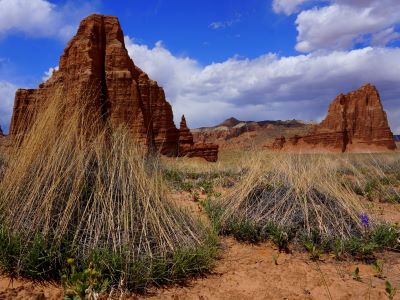
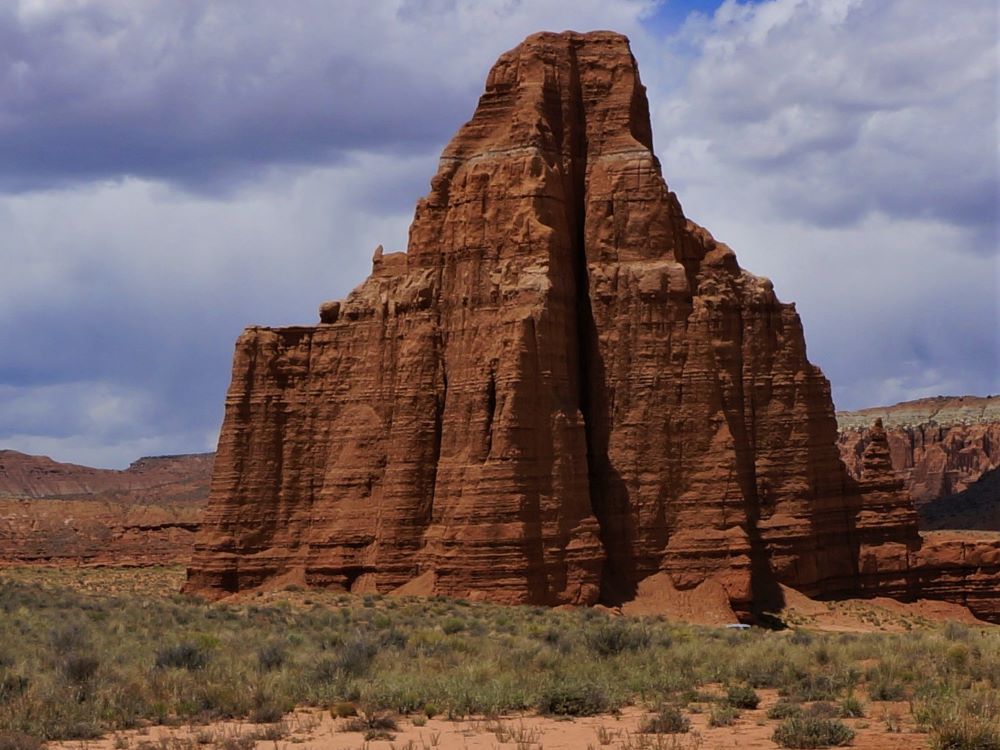
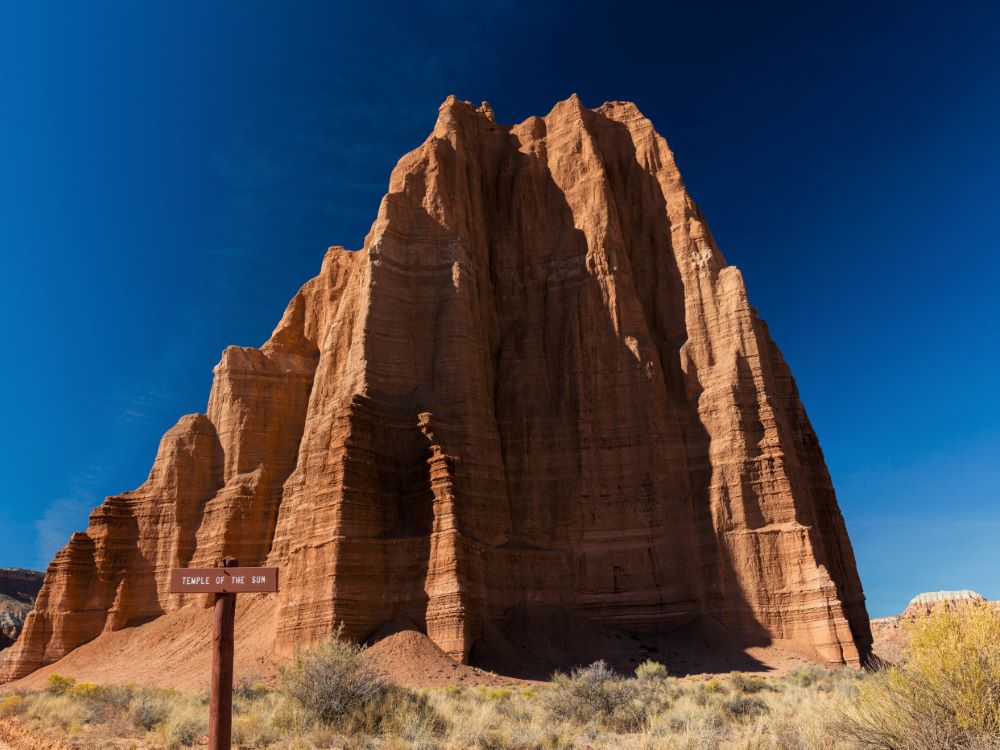
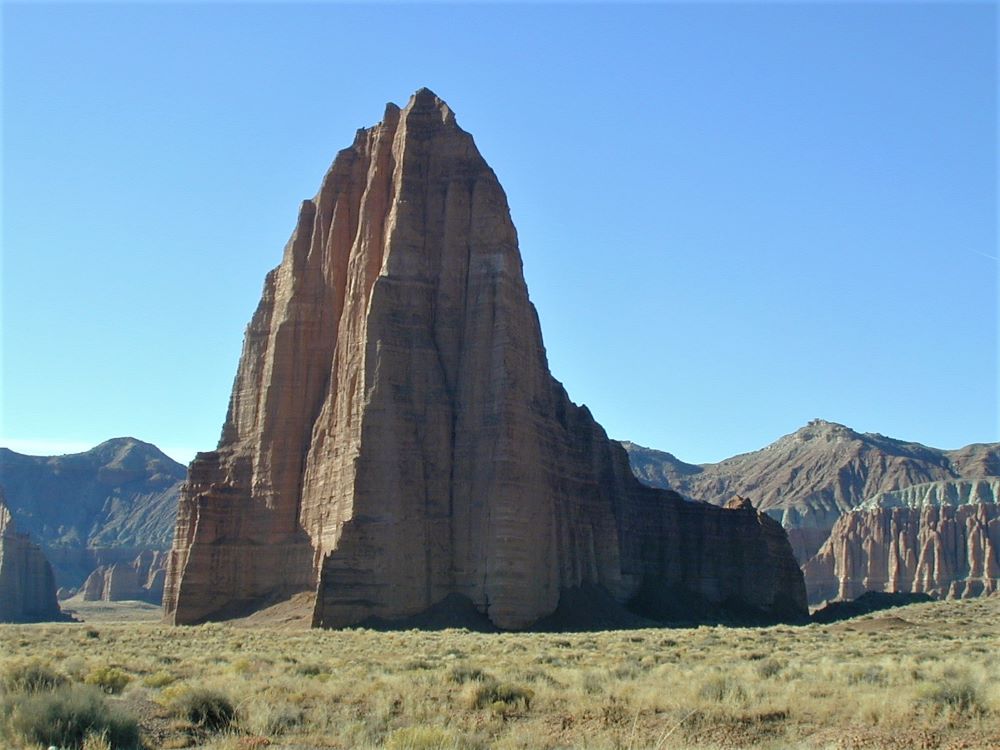
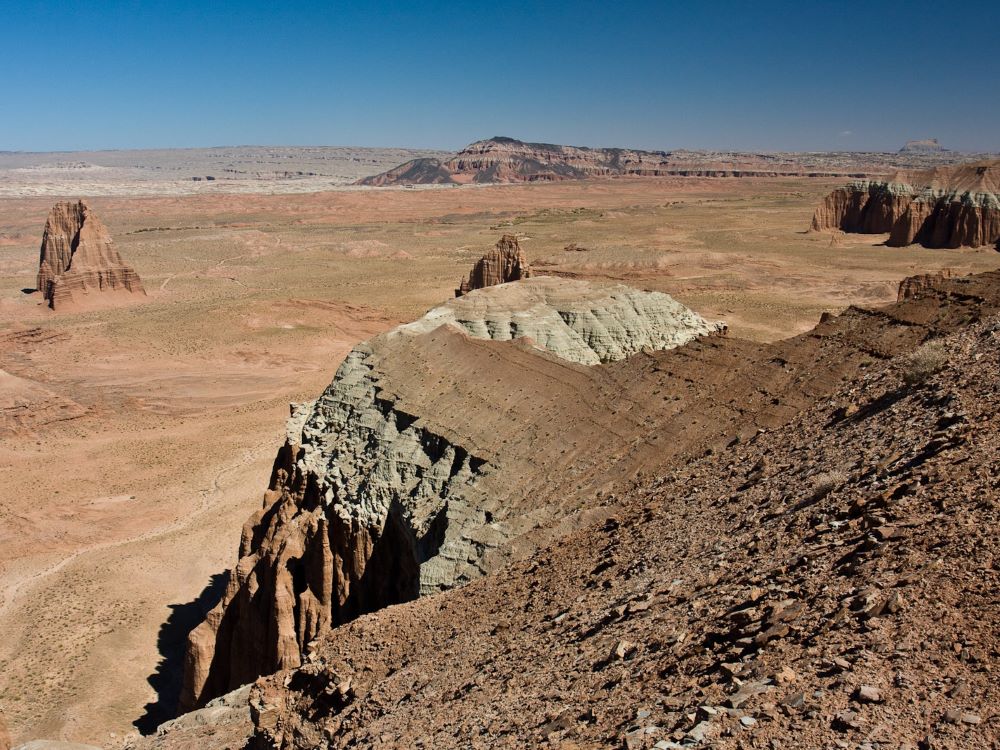
The Temple of the Sun and Temple of the Moon rise from the barren expanse of Cathedral Valley like colossal stone sanctuaries, their sheer Entrada Sandstone walls glowing warm hues of orange and rose in changing light. In this remote corner of desert backcountry, silence amplifies the immensity of the formations—freestanding monoliths shaped over millions of years as tides, sediment, uplift, and erosion sculpted the landscape into its present form. Visitors often describe the scene as otherworldly: the wide valley floor, the jagged skyline, and the solitary towers standing against an endless horizon evoke a sense of deep time and geologic grandeur reminiscent of ancient natural temples.
Reaching the formations requires navigating long stretches of dirt road, where conditions vary daily depending on weather and maintenance. High‑clearance vehicles are necessary, and travelers should check road conditions before attempting the route. The short walk from the parking area to overlook points is easy, allowing visitors to explore different vantage points or photograph the monoliths in early morning or late afternoon light. Many combine the visit with nearby features such as Glass Mountain or the broader Cathedral Valley Loop. This area is remote, with no water, services, or shade—preparation is essential for safe exploration of one of Capitol Reef’s most striking geologic landmarks.
History
The monoliths are made of Entrada Sandstone and stand in the Lower Cathedral Valley, carved by erosion from a once-continuous layer of rock. Writer Charles Kelly and newspaper editor Frank Beckwith named Cathedral Valley in 1945 for the soaring, church-like formations, and the area later became part of Capitol Reef National Park.
Things to Do
Photograph the Temples
The temples glow at sunrise and sunset, and Glass Mountain, a mound of selenite crystals, is nearby.
Drive the Cathedral Valley Loop
The 58-mile loop passes the temples and other formations.
Camp in Cathedral Valley
A small primitive campground is in the upper valley.
Ford the River Carefully
The eastern route crosses the Fremont River; check depth and road conditions first.