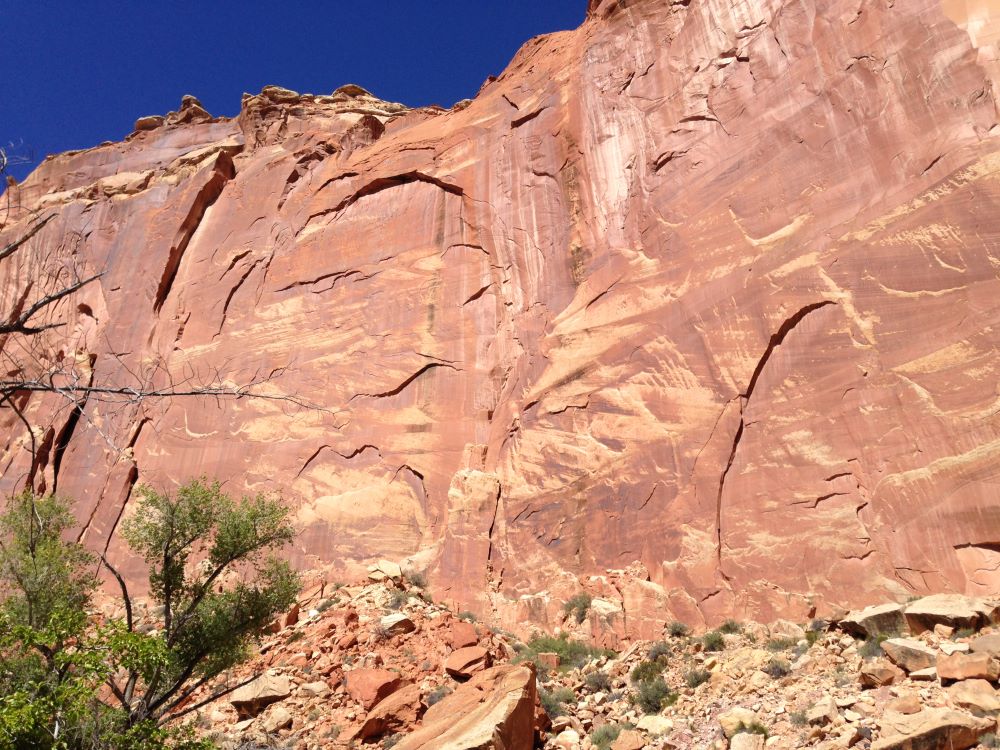
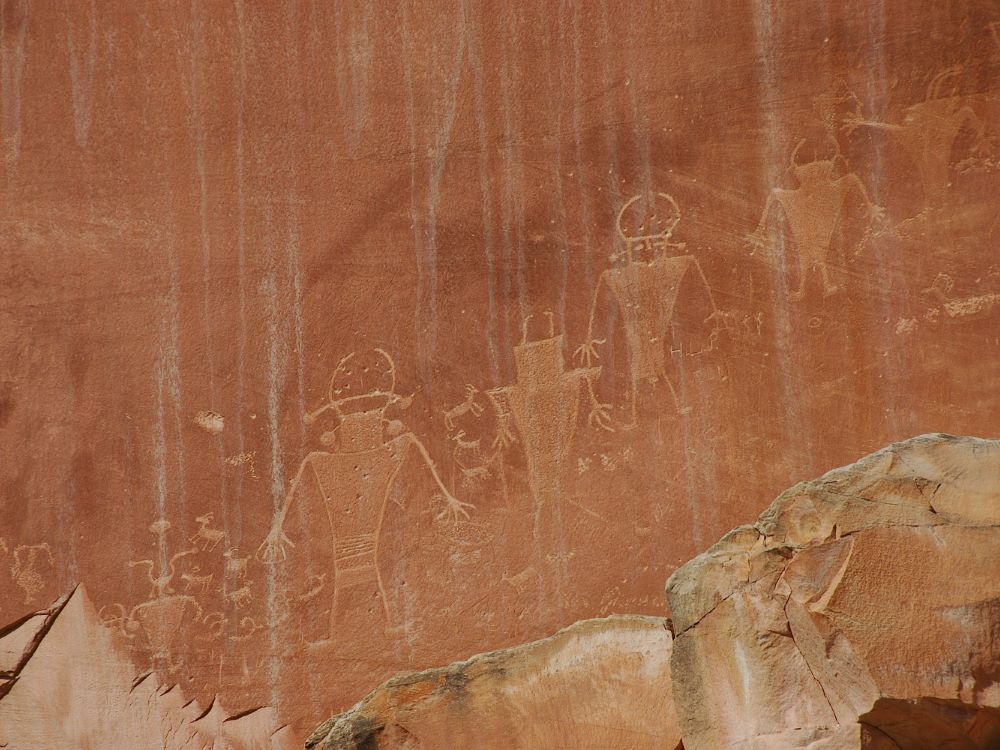
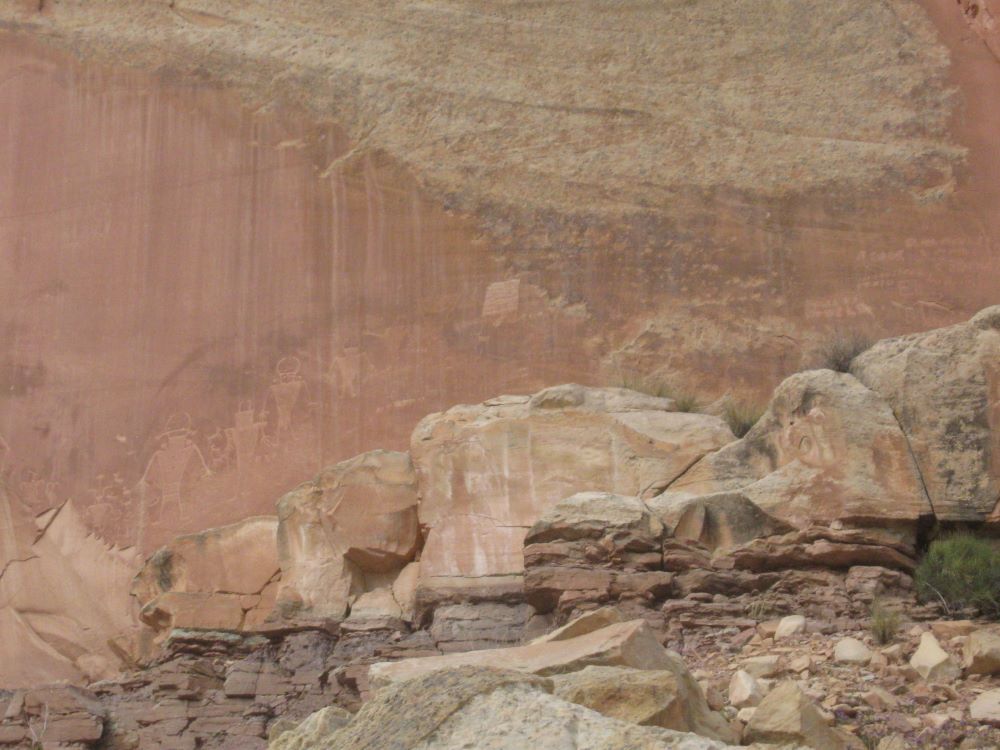
Roadside boardwalk viewpoint with interpretive panels offering clear views of ancient Fremont rock carvings etched high on a sandstone cliff.
★Rating:5.0
General Information.
Hours:
Open 24 hours year‑round (roadside stop along Highway 24)
Fees:
Free to access from Highway 24 (standard park entrance fees apply only to the Scenic Drive, not this pullout)
Pet Policy:
Pets permitted only in developed areas/within 50 ft of roads and parking; not allowed on most trails—use the parking/roadside viewing area and obey leash rules (6 ft)
Closest cities with hotels:
Torrey (3 mi)
Seasons:
All year; visibility varies with light—morning or late‑day glare can affect viewing
From Capitol Reef National Park Visitor Center: Drive east on UT‑24 for about 1.5 miles to the well‑signed turnout on the right, park, and follow the short boardwalks to the viewing platforms along the cliff.
Overview
The Petroglyph Pullout provides an intimate window into the stories of the Fremont people, whose figures, animals, and abstract designs were pecked into varnished sandstone between roughly 600–1300 A.D. Framed by cottonwoods and the rust‑red wall of Capitol Reef, the wooden boardwalks lead to platforms where the anthropomorphic forms—some with elaborate headdresses—emerge from the cliff face, hinting at hunting scenes, ritual life, and seasonal cycles preserved by desert air and time.
Because the site sits directly off Highway 24, it’s one of the park’s most accessible cultural stops: a brief, level walk delivers clear views without the need for a long hike, and interpretive panels help visitors spot the carvings high on the wall. Plan for soft, angled light for best visibility, respect all protective railings, and follow park guidance on pets and etiquette to help preserve the fragile rock art for future generations.
History
The Fremont people farmed and hunted along the Fremont River from about AD 600 to 1300, and they pecked these figures of bighorn sheep and broad-shouldered humans with headdresses into the varnished sandstone. Archaeologists named the Fremont culture after the river in the 1930s, based on sites studied here.
Things to Do
Walk the Boardwalk
Accessible boardwalks lead to viewing platforms along the cliff.
See the Petroglyphs
Look for bighorn sheep, spirals and human figures with elaborate headdresses.
Bring Binoculars
Some carvings are high on the cliff and easier to see with binoculars.
Visit the Fruita Schoolhouse
The historic schoolhouse is a short distance west.