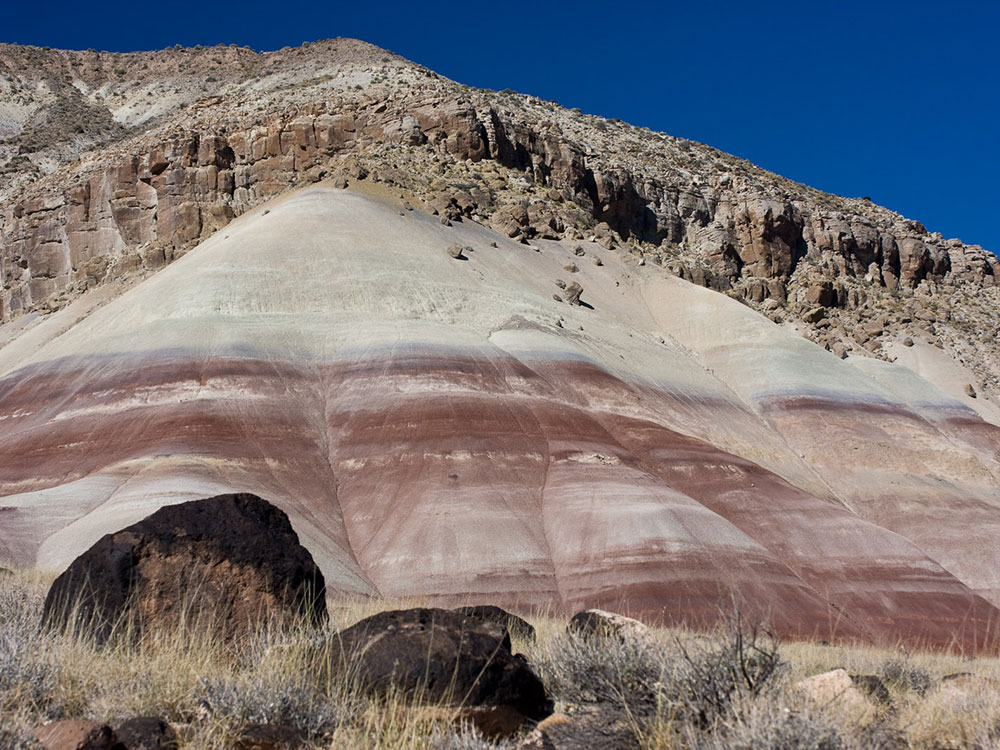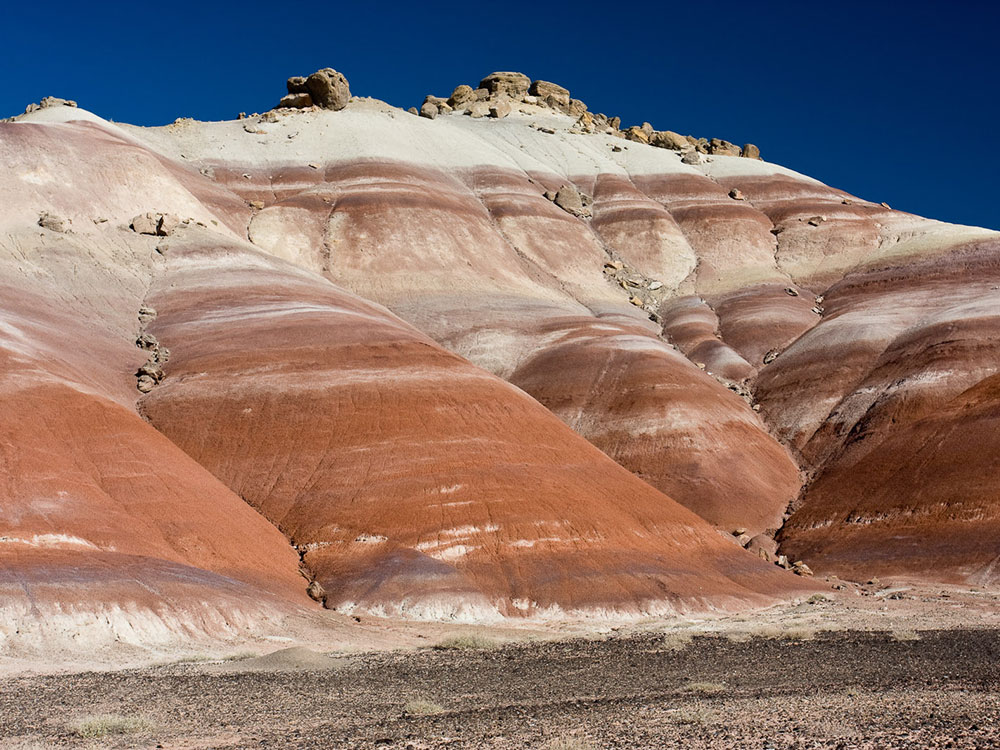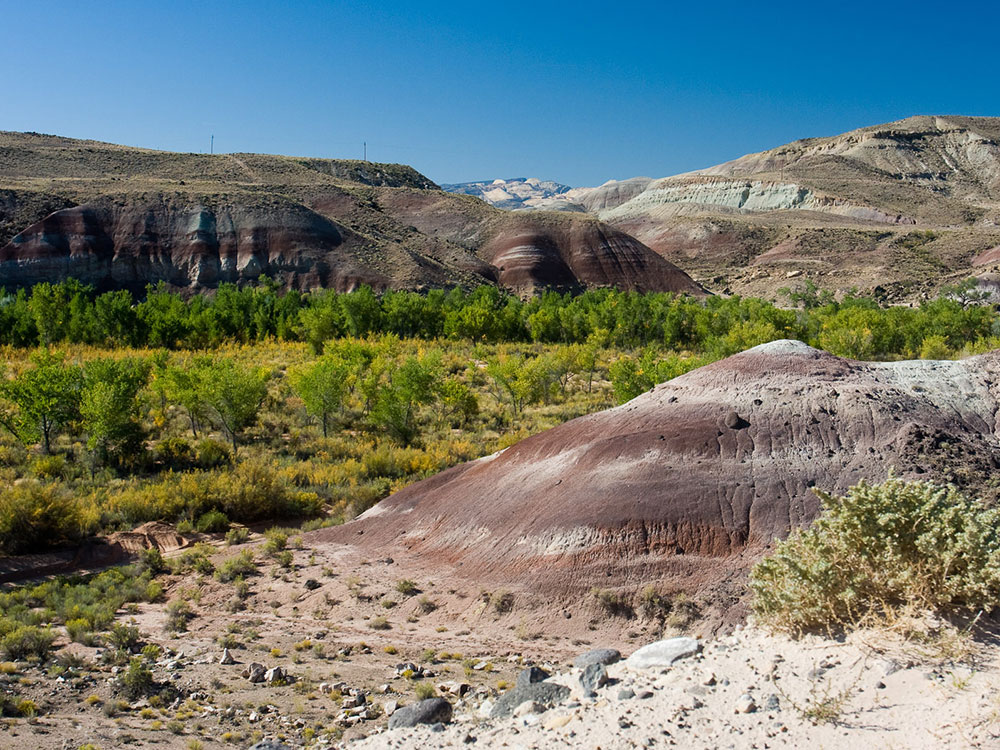

Colorful clay hills formed from ancient volcanic ash layers, known for their Mars-like appearance and popular with photographers and geology enthusiasts.
General Information
- Hours:
-
Open 24/7; best visited during daylight or blue hour
No facilities on site - Fees:
- Free to access; no permits required
- Pet Policy:
- Pets allowed; must be leashed and kept on established paths
- Closest cities with hotels:
- Hanksville (12 mi), Torrey (40 mi)
- Seasons:
- Best visited March–May and September–November
- Location:
- Bentonite Hills, Capitol Reef area, UT
- Website:
- charlieswanderings.com
How to Get There
From Hanksville (12 mi): Drive west on UT-24 for 10 miles, turn left onto Cow Dung Road, and continue 2 miles past the Mars Desert Research Station to reach the hills.
Overview
The Bentonite Hills are a surreal landscape of multicolored clay mounds located just outside Capitol Reef National Park in southern Utah. Composed of bentonite clay and volcanic ash from the Jurassic period, these hills display vibrant hues of red, purple, and blue—especially during the soft light of sunrise and sunset. Their alien appearance has earned them the nickname “Mars on Earth,” and they are often used as a backdrop for photography and drone videography. The area is managed by the Bureau of Land Management, and visitors are free to explore on foot, though care must be taken to avoid damaging the fragile terrain.
Accessible via a rough dirt road near the Mars Desert Research Station, the Bentonite Hills require a high-clearance vehicle or a willingness to hike in. There are no marked trails or facilities, so visitors should come prepared with water, navigation tools, and a strong sense of Leave No Trace ethics. While the hills are stunning in any light, the best time to visit is during blue hour, when the colors become most vivid. Whether you're a geologist, photographer, or curious traveler, the Bentonite Hills offer a unique and otherworldly experience in Utah’s canyon country.
History
The hills are part of the Brushy Basin Member of the Morrison Formation, laid down about 150 million years ago, when volcanic ash settled into rivers and lakes and later turned into bentonite clay. The same rock layers have yielded many dinosaur fossils across the West.
Things to Do
Photograph the Colors
The bands of red, purple and gray are most vivid in early morning or late afternoon.
Walk Among the Hills
Wander among the mounds, but avoid them when wet, as the clay becomes slick and sticky.
Stay on Existing Tracks
Drive only on established roads to protect the fragile surface.
Visit Capitol Reef
Capitol Reef National Park is nearby.
This article uses material from the Wikipedia articles and official tourism pages for Bentonite Hills, which are released under the Creative Commons Attribution-Share-Alike License 3.0.