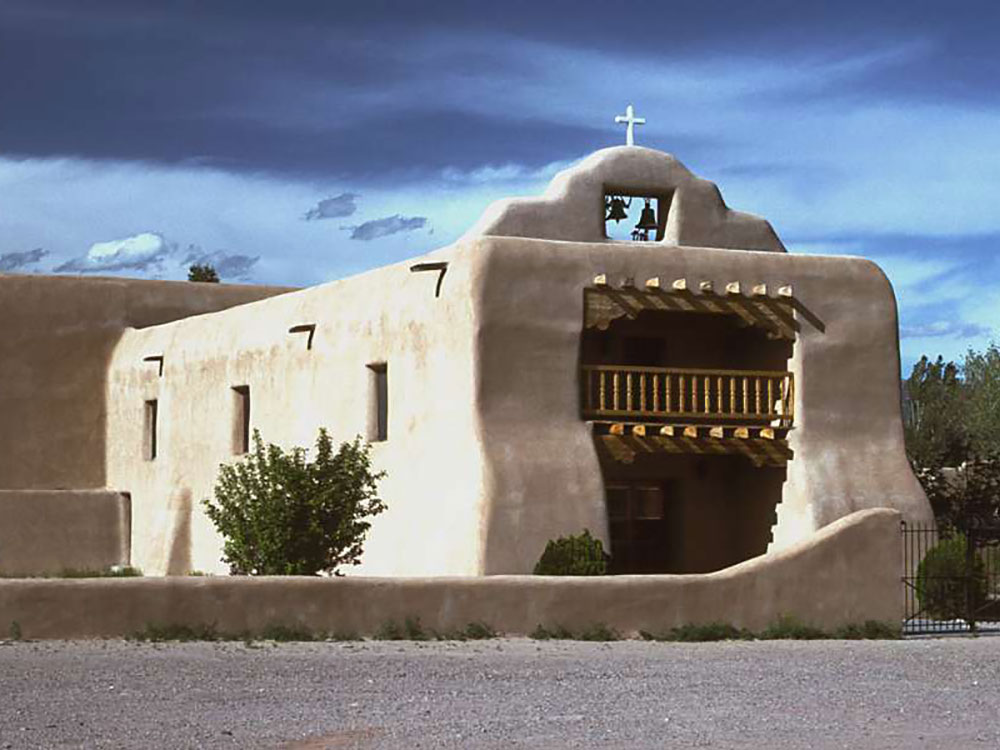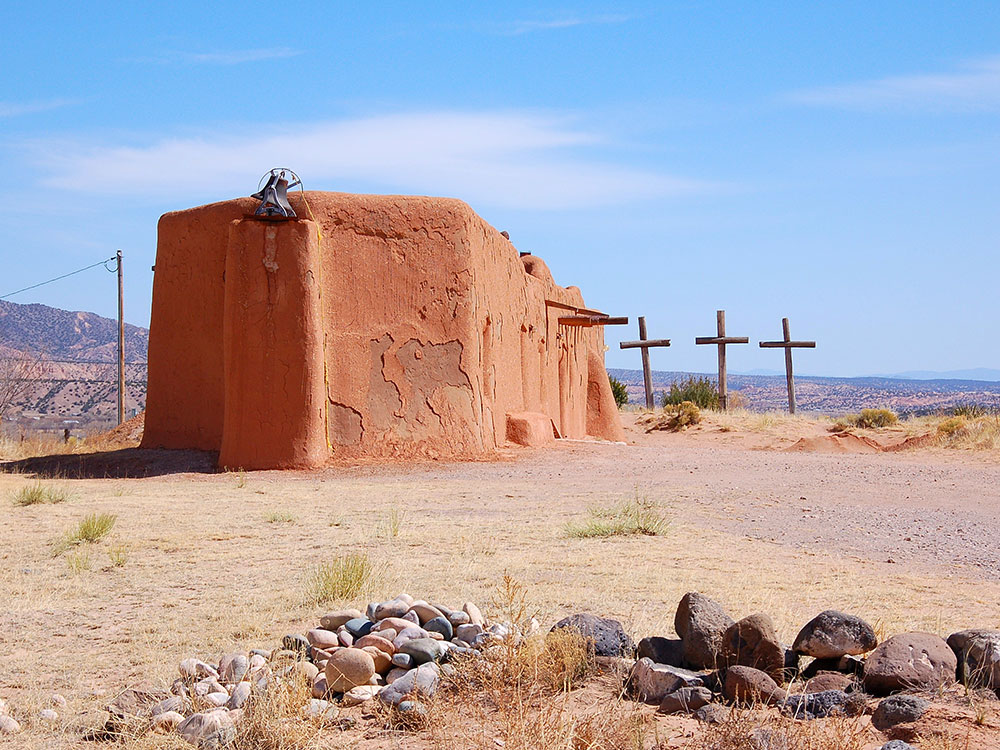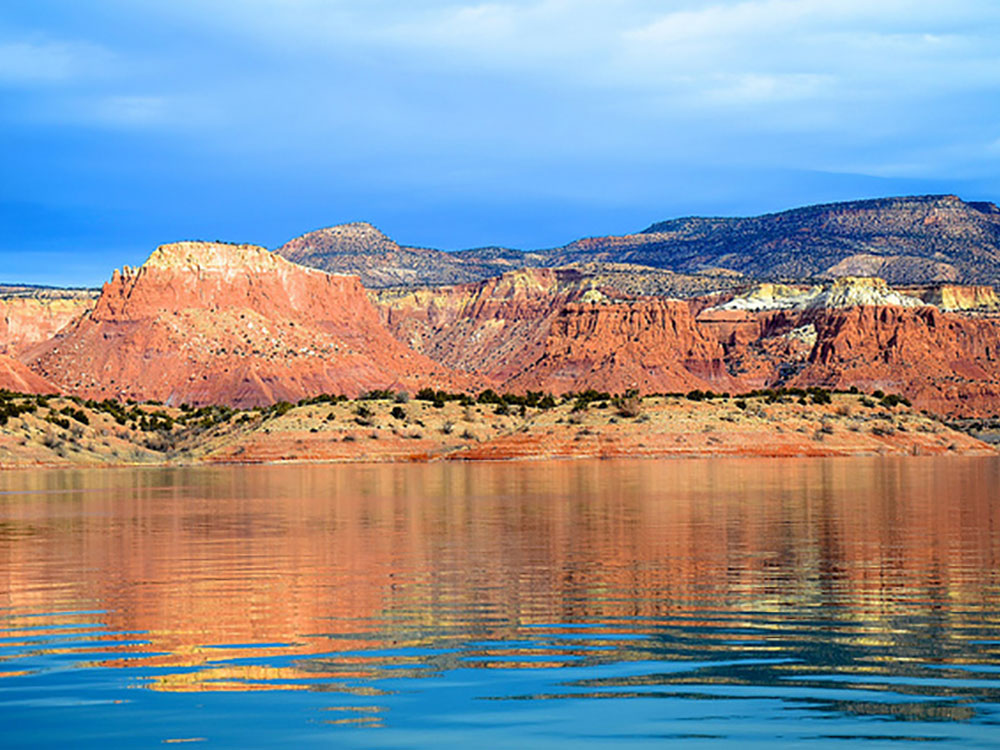

Community about 53 miles north of Santa Fe, was one of the homes of American artist Georgia O'Keeffe from 1929 until 1984, and many of her paintings depict scenes near Abiquiú.
General Information
- Closest cities with hotels:
- Española (30 mi) / Santa Fe (48 mi)
- Seasons:
- All year; spring and fall are best for weather and scenery, summer can be hot, winter is quieter with cooler temperatures
- Location:
- Abiquiú, NM 87510
- Website:
- newmexico.org
How to Get There
From Santa Fe (48 mi): Take US-285 N toward Española, then merge onto US-84 N and continue northwest for about 50 miles until you reach Abiquiú.
Overview
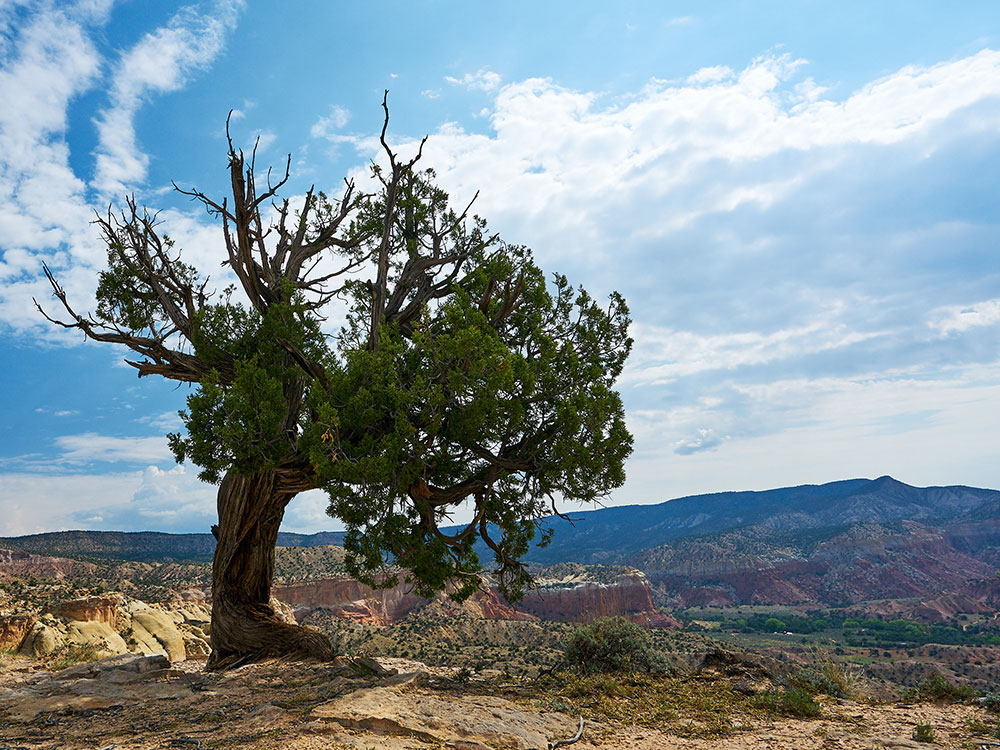
Abiquiú is a small village in Rio Arriba County, about 53 miles northwest of Santa Fe, set in the red-and-white cliff country along the Chama River. It is famous as the home of painter Georgia O’Keeffe, who lived and worked here for much of her life and made the surrounding landscape one of the most recognizable in American art.
Visitors come for O’Keeffe’s home and studio, the dramatic scenery of Ghost Ranch, and the colorful badlands and mesas that inspired her paintings. The village is a quiet base for hiking, boating on Abiquiú Lake, and exploring the high desert of northern New Mexico, and it is a popular stop on the road between Santa Fe and the Colorado border.
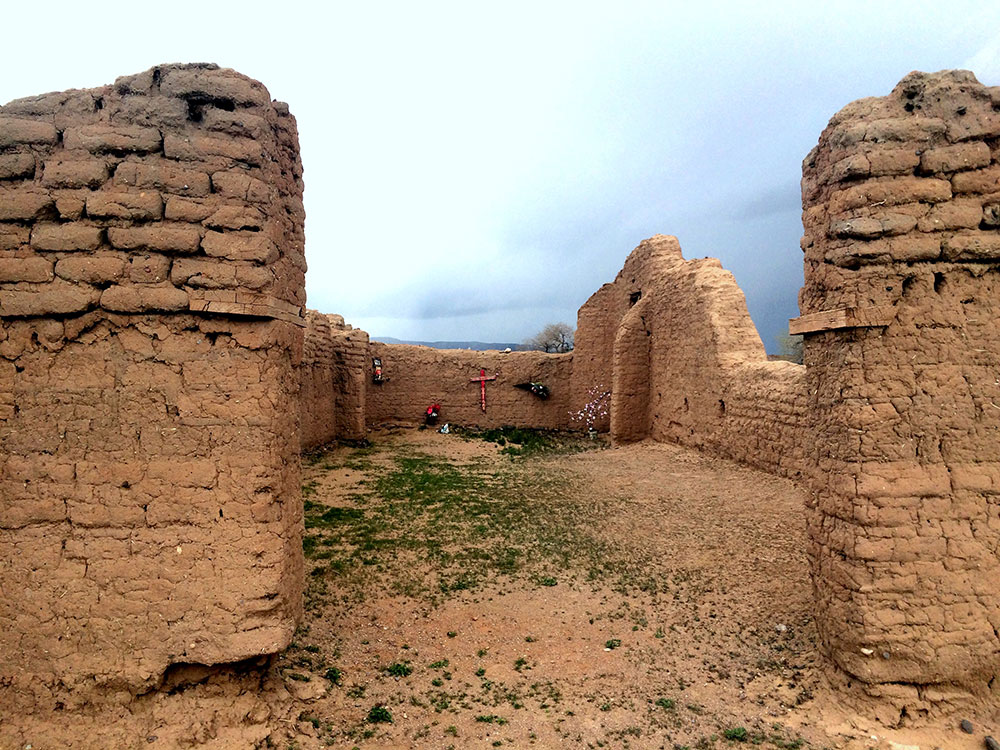
The area was home to Ancestral Puebloan communities long before Spanish settlers arrived. In 1750 the Spanish colonial government established Santo Tomás de Abiquiú, a settlement populated largely by Genízaros, detribalized Native Americans who had been captured and raised in Hispanic households. Abiquiú became a trading post on the Spanish Trail to California, and the village remained a small agricultural community. Georgia O’Keeffe bought a house here in 1945 and made it her summer home, moving to New Mexico permanently after 1949.
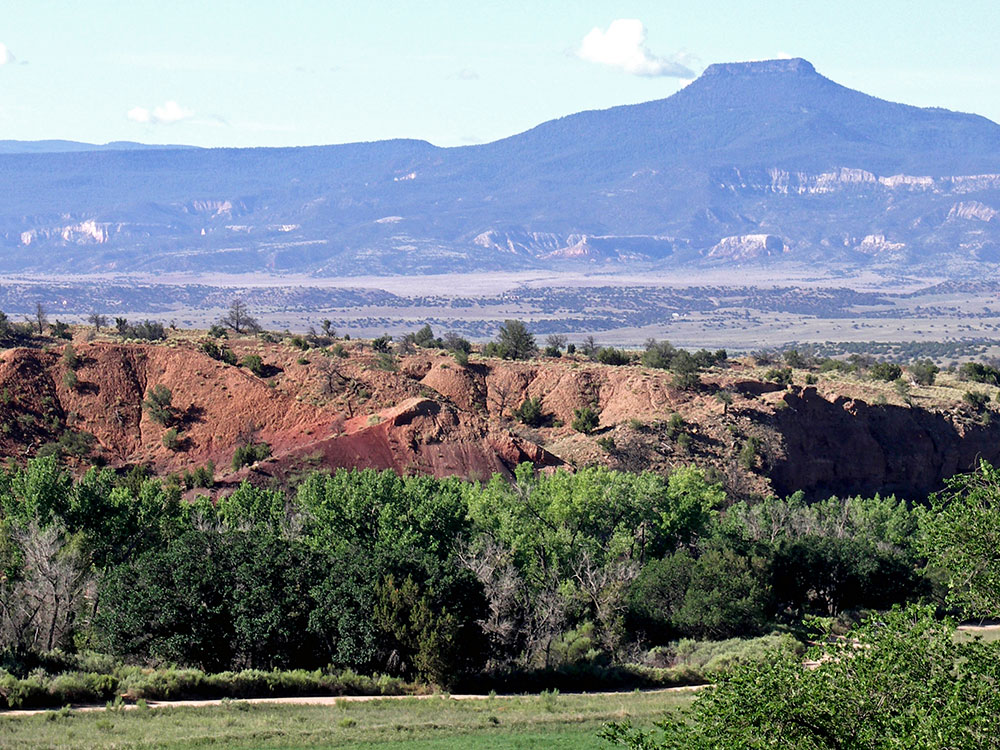
The Georgia O’Keeffe Home and Studio is open for guided tours by reservation, and nearby Ghost Ranch is surrounded by the multicolored cliffs she painted for decades. Flat-topped Cerro Pederñal, which she called her "private mountain," rises on the horizon, and the white cliffs of the Plaza Blanca area, which she called "the Badlands," are a short drive from the village.
Culture in Abiquiú centers on O’Keeffe’s legacy, the Genízaro heritage of the village, and the arts and learning programs at Ghost Ranch, which also has small museums of paleontology and anthropology. The Monastery of Christ in the Desert, a Benedictine community in the Chama River canyon, adds a quiet spiritual presence to the region.
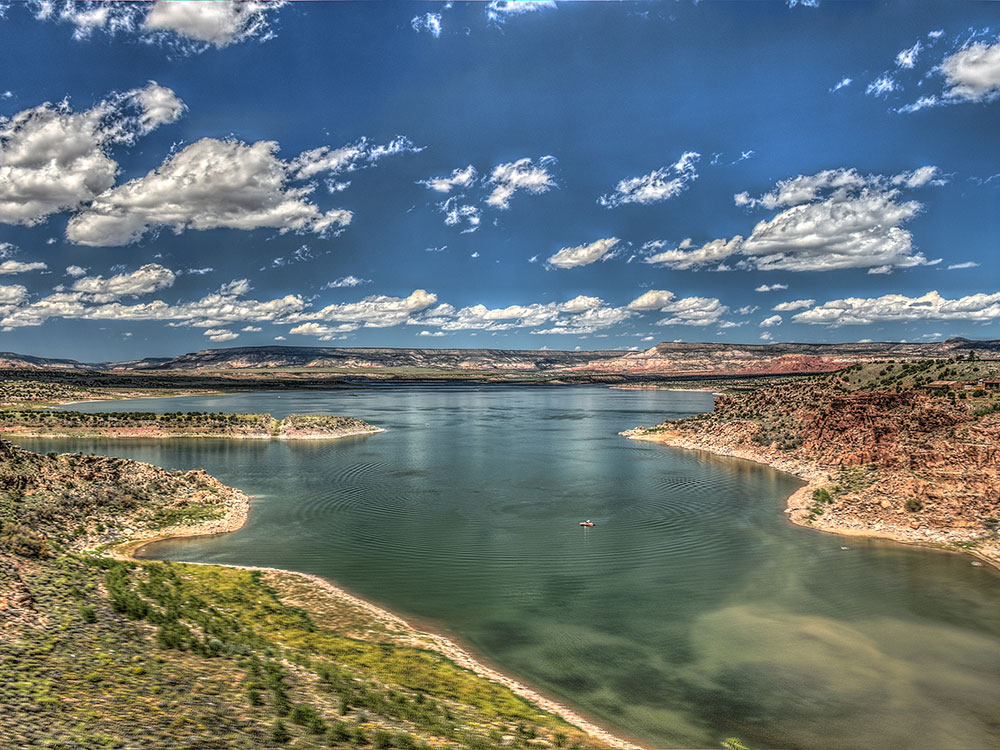
The Abiquiú area has abundant public land. Abiquiú Lake, a reservoir on the Rio Chama, offers boating and fishing, and the Chama River Canyon Wilderness upstream protects a colorful canyon of sandstone cliffs with hiking trails. The Santa Fe and Carson National Forests surround the area, and Ghost Ranch maintains its own hiking trails to viewpoints.
Abiquiú has a dry high desert climate with plenty of sun. Summers are warm to hot, with afternoon monsoon thunderstorms in July and August, while winters are cold with occasional snow. Spring and fall bring mild days and cool nights, and autumn color along the river makes it one of the best times to visit.
This article uses material from the Wikipedia articles Abiquiú, New Mexico, Georgia O'Keeffe, Ghost Ranch, which are released under the Creative Commons Attribution-Share-Alike License 3.0.
Featured Locations

Georgia O'Keeffe Home and Studio
Historic house museum in Abiquiú, New Mexico, was the principal residence and studio of artist Georgia O'Keeffe from 1943 until her death
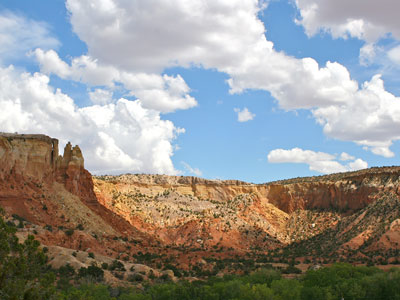
Artotem from Here, There, and..., CC BY 2.0, via Wikimedia Commons; Image Size Adjusted

Ghost Ranch
Retreat and education center located close to the village of Abiquiú, was the home and studio of Georgia O'Keeffe, as well as the subject of many of her paintings
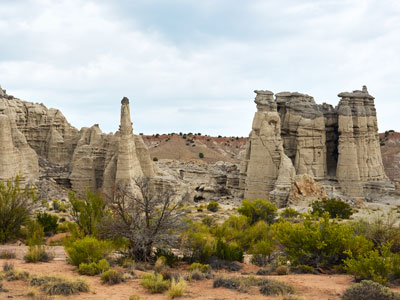
Pedro Szekely from Los Angeles, USA, CC BY-SA 2.0, via Wikimedia Commons; Image Size Adjusted

Plaza Blanca Historic District
19 acres (7.7 ha) historic district included 17 contributing buildings, which was listed on the National Register of Historic Places in 1986