Remote volcanic coastline featuring a black sand beach, lava tubes, sea arches, and native hala forest, offering a dramatic and culturally rich natural experience.
General Information
- Hours:
- Daily: 7am to 6pm
- Fees:
-
Hawaii Residents: Free with ID
Non-Residents: $5 per person
Children 3 and under: Free
Parking: $10 per vehicle (non-residents)
Camping and cabins available by permit - Pet Policy:
- Pets are not allowed
- Closest cities with hotels:
- Hāna (3 mi), Kīhei (64 mi)
- Seasons:
- All year; best weather from April to October
- Location:
- Wai'anapanapa State Park, Hāna, HI
- Website:
- dlnr.hawaii.gov
How to Get There
From Kahului, HI (53 mi): Drive east on Hana Highway (HI-36 E) for about 2.5 hours; turn left at the sign for Waiʻānapanapa State Park just before reaching Hāna town.
Overview
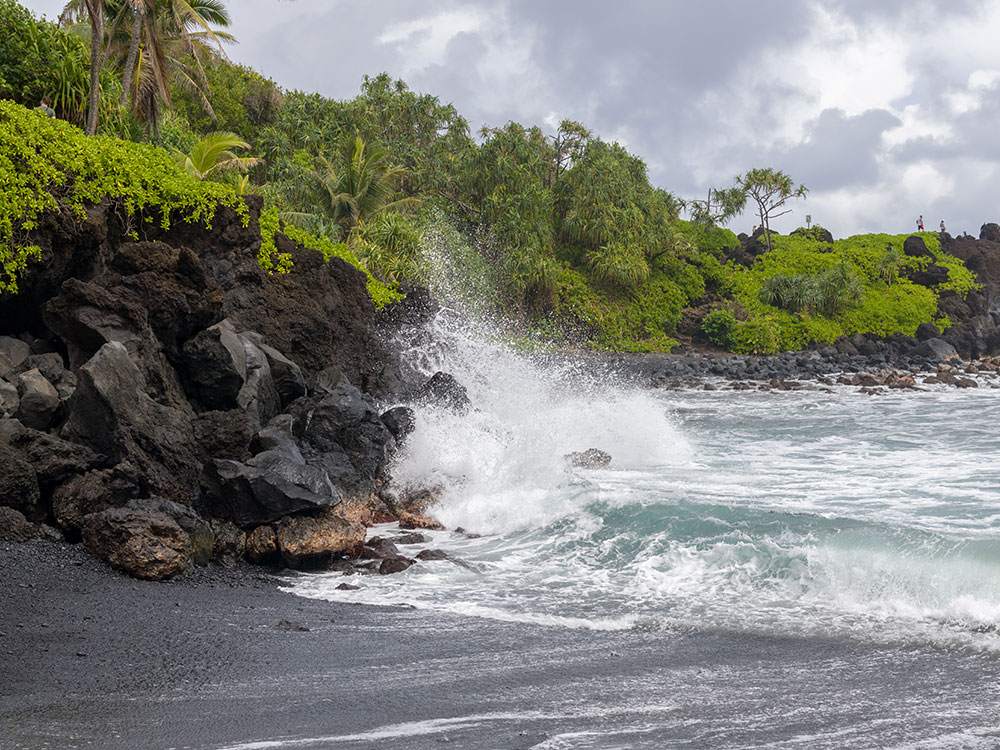
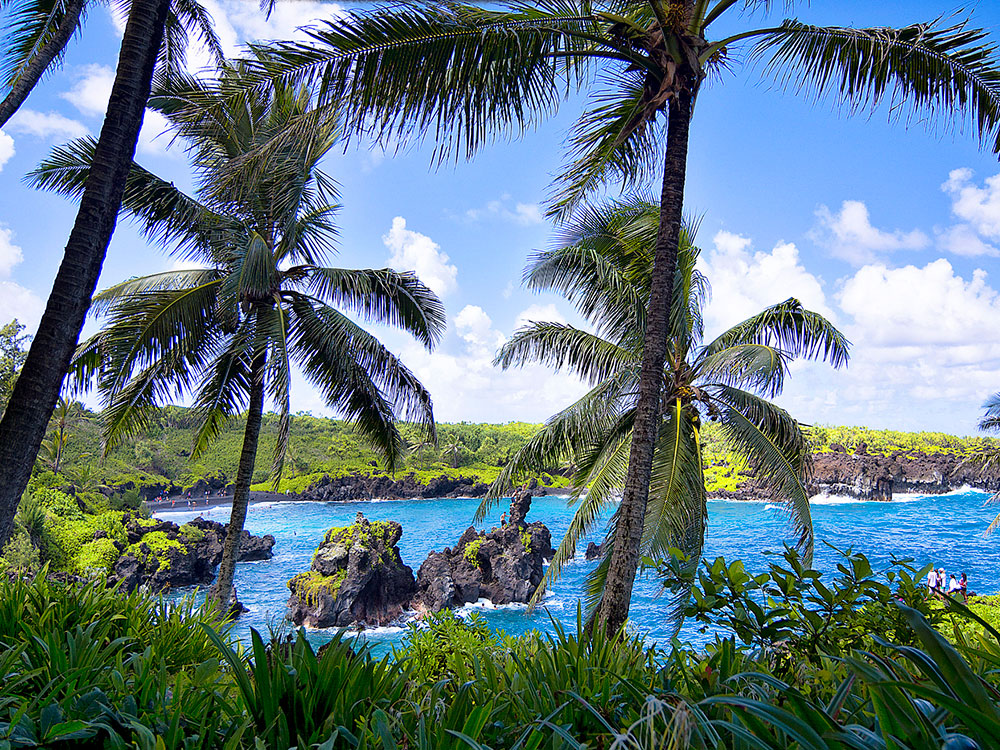
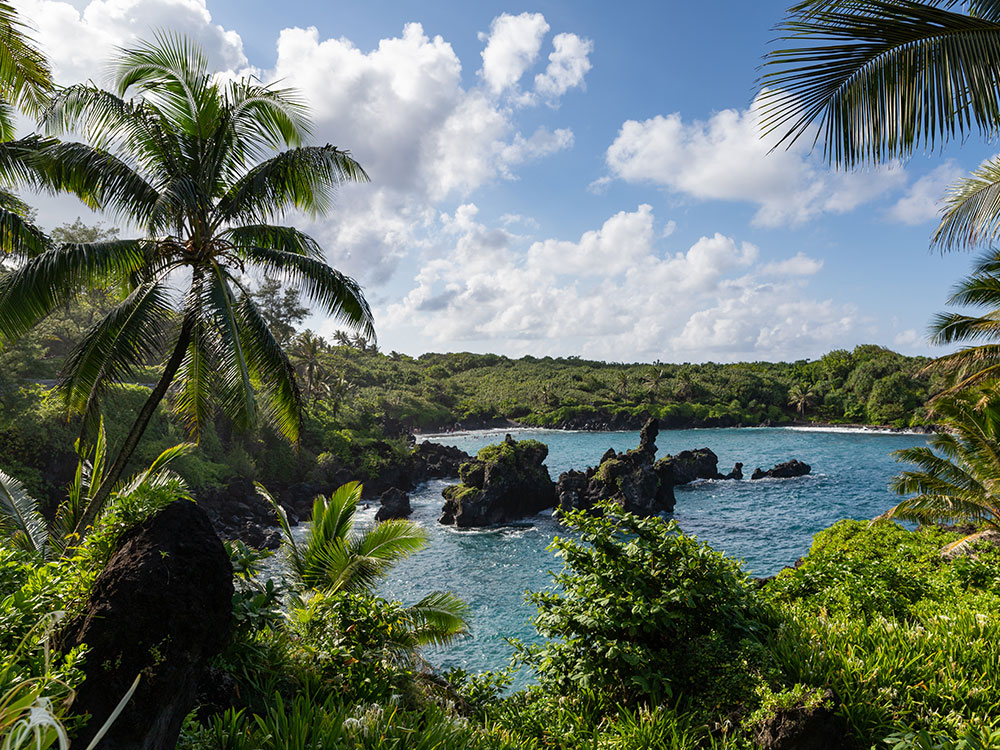
Waiʻānapanapa State Park is a dramatic stretch of coastline near Hāna on East Maui, famous for its jet-black sand beach, sea arches, lava tubes, blowholes and freshwater caves set against bright green forest and blue ocean. The black sand of Pāʻiloa Beach is formed from lava that has been ground into small, smooth stones by the waves, and the contrast with turquoise water makes the beach one of the most photographed in Hawaiʻi. The park also protects ancient Hawaiian sites and legends, including a freshwater cave pool linked to a tragic tale of a Hawaiian princess. Visitors come as the highlight of the Road to Hāna, for photography, for the coastal trail and for camping on the edge of the sea.
Access
The park is about 3 miles north of Hāna town, off the Hāna Highway at around mile marker 32, and is reached by one of the most famous scenic drives in the world. The road from Kahului is about 50 miles of winding curves, narrow one-lane bridges and waterfalls, and the drive takes about 2.5 hours without stops. Many visitors drive their own rental cars or join guided van tours, and a timed-entry reservation for non-residents is required, so book ahead online. Because of limited parking and heavy visitation, it is wise to arrive early.
Seasons
The park is open year-round. Summer is generally drier and calmer, and spring and fall are pleasant, but East Maui is one of the rainiest places in Hawaiʻi, so showers can happen any time. Winter brings more rain and larger surf, which makes the sea arches and blowholes dramatic but also dangerous, and the black sand beach can have strong currents and shore break all year. Landslides or flooding on the Hāna Highway can occasionally close the road, so check conditions before the drive.
Things to Do
Visit Hawaiʻi's Famous Black Sand Beach
Pāʻiloa Beach is a striking cove of glossy black stones and sand framed by cliffs and palm trees. Visitors come to walk the shore and take photos, although the strong surf and currents make swimming risky.
See Sea Arches and Blowholes
Along the coastal trail, waves have cut sea arches and blowholes into the lava cliffs. The views are most dramatic when the surf is up, but always stay behind marked areas.
Explore Lava Tubes and Caves
Short trails lead to lava tubes and freshwater caves that glow with turquoise water. The caves are tied to Hawaiian legends and are best visited with respect and caution.
Walk the Coastal Trail Toward Hāna
The Hāna Coastal Trail follows the shore past ancient house sites and heiau, a burial ground and rugged lava formations. It leads toward Hāna and Piʻilanihale Heiau at Kahanu Garden.
Camp or Stay in a Cabin Near the Sea
The park has campsites and cabins close to the beach, so overnight guests can wake up to the sound of waves and enjoy the stars. Permits and reservations are required.
Top Trails
Black Sand Beach and Sea Arch Loop
Length: Approximately 1 mile loop
Elevation Gain: Minimal
Difficulty: Easy
A short walk leads from the parking area down to the black sand beach, then around the coast to see the sea arch and other lava formations. Sturdy shoes are helpful because the rocks are sharp and slippery.
Hāna Coastal Trail
Length: Approximately 3 miles one way
Elevation Gain: Minimal
Difficulty: Easy to Moderate
This coastal route follows a section of the old Hawaiian shore path to Hāna through lava rock, hala trees and ancient sites. It is rocky and exposed, so bring water, sun protection and shoes with good traction.
Visitor Centers
Waiʻānapanapa State Park does not have a full visitor center. Near the parking area, a small check-in and information kiosk provides maps, safety information and details about reservations, restrooms and the interpretive signs that describe local legends and history. Park staff and rangers may be present, and the Hawaiʻi State Parks website has current rules and reservation details. More information is also available from visitor resources in Hāna.
Camping and Lodging
The park offers tent campsites and a set of rustic cabins, which are both popular and must be reserved well in advance through the state parks system. Facilities include restrooms, showers and picnic areas. In Hāna, about 5 minutes away, lodging includes the Hotel Hāna-Maui, Hāna Kai Maui and several bed-and-breakfasts and vacation rentals. Other places to stay lie further away, in Pāʻia and Haʻikū, about 1.5 to 2 hours back along the Hāna Highway, and in Kahului, Kīhei and Wailea, which offer the island's widest range of resorts, about 2.5 to 3 hours away. Because the drive is long, many visitors choose to stay overnight in Hāna. Check each property's website for current availability.
This article uses material from the Wikipedia article and official pages for Waiʻānapanapa State Park, Hawaii State Parks: Waiʻānapanapa State Park, released under the Creative Commons Attribution-Share-Alike License 3.0.