Tropical town known for its lush landscapes, frequent rainfall, vibrant cultural festivals, and access to natural attractions like waterfalls and botanical gardens.
General Information
- Seasons:
- Best visited in spring (April–May) and fall (September–October) for drier weather and fewer crowds
- Location:
- Hilo, HI
- Website:
- gohawaii.com
How to Get There
From Hilo International Airport (2 mi): Head west on Kanoelehua Avenue (Highway 11) into downtown Hilo, following signs toward Hilo Bay and Banyan Drive.
Overview
Hilo is the largest city on the Big Island of Hawaii, with about 45,000 residents, and the seat of Hawaii County. It lies along Hilo Bay on the island's windward east coast, below the slopes of Mauna Kea and Mauna Loa, and it is lush, green and one of the rainiest cities in the United States. Hilo is quieter and more local than the resort towns on the sunny west coast, and it is the island's main port and a center of government, education and agriculture.
People come to Hilo as the base for visiting Hawaii Volcanoes National Park, about 30 miles away, and for waterfalls, tropical gardens, black sand beaches and the Hamakua coast. The historic downtown, farmers market, local restaurants and Merrie Monarch Festival, a major hula competition held each spring, give the city a strong sense of Hawaiian culture.
History
Hilo was an important Hawaiian settlement long before Western contact and was the site of Kamehameha I's early campaigns. Missionaries arrived in 1824, and the town grew in the 19th century with sugar plantations and a railroad. A tsunami in 1946 killed 159 people and another in 1960 killed 61, destroying much of the waterfront, and the damaged areas were turned into parks, including Liliuokalani Gardens and Wailoa River State Park.
Sightseeing and Popular Landmarks
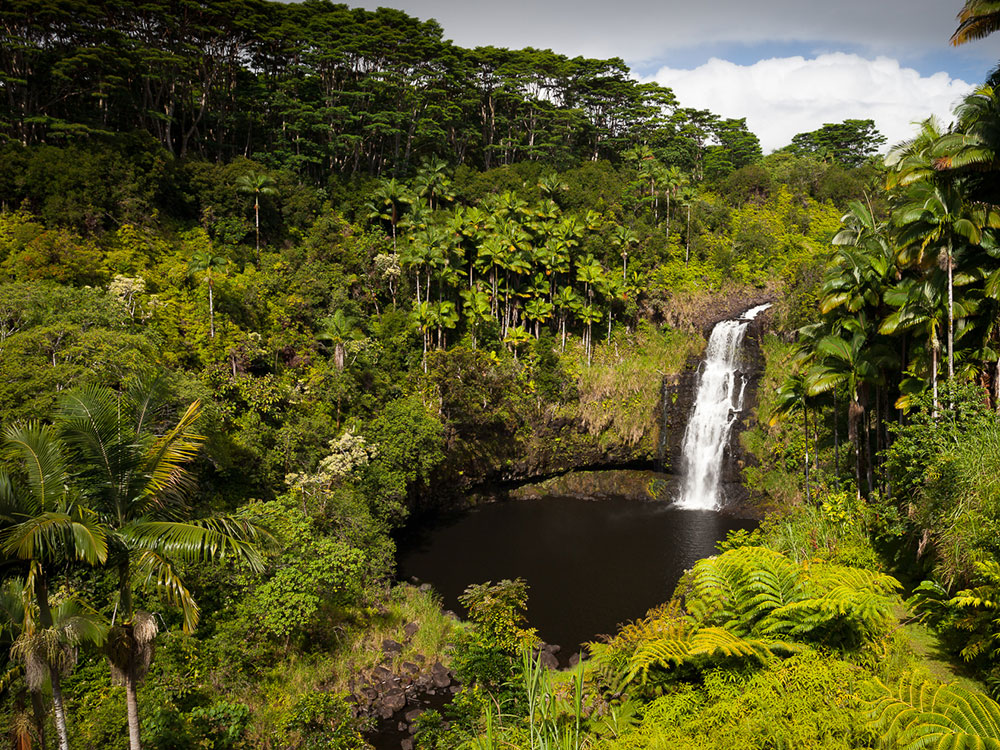
Popular sights include Rainbow Falls, Boiling Pots, Liliuokalani Gardens, Coconut Island and the Pacific Tsunami Museum. Akaka Falls State Park is a short drive north, and Waipio Valley and the Hilo-side coast of Puna are within reach for day trips.
Culture and Museums
The Lyman Museum displays Hawaiian artifacts, missionary history and a collection of rocks and minerals. The Imiloa Astronomy Center of Hawaii combines Hawaiian culture and astronomy, the Pacific Tsunami Museum tells the story of the two tsunamis, and the Palace Theater and downtown galleries host films, concerts and festivals.
Parks
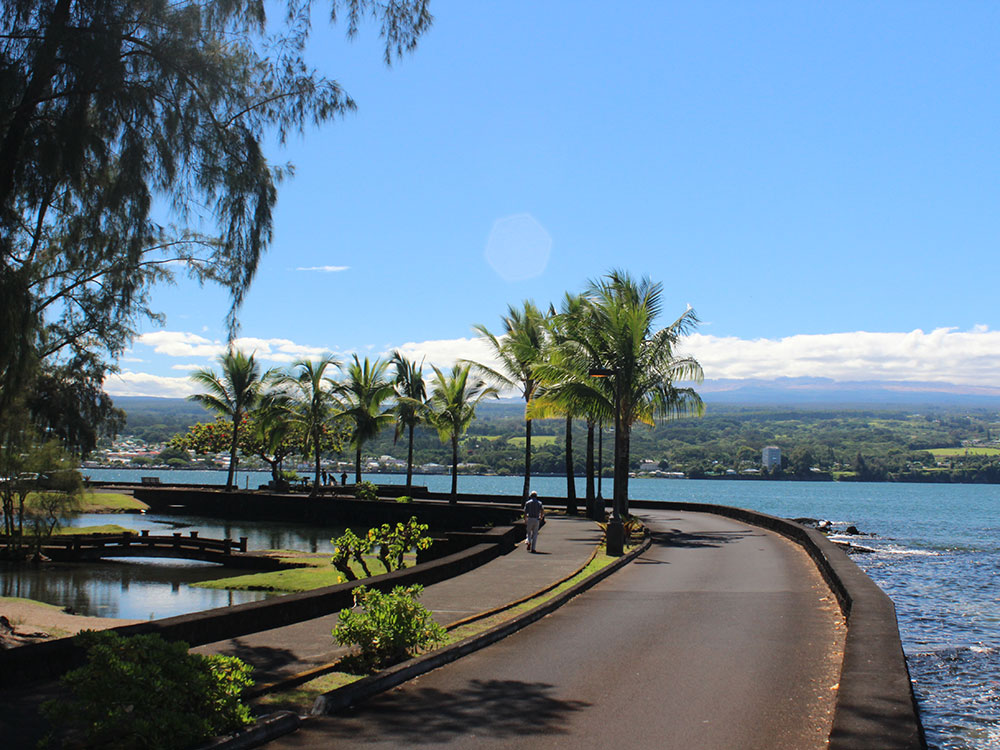
Hilo's parks include Liliuokalani Gardens, a Japanese-style garden on the bay, Lili'uokalani Park, Wailoa River State Park, and Rainbow Falls and Boiling Pots State Park along the Wailuku River. The Hilo Bayfront Beach Park and Richardson Ocean Park offer swimming and snorkeling, and Hawaii Tropical Botanical Garden on the Onomea scenic route is a short drive away.
Seasons and Weather
Hilo has a tropical rainforest climate with warm, humid weather year-round, with highs in the upper 70s and low 80s°F and lows in the upper 60s. It gets more than 100 inches of rain a year, with the wettest months from November to March, so bring a rain jacket. Hurricane season runs from June through November.
Events
- Merrie Monarch Festival: the world’s preeminent hula competition, a week-long celebration of ancient and modern hula held each spring beginning on Easter Sunday.
- Hilo Orchid Show: the state’s largest and most comprehensive orchid show, held annually since 1951.
Things to See
- Pacific Tsunami Museum: Hawaii’s only tsunami museum, mostly about the 1946 tsunami. The bayfront was twice destroyed by tsunamis.
- Lyman Museum and Haili Church
- Rainbow Falls (Waiānuenue) and Boiling Pots on the Wailuku River
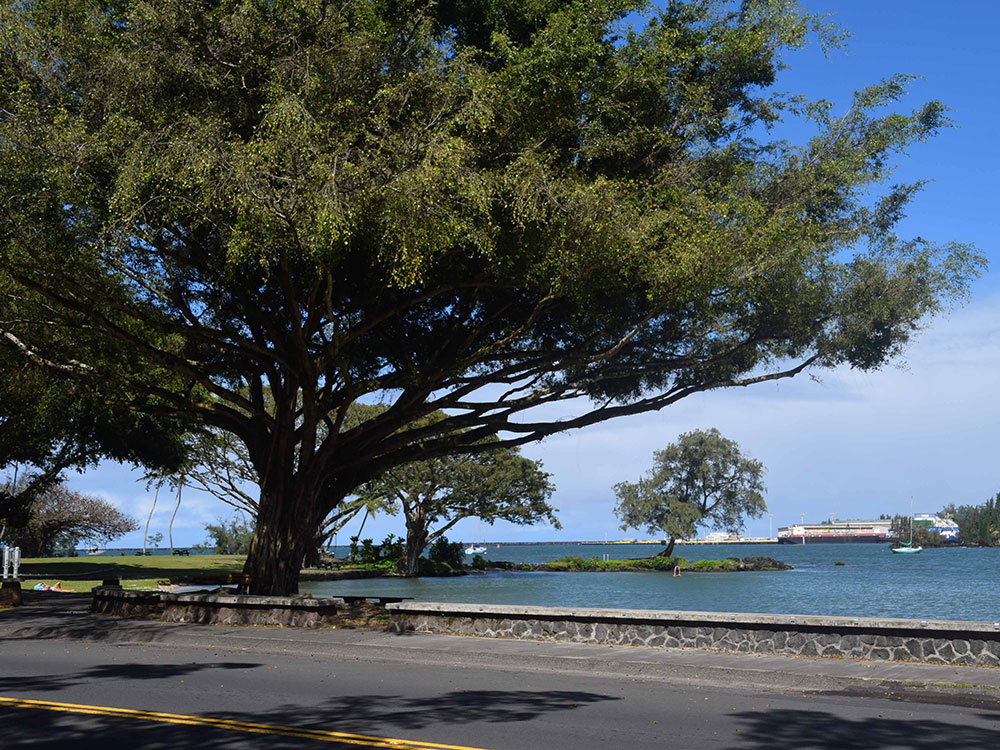
- Banyan Drive: lined with banyan trees planted by celebrities including Babe Ruth and Amelia Earhart, near Liliʻuokalani Park and Gardens and Coconut Island
- Gardens: Hawaii Tropical Botanical Garden, Nani Mau Gardens, Hilo Tropical Gardens and University of Hawaiʻi at Hilo Botanical Gardens
- Panaʻewa Rainforest Zoo
- Mokupāpapa Discovery Center: on Northwestern Hawaiian Islands coral reefs
- Naha Stone (associated with Kamehameha I) at the Hilo Public Library
- Downtown Farmers Market, shops and restaurants; the district lies roughly between the Wailuku River, Kamehameha Avenue, Ponahawai Street and Kapiolani Street
- Mauna Loa Macadamia Nut Corporation
History
The first inhabitants arrived around 1100 AD. The name Hilo once applied to much of the island’s east coast, now split into South and North Hilo. When William Ellis visited in 1823, the main settlement was Waiākea, and missionaries later founded Haili Church. The local economy long depended on sugar plantations until they closed in the 1990s. Hilo expanded inland from the 1960s.
This article uses material from Wikipedia as well as information from official tourism and institutional sources. Key references include Hawaii Tourism Authority, University of Hawaii at Hilo, Hawaii Volcanoes National Park, Imiloa Astronomy Center, and National Weather Service Honolulu. Wikipedia material is from the article "Hilo, Hawaii", released under the Creative Commons Attribution-Share-Alike License 3.0.