Tropical town known for its lush landscapes, frequent rainfall, vibrant cultural festivals, and access to natural attractions like waterfalls and botanical gardens.
General Information
How to Get There
From Hilo International Airport (2 mi): Head west on Kanoelehua Avenue (Highway 11) into downtown Hilo, following signs toward Hilo Bay and Banyan Drive.
Overview
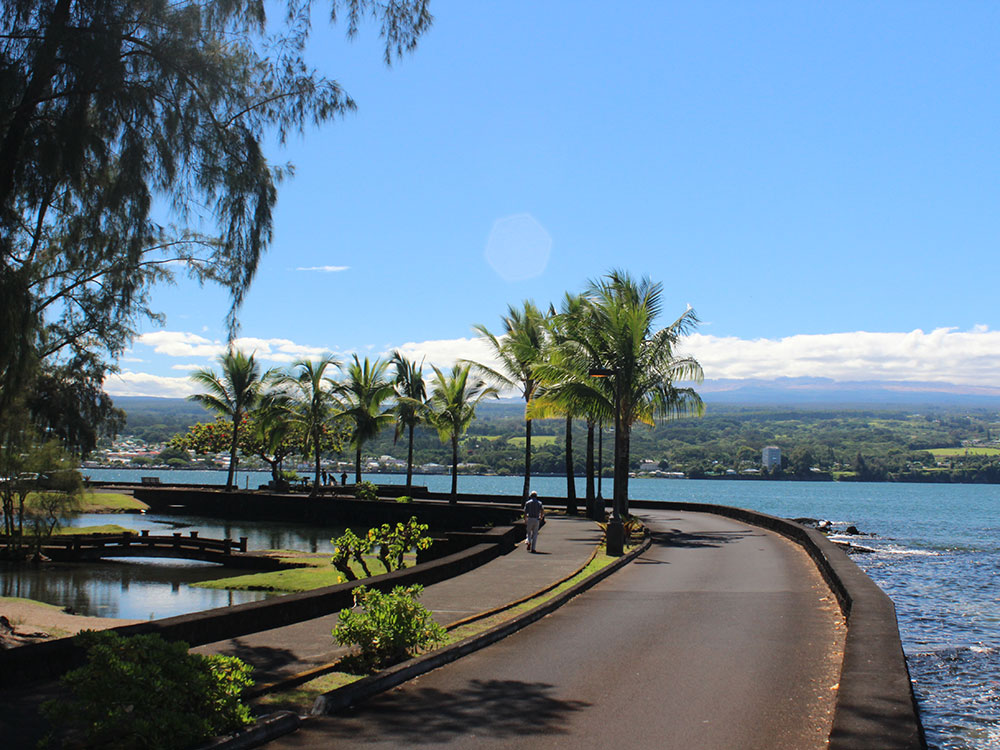
Hilo is the largest city on the Big Island and the oldest in the Hawaiian archipelago, overlooking Hilo Bay at the base of Mauna Loa and Mauna Kea. It is lush and rainy, and it draws less than half as many visitors as the sunnier, resort-lined west coast. Its downtown has become a cultural center since the 1980s, with galleries, museums, cafés and the Palace Theater, an arthouse cinema that reopened in 1998. Hilo is home to the University of Hawaiʻi at Hilo and the ʻImiloa Astronomy Center, and is served by Hilo International Airport. The name may mean “to twist.”
Events
- Merrie Monarch Festival: the world’s preeminent hula competition, a week-long celebration of ancient and modern hula held each spring beginning on Easter Sunday.
- Hilo Orchid Show: the state’s largest and most comprehensive orchid show, held annually since 1951.
Things to See
- Pacific Tsunami Museum: Hawaii’s only tsunami museum, mostly about the 1946 tsunami. The bayfront was twice destroyed by tsunamis.
- Lyman Museum and Haili Church
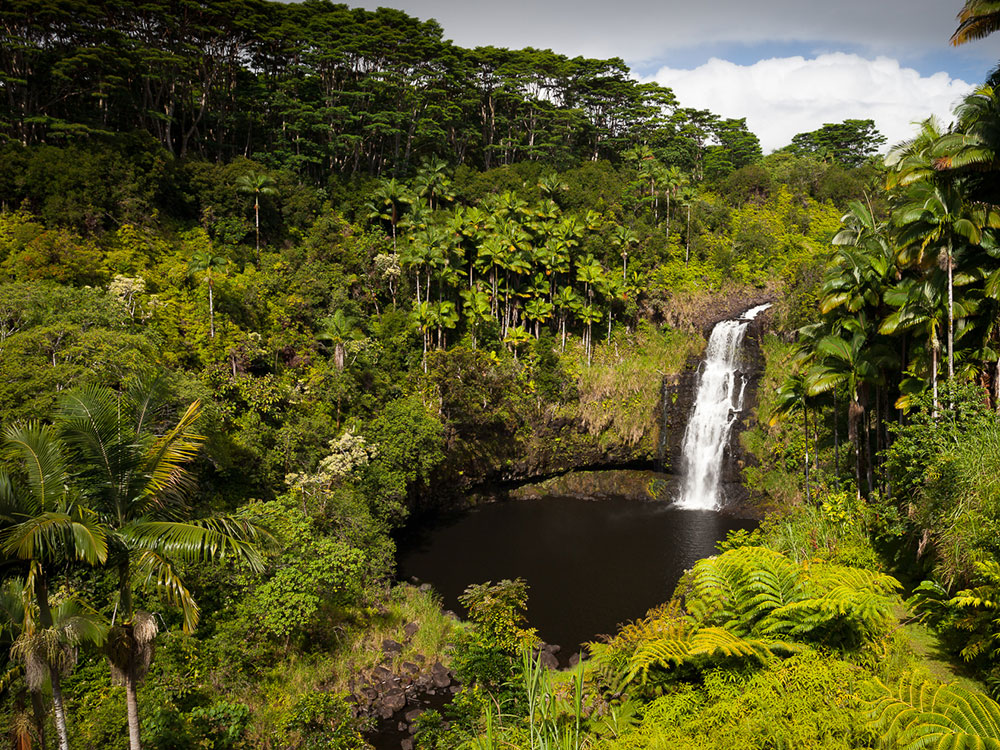
- Rainbow Falls (Waiānuenue) and Boiling Pots on the Wailuku River
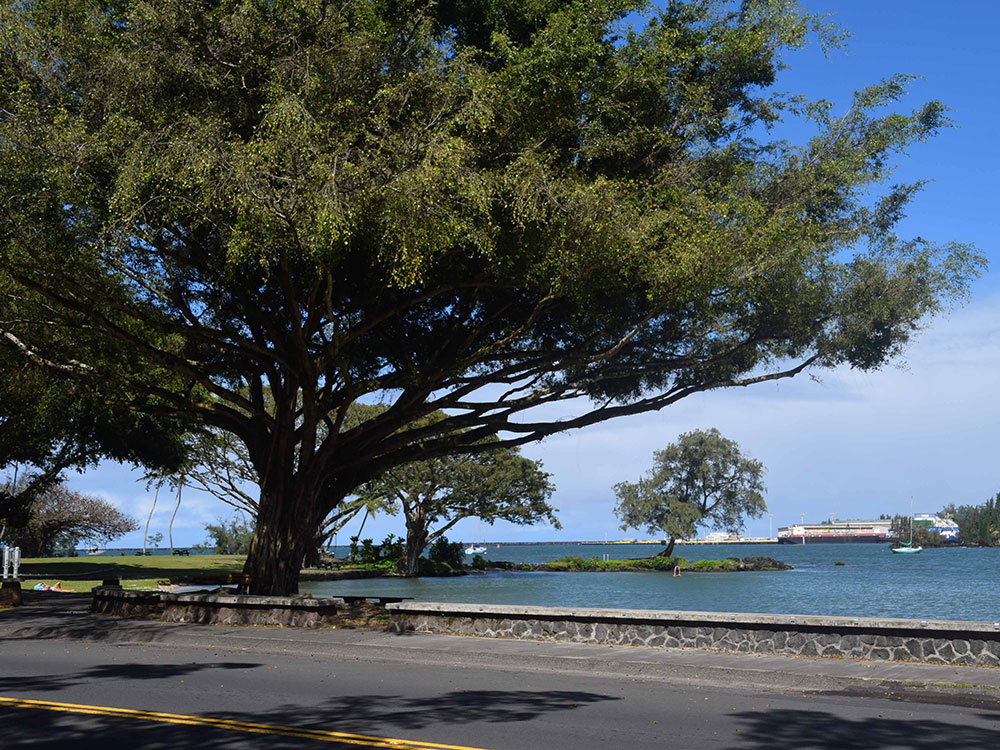
- Banyan Drive: lined with banyan trees planted by celebrities including Babe Ruth and Amelia Earhart, near Liliʻuokalani Park and Gardens and Coconut Island
- Gardens: Hawaii Tropical Botanical Garden, Nani Mau Gardens, Hilo Tropical Gardens and University of Hawaiʻi at Hilo Botanical Gardens
- Panaʻewa Rainforest Zoo
- Mokupāpapa Discovery Center: on Northwestern Hawaiian Islands coral reefs
- Naha Stone (associated with Kamehameha I) at the Hilo Public Library
- Downtown Farmers Market, shops and restaurants; the district lies roughly between the Wailuku River, Kamehameha Avenue, Ponahawai Street and Kapiolani Street
- Mauna Loa Macadamia Nut Corporation
History
The first inhabitants arrived around 1100 AD. The name Hilo once applied to much of the island’s east coast, now split into South and North Hilo. When William Ellis visited in 1823, the main settlement was Waiākea, and missionaries later founded Haili Church. The local economy long depended on sugar plantations until they closed in the 1990s. Hilo expanded inland from the 1960s.
This article uses material from the Wikipedia article "Hilo, Hawaii", which is released under the Creative Commons Attribution-Share-Alike License 3.0