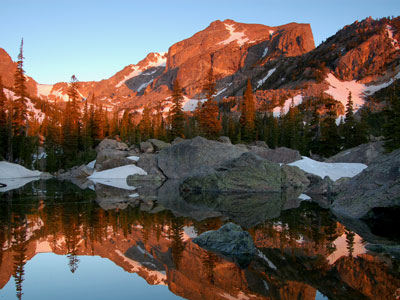

A rugged alpine lake famous for its striking turquoise color, surrounded by massive boulders and reached via a scenic hike past some of the park’s most iconic lakes.
General Information
- Hours:
- Open 24 hours a day, year-round; some roads and facilities may close seasonally
Timed entry permit required during peak season (mid-May through mid-October) during daytime hours - Length:
- 4.2 miles roundtrip
- Elevation Gain:
- 745 feet
- Difficulty:
- Moderate
- Fees:
-
Private Vehicle (1-day pass): $30
Private Vehicle (7-day pass): $35
Per Person (walk-in/bike): $15 per day
Motorcycle (1-day): $25
Annual pass available - Pet Policy:
- Pets are not allowed on trails
- Closest cities with hotels:
- Estes Park (9 mi)
- Seasons:
- Late spring through fall most popular; winter possible with proper gear
- Location:
- Lake Haiyaha via Bear Lake Trailhead, Estes Park, CO 80517
- Website:
- nps.gov/romo_lakehaiyaha
How to Get There
From Estes Park (9 mi): Enter Rocky Mountain National Park via the Beaver Meadows Entrance on US-36, drive about 9 miles along Bear Lake Road to the Bear Lake Trailhead, then follow the trail past Nymph and Dream Lakes before turning toward Lake Haiyaha.
Overview
Lake Haiyaha is a rugged alpine lake in the Bear Lake area of Rocky Mountain National Park, set beneath the cliffs of Hallett Peak and Otis Peak. Unlike most lakes in the area, its shoreline is dominated by large, angular granite boulders and twisted limber pines, creating a striking and wild landscape. The hike combines some of the park's most scenic highlights, passing Nymph Lake and the views above Dream Lake, with a quieter destination that sees fewer visitors than nearby Dream and Emerald lakes. The name Haiyaha is often said to come from a Native American word meaning "rock" or "big rocks."
Getting to the Trailhead
From Estes Park, enter the park through the Beaver Meadows Entrance on US-36 and turn left onto Bear Lake Road, a paved road accessible to all vehicles. The Bear Lake Trailhead is at the end of the road, about 9 miles from the junction, with a large parking lot, restrooms, and a ranger station, though the lot still fills early on summer days. From late May through mid-October, a Timed Entry + Bear Lake Road reservation from Recreation.gov is required to enter the Bear Lake Road Corridor between 5 a.m. and 6 p.m.; check the National Park Service website for current dates. Trailhead parking fills very early in summer, so many hikers park at the Park & Ride Transit Hub on Bear Lake Road and ride the free park shuttle, which stops at the Bierstadt Lake Trailhead, Glacier Gorge Trailhead, and Bear Lake; a ticketed Hiker Shuttle also runs from the Estes Park Visitor Center to the Park & Ride.
Trail Description
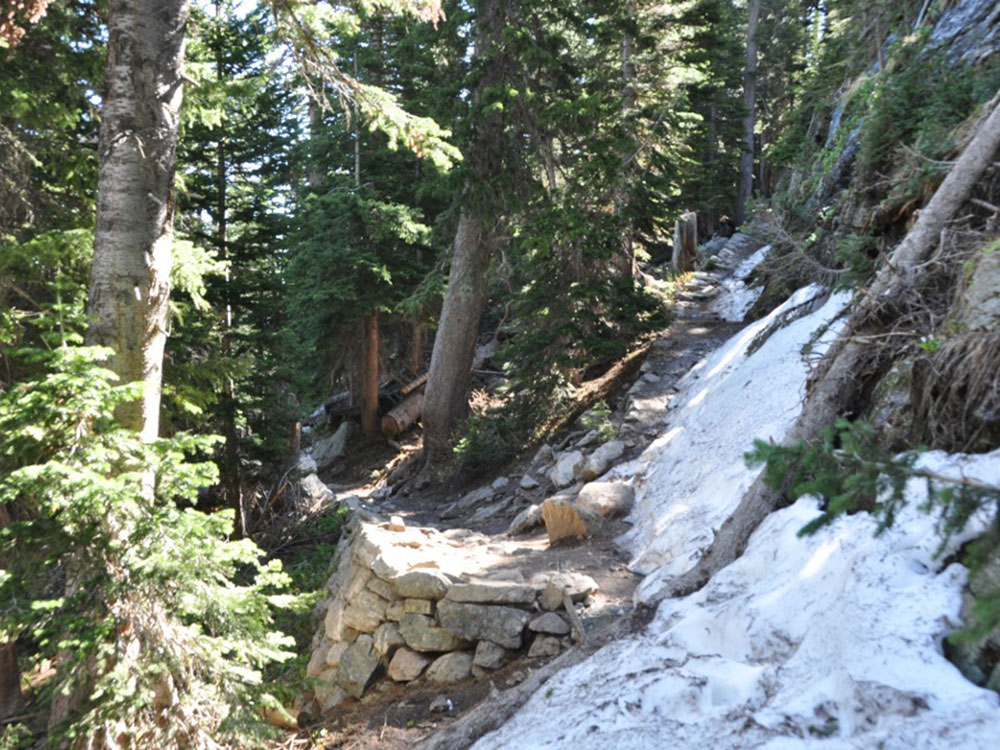
From the Bear Lake Trailhead, follow the signs for Nymph Lake and Dream Lake as the trail climbs through subalpine forest past Nymph Lake. Just before Dream Lake, turn left at the signed junction toward Lake Haiyaha. The trail climbs steadily along the slope of Hallett Peak, with views of Longs Peak, Glacier Gorge, and the Mills Lake area below, before descending slightly to Lake Haiyaha, about 2.1 miles from the trailhead. To reach the best views of the lake, hikers scramble over large boulders near the shore. Hikers can return the same way, for a total of about 4.2 miles round trip, or continue on the trail toward The Loch and Alberta Falls and finish at the Glacier Gorge Trailhead, which makes a scenic loop with the help of the park shuttle.
Trail Conditions and Difficulty
The hike is moderate, with about 745 feet of elevation gain and some steep, rocky sections. Reaching the shoreline requires easy scrambling over large boulders. At these elevations, the thin air makes climbing harder than many visitors expect, so take your time and drink plenty of water. Afternoon thunderstorms are common in summer, so start early and plan to be off exposed areas by early afternoon. In winter, the trail is snow-covered and the route can be difficult to follow, so snowshoes or traction devices are recommended, and the steep slopes above the trail can pose avalanche danger.
This article uses material from official National Park Service resources for Lake Haiyaha, which are released under the Creative Commons Attribution-Share-Alike License 3.0. Additional trail information is from the National Park Service pages "Timed Entry Permit System" and "Shuttle Buses and Public Transit".