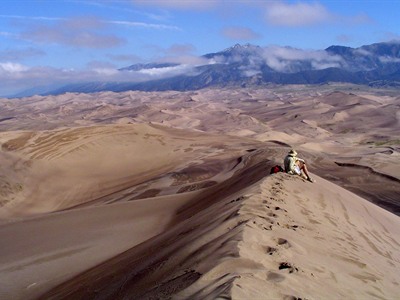

A prominent towering sand dune offering a strenuous climb with expansive views over a vast desert landscape and surrounding mountain ranges.
General Information
- Length:
- 2.5 miles roundtrip
- Elevation Gain:
- 688 feet
- Difficulty:
- Strenuous
- Hours:
- Open daily year-round
Typical park access is 24 hours for hiking areas (weather dependent) - Fees:
-
$25 per vehicle (valid for 7 days)
$15 per person (walk-in/bicycle) - Pet Policy:
- Pets are allowed in designated areas but not permitted on the main dune field during peak daytime hours
- Seasons:
- All year; best in spring and fall for cooler temperatures, early morning or evening in summer
- Closest cities with hotels:
- Alamosa (35 mi)
- Location:
- High Dune, Great Sand Dunes National Park, CO
- Website:
- nps.gov
How to Get There
From Alamosa (35 mi): Take US-160 E to CO-150 N and follow it north for about 16 miles to the park entrance, then continue to the main Dunes Parking Area where the hike begins.
Overview
High Dune on the First Ridge is the most popular hiking destination in the dunefield of Great Sand Dunes National Park. Although it is neither the highest in elevation nor the tallest dune in the park, it appears that way from the main parking lot, and its summit provides a great view of the entire dunefield, the San Luis Valley, and the Sangre de Cristo Mountains. Hikers come for the challenge of climbing through deep sand, the sweeping views, and the thrill of running, sliding, or sandboarding back down the slopes. No permit is required for a day hike.
Getting to the Trailhead
Great Sand Dunes is in the San Luis Valley; from Alamosa, take US-160 east and CO-150 north to the park entrance, about 35 miles. The roads are paved and accessible to all vehicles, the park is open 24 hours, and an entrance fee is required. Continue past the visitor center to the Dunes Parking Lot, which has restrooms; the lot can fill on summer weekends.
Trail Description
From the Dunes Parking Lot, walk across the wide bed of Medano Creek, which flows seasonally in late spring and early summer, to the base of the dunes. There are no trails in the dunefield, so hikers simply pick a route up the ridges toward High Dune, following the crests of the dunes where the sand is firmer. The route climbs steadily up and over several smaller dunes before reaching the summit of High Dune. Hikers return the same way, for a total of about 2.5 miles round trip; the National Park Service says the average round trip takes about 2 hours, but to plan on as much as 4 hours if not acclimated to the higher elevation.
Trail Conditions and Difficulty
The hike is strenuous, with about 700 feet of elevation gain through soft sand, which makes every step more tiring than hiking on a trail. In summer, the sand surface can reach 150 degrees Fahrenheit in the afternoon, causing burns on bare feet, so hike in the early morning or evening and wear closed-toe shoes. Afternoon thunderstorms are common in summer, and the exposed dunes are extremely dangerous during lightning. At around 8,000 feet, the elevation also makes the climb harder. In winter, the dunes can be snow-covered and cold, but hiking is possible.
This article uses material from the Wikipedia articles and official tourism pages for the Great Sand Dunes National Park, which are released under the Creative Commons Attribution-Share-Alike License 3.0. Additional trail information is from the National Park Service page "Hiking - Great Sand Dunes National Park & Preserve".


