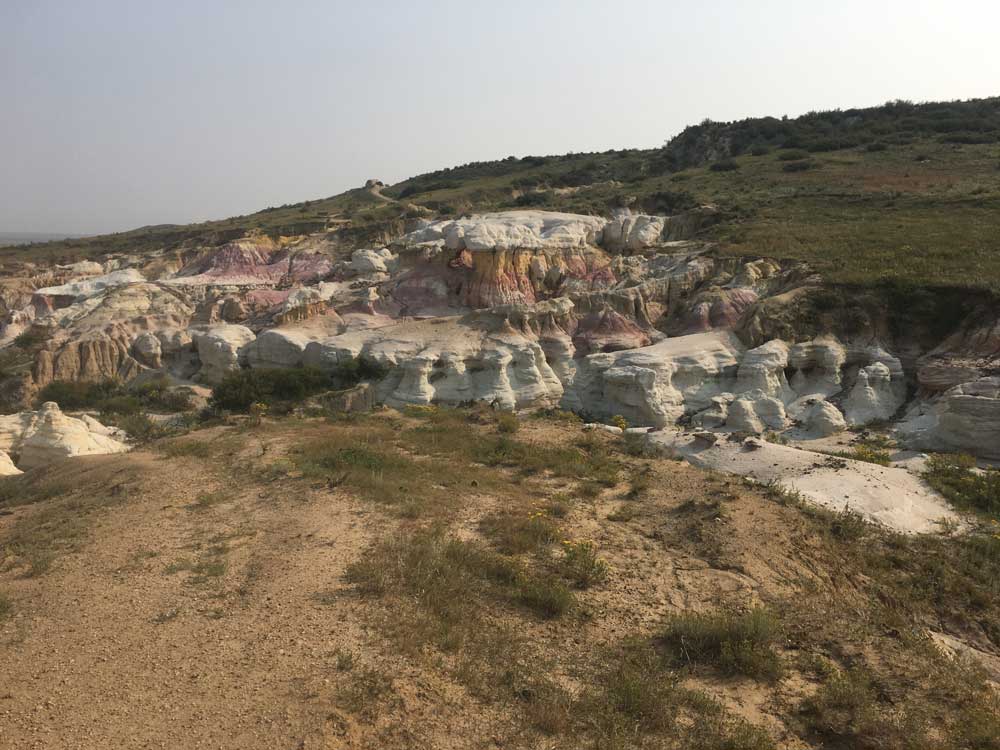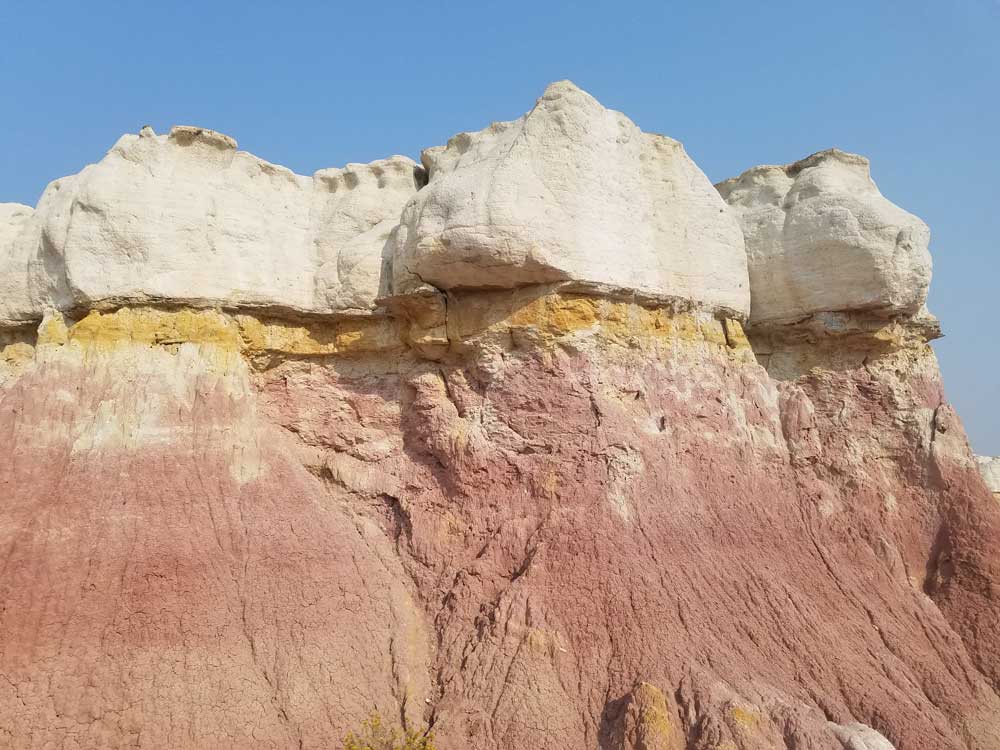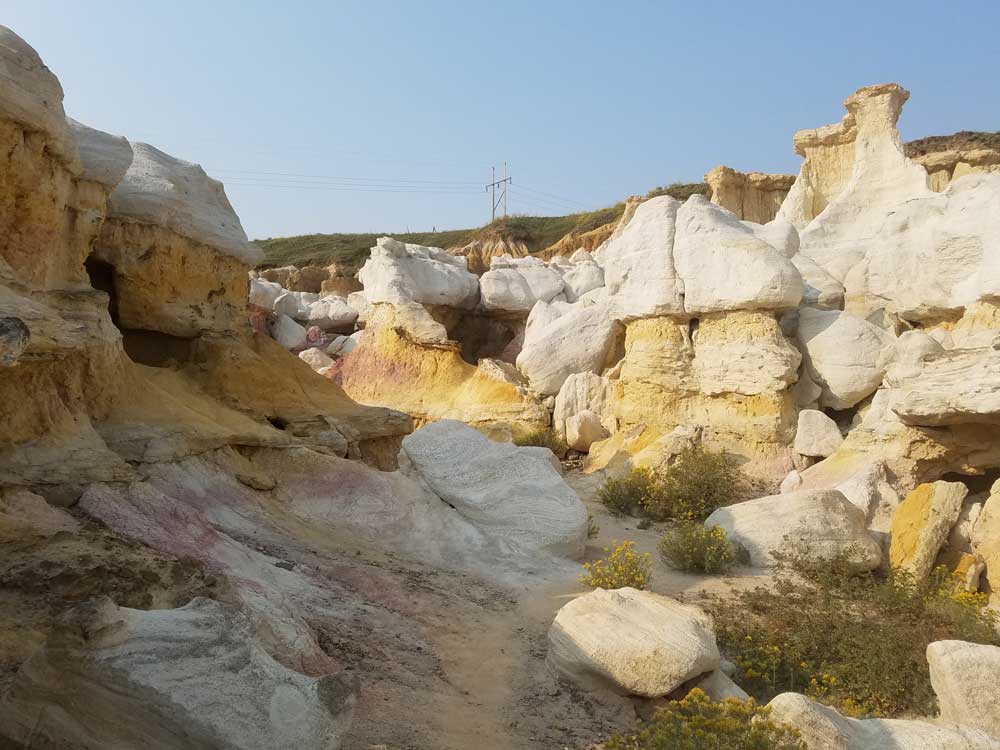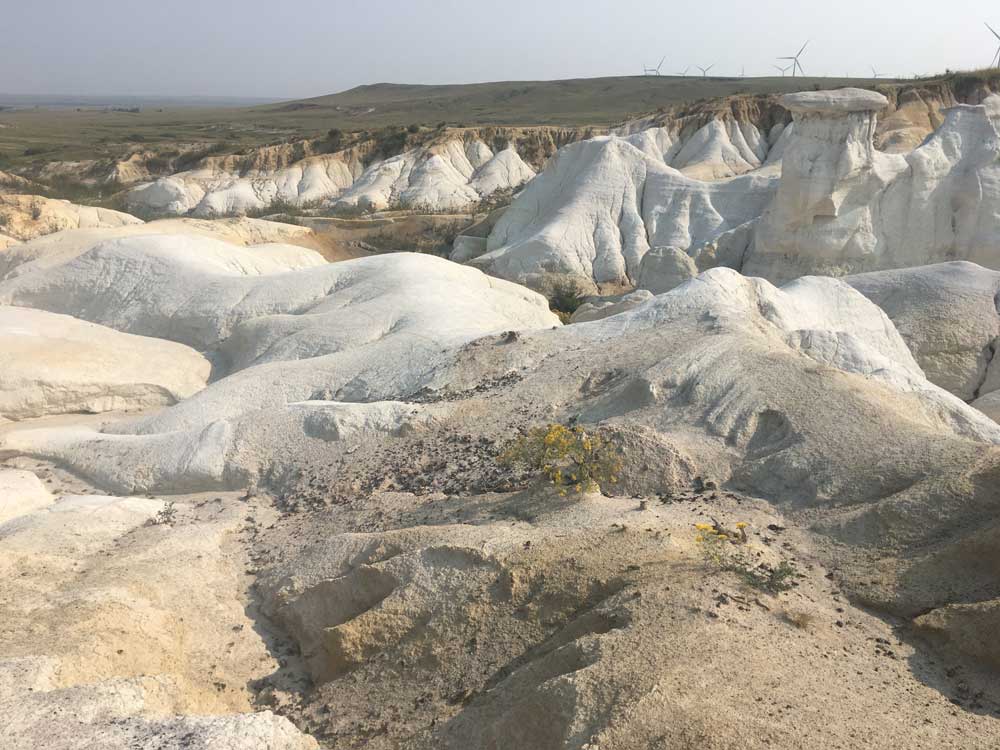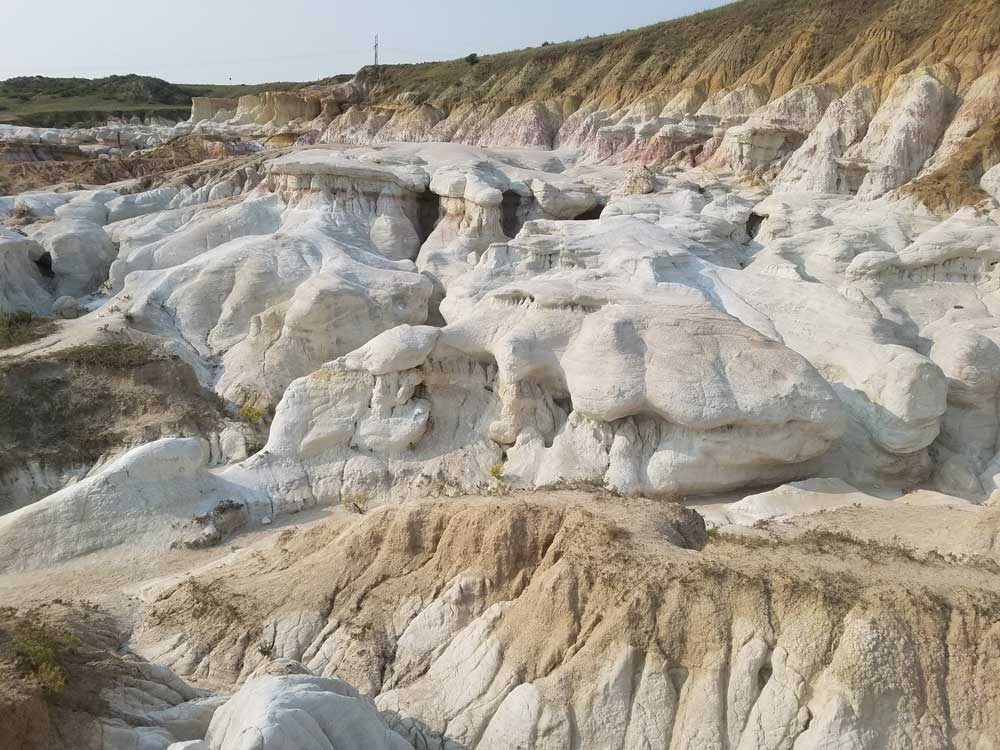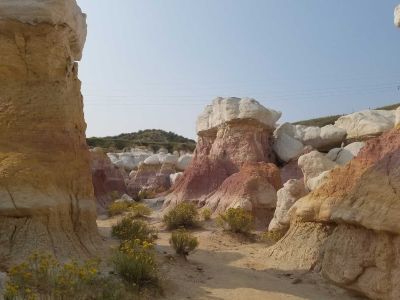
Archeological district located on the eastern plains of Colorado, covering 750 acres, containing grassland and geological formations of hoodoos, colored clay and sandstone-capped spires.
General Information
- Hours:
- Dawn to Dark
- Fees:
- No fees
- Pet Policy:
- Pets not allowed
- Closest cities with hotels:
- Colorado Springs, 36 miles
- Seasons:
- All year
- Location:
- 29950 Paint Mine Rd, Calhan, CO 80808
- Website:
- communityservices.elpasoco.com/parks-and-recreation/paint-mines-interpretive-park/
From Colorado Springs (36 mi): Continue to N Nevada Ave. Turn right onto N Nevada Ave. Turn right onto E Platte Ave. Follow US-24 E to Yoder St. Take Paint Mine Rd to your destination.
Calhan Paint Mines Archeological District
Calhan Paint Mines is an archeological district located on the eastern plains of Colorado in El Paso County, one mile south of Calhan. The Paint Mines Interpretive Park is "a unique blending of geological, archaeological, historical and ecological resources".
Park
The park has a diverse ecological system, with a combination of prairie, badlands and wetlands that attracts coyote, mule deer, song birds, horned toads, falcons, rabbits, and hawks.
The park has 4 miles (6.4 km) of trails that rise over 500 feet (150 m) in elevation. It covers 750 acres (300 ha), containing grassland and geological formations of hoodoos, colored clay and sandstone-capped spires. The site is protected by law because of the fragile environment, as well as the geological and archaeological significance of the artifacts, rocks, animals and plants.
Each year the park is visited by birdwatchers and hikers. It is also an outdoor geological lab.
Archaeological evidence, such as arrow heads and stone dart tips, has found that there was prehistoric and historic occupation by Native American peoples. The earliest occupation was about 9,000 years ago. Artifacts found represent the Apishapa culture, Cody complex and Duncan complex. The clay was used in prehistoric and historic times to create and paint pottery and as paint for ceremonial purposes. The selenite clay was used for arrowheads. The "channels" were used to herd bison into a gulch where they could be easily hunted with bows and arrows.
The Calhan Paint Mines Archaeological District was designated by the National Park Service. The land is protected by the El Paso County Parks Department, with funding by the State Historical Fund for master planning and an archaeological survey.
History
Native peoples gathered the brightly colored clays here for thousands of years and used them to make paint, which gave the site its name. In the early 1900s settlers also dug clay from the area for bricks and pottery. El Paso County later acquired the land and opened it as an interpretive park to protect its geology and archaeology.
Things to Do
Hike the Trails
Four miles of trails lead through the badlands of hoodoos and colorful clay formations.
Photograph the Colors
Morning and late-afternoon light brings out the pinks, oranges and purples of the clay.
Watch for Wildlife
Look for hawks, falcons, songbirds, mule deer and coyotes on the surrounding prairie.
Follow the Park Rules
Stay on trails and do not climb on the fragile formations; pets are not allowed.
This article uses material from the Wikipedia article "Calhan Paint Mines Archeological District", which is released under the Creative Commons Attribution-Share-Alike License 3.0