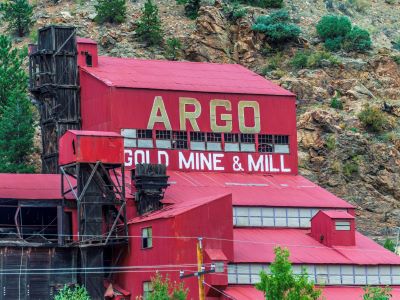

Historic five-story mill and tunnel complex offering guided tours, gold panning experiences, and exhibits on Colorado’s gold mining heritage.
General Information
- Hours:
-
Daily: 10am to 6pm (Memorial Day to Labor Day)
Winter: 10am to 5pm (weather permitting)
Tours begin hourly from 11am to 4pm
Arrive 15 minutes early for check-in - Fees:
-
Adults: $30
Children (5–16): $20
Children (1–4): $4
Infants: Free
Gold Panning Only: $16 (gold), $12 (gemstones) - Pet Policy:
- Pets are not allowed
- Seasons:
- All year
- Location:
- Argo Gold Mill and Tunnel, CO
- Website:
- argomilltour.com
How to Get There
From Denver (34 mi): Take I-70 West toward Idaho Springs, exit at 241A, turn left onto Miner Street, then right onto Riverside Drive to reach the entrance.
Overview
The Argo Gold Mill and Tunnel is a towering relic of Colorado’s gold rush era, standing as a testament to the ingenuity and ambition of 19th-century miners. Built in the early 1900s, the mill once processed over $100 million worth of gold ore and served as the terminus of the Argo Tunnel, which stretched more than four miles into the mountains. Today, visitors can explore this National Historic Landmark through immersive guided tours that include a walk through the tunnel portal, a look at massive original milling equipment, and a hands-on gold panning experience that lets guests keep what they find.
Beyond its industrial might, the Argo Mill offers a rich educational journey into the lives of the miners and the evolution of mining technology. The site includes a museum filled with artifacts, photographs, and documents that bring the gold rush to life. Whether you're a history buff, a family on an adventure, or a curious traveler, the Argo Mill and Tunnel offers a unique glimpse into the rugged past that helped shape the American West.
History
The Argo Tunnel was dug between 1893 and 1910 under the direction of mining investor Samuel Newhouse, running more than four miles beneath the mountains to drain and haul ore from the rich mines around Central City and Black Hawk. The Argo Mill was completed in 1913 at the tunnel's portal in Idaho Springs, where it processed ore from dozens of mines in the district. Operations came to an abrupt end in 1943 when a flood of water burst into the tunnel and killed four miners, and the mill sat idle for decades before being restored and reopened to visitors as a museum and tour site.
Tour Overview
The mill can only be explored on a guided tour, which begins hourly during operating hours, and visitors should arrive about 15 minutes early to check in. The tour climbs through several levels of the five-story mill on steep stairs and walkways, shows how ore was crushed and processed into gold, and includes a stop at the tunnel portal and museum, followed by gold panning. Because of the many stairs and uneven floors, the tour is not wheelchair accessible, and visitors should wear sturdy, closed-toe shoes. Pets are not allowed, and visitors who only want to pan for gold can purchase a separate panning ticket instead.
This article uses material from the Wikipedia articles and official tourism pages for the Argo Gold Mill and Tunnel, which are released under the Creative Commons Attribution-Share-Alike License 3.0.