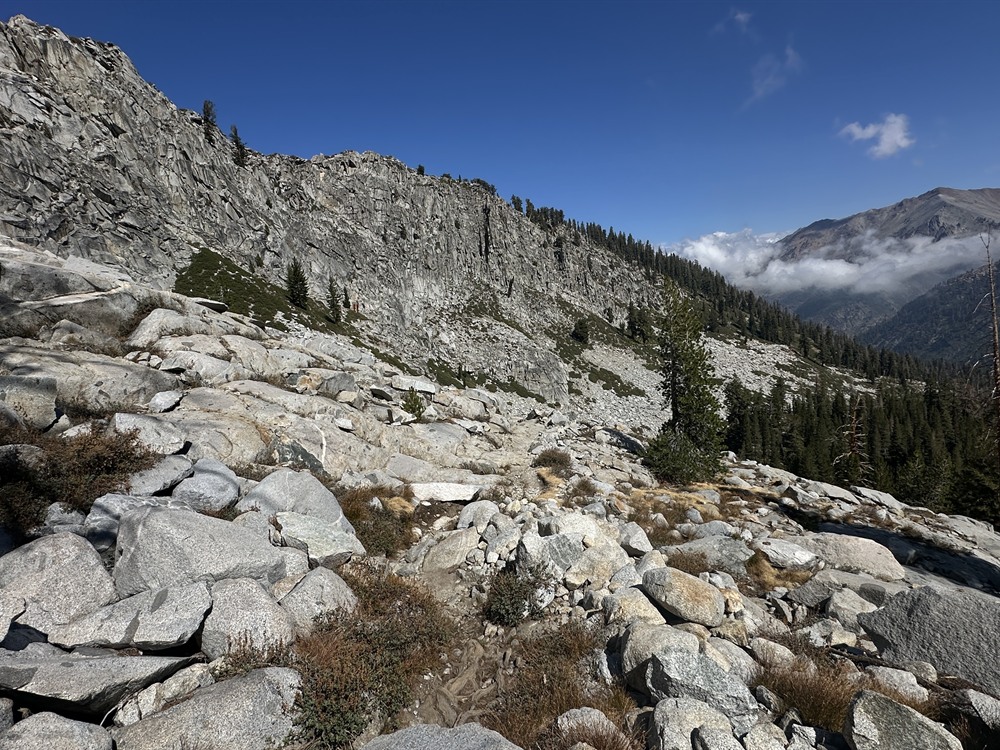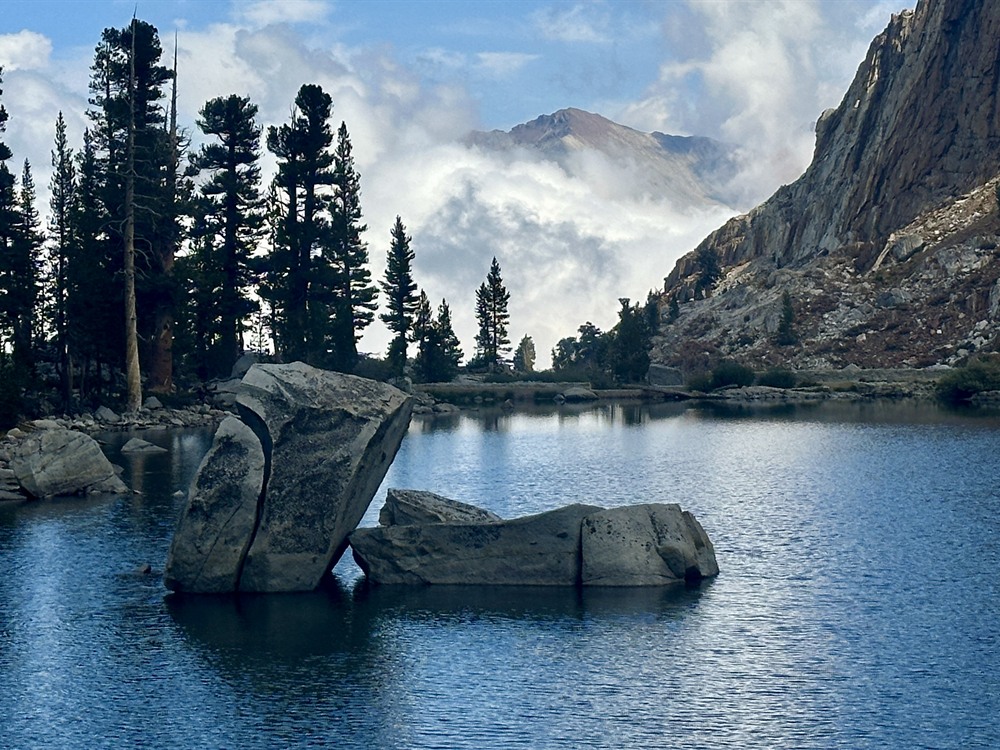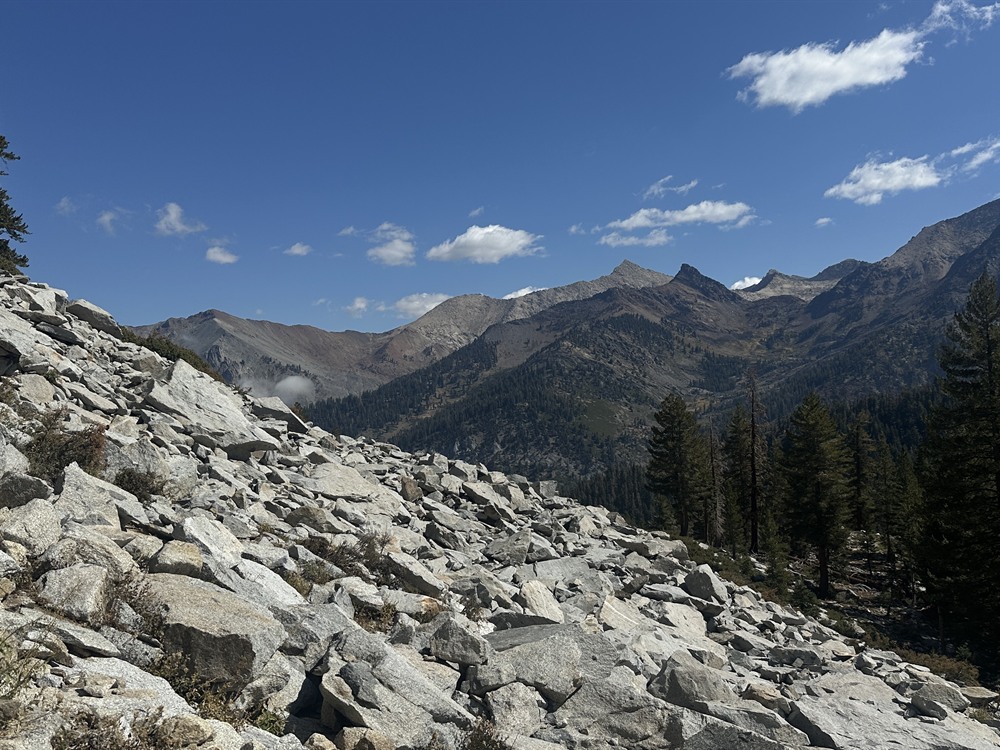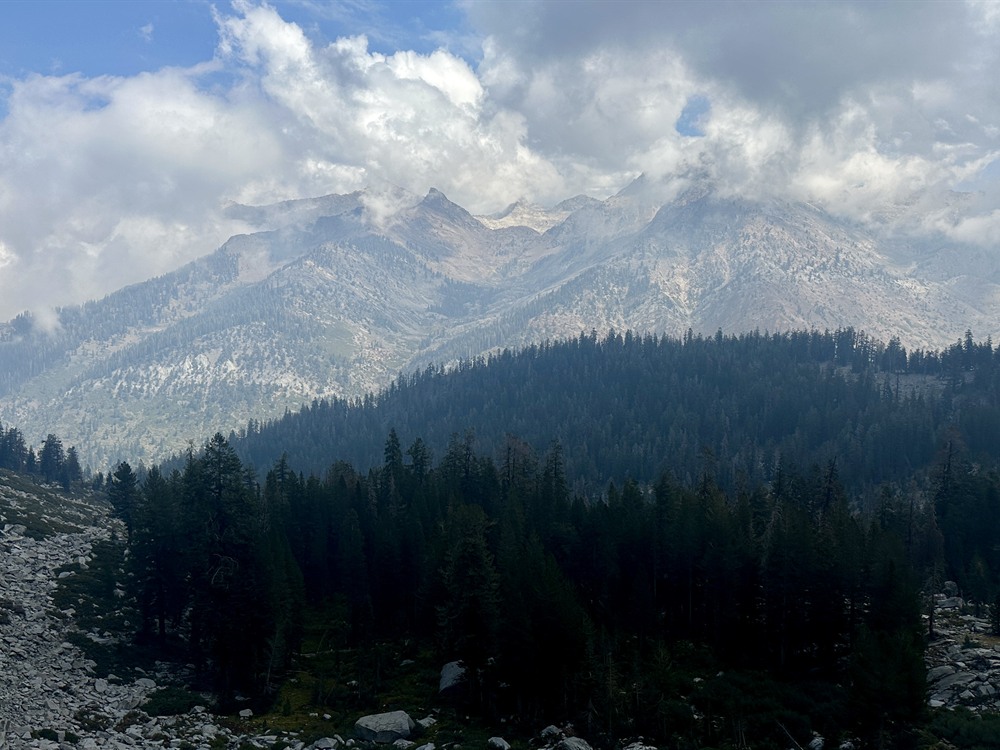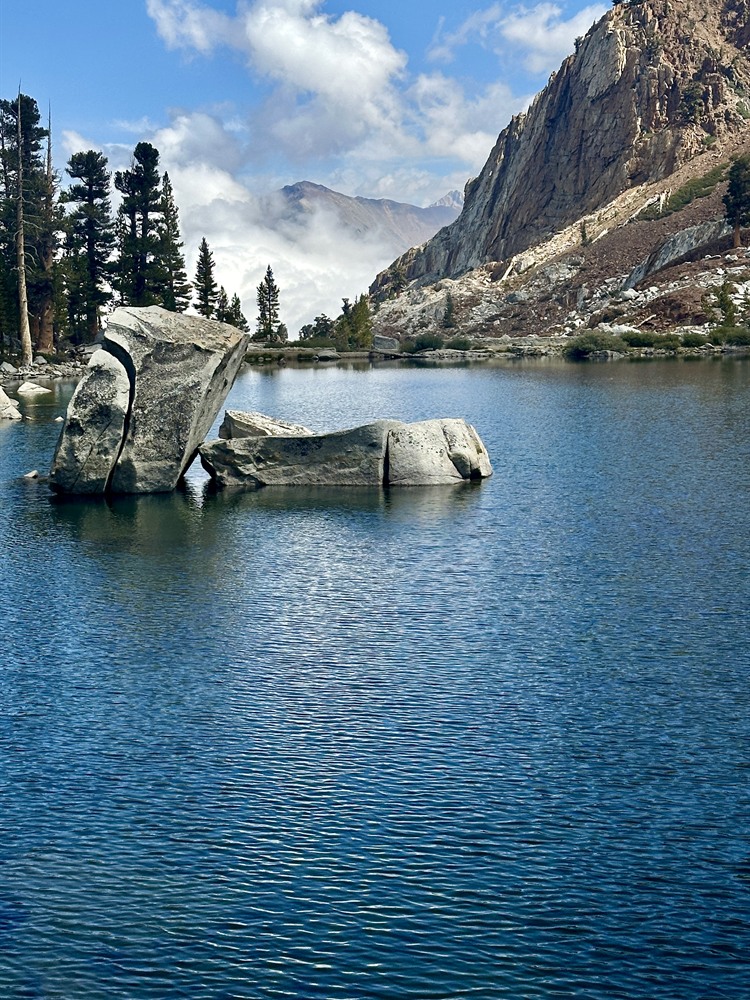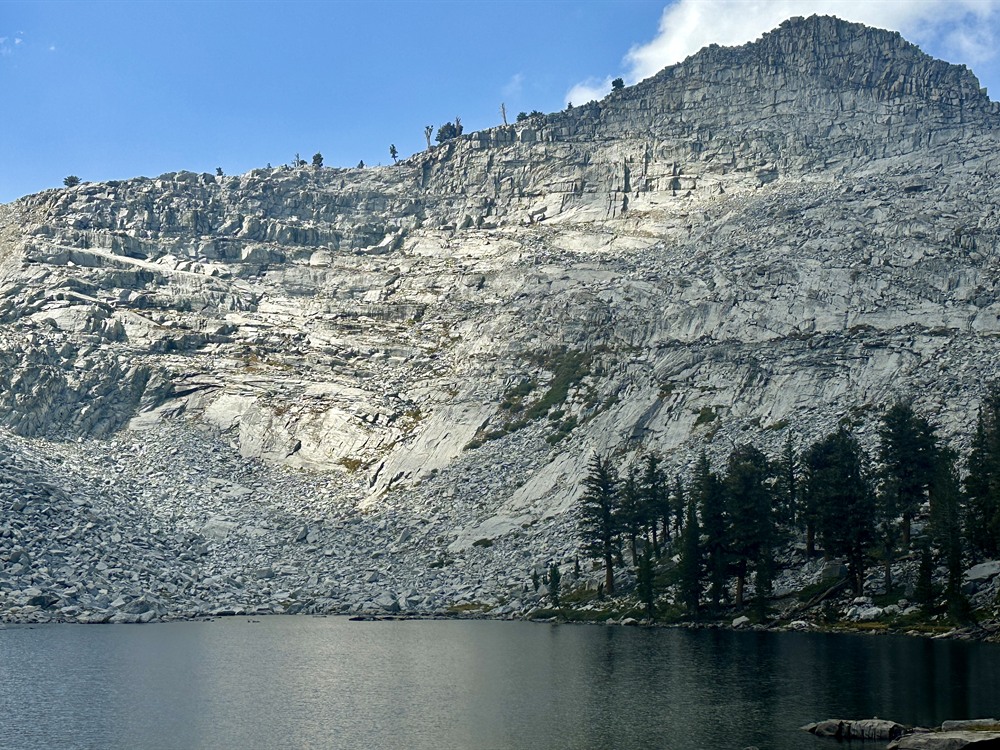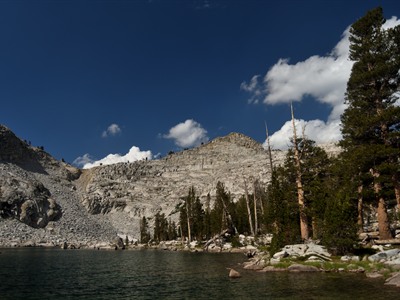
Alpine lake near Mineral King in Sequoia National Park, that can be reached by a three-and-a-half mile hike from Mineral King Valley.
General Information
- Length:
- 6.8 miles roundtrip
- Elevation Gain:
- 2,200 feet
- Difficulty:
- Strenuous
- Pet Policy:
- Pets not allowed on trails
- Seasons:
- Spring, summer, fall
- Trailhead:
- Spur off Wolverton Road
- Location:
- Eagle Lake Trail, Sequoia National Park, CA
- Website:
- nps.gov/seki/planyourvisit/mineral-king.htm
How to Get There
Overview
Eagle Lake is a beautiful alpine lake set in a granite basin above the Mineral King valley in Sequoia National Park, surrounded by rugged peaks. The trail passes the Eagle Sinkholes, where Eagle Creek disappears into the ground, and climbs through meadows and talus to the lake. Hikers come for the lake, the views, and the high-country scenery of Mineral King. No permit is required for a day hike.
Getting to the Trailhead
Mineral King is a remote, high valley in the southern part of Sequoia National Park, reached by Mineral King Road, which leaves CA-198 just east of Three Rivers and climbs about 25 miles to the valley. The road is narrow, steep, winding, and partly unpaved, takes about 1.5 hours to drive, and is not suitable for trailers or RVs. It is open seasonally, typically from late May through October. Marmots in Mineral King are known to chew on radiator hoses and wiring in early summer, so many visitors wrap the underside of their vehicles with tarps. The hike begins at the Eagle/Mosquito Trailhead near the end of Mineral King Road. Parking is limited.
Trail Description
From the trailhead, the trail climbs steadily along Eagle Creek, passing a junction with the trail to Mosquito Lakes, then continues past the Eagle Sinkholes, where the creek vanishes underground. The trail then climbs more steeply over rocky terrain and talus to Eagle Lake, about 3.4 miles from the trailhead. Hikers return the same way, for a total of about 6.8 miles round trip.
Trail Conditions and Difficulty
The hike is strenuous, with about 2,200 feet of elevation gain and rocky, loose sections near the lake. No technical scrambling is required. At high elevations, the thin air makes climbing harder than many visitors expect, and afternoon thunderstorms are common in summer, so start early. Snow can linger on the upper trail into early summer.
This article uses material from the Wikipedia articles "Eagle Lake (Tulare County)", which are released under the Creative Commons Attribution-Share-Alike License 3.0