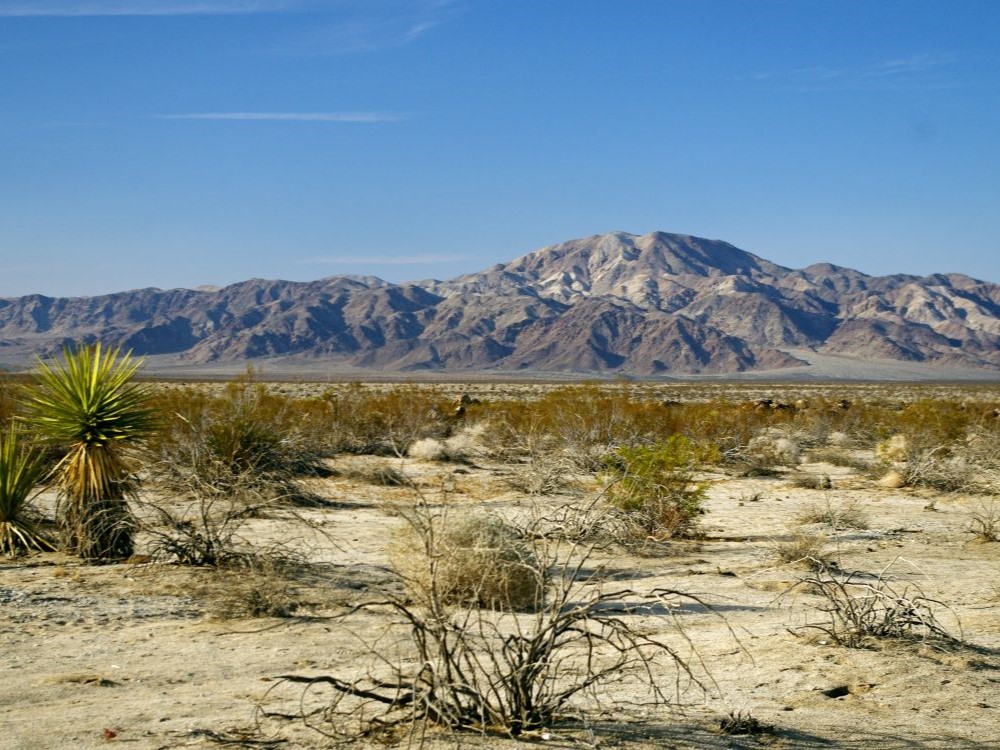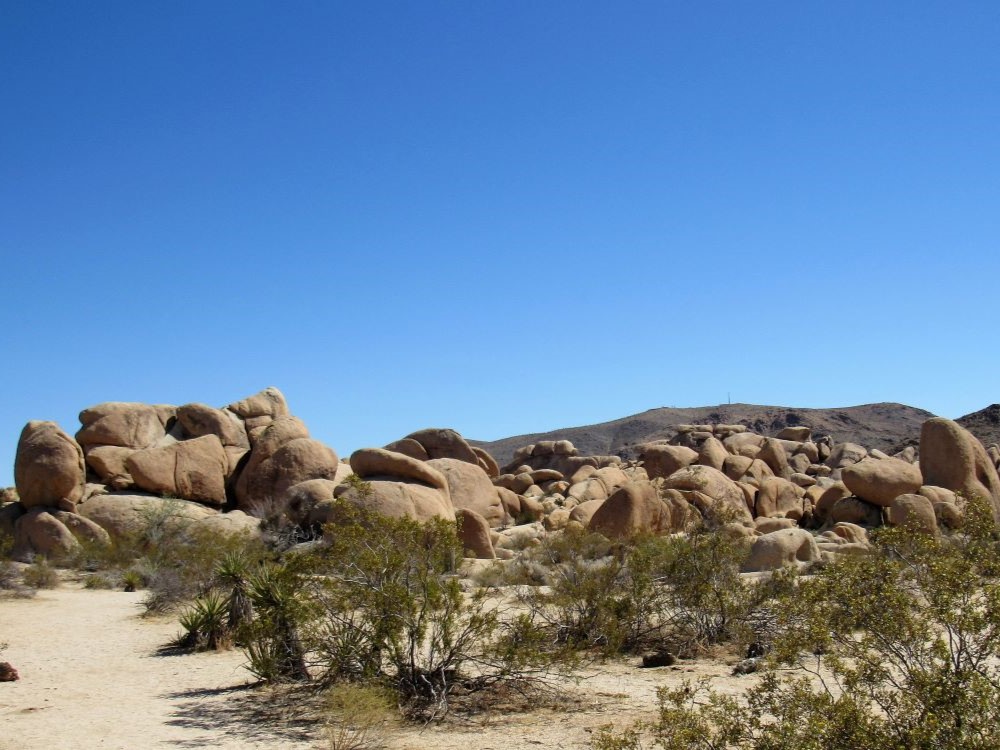

Expansive desert basin showcasing the transition between Mojave and Colorado ecosystems, featuring rare wildlife, scenic drives, and exceptional stargazing conditions.
General Information
- Hours:
-
Open 24 hours a day, 365 days a year
Best explored during daylight for safety and visibility - Fees:
-
Private vehicle: $30 (valid for 7 days)
Motorcycle: $25
Individual (on foot or bicycle): $15
Annual Joshua Tree Pass: $55
America the Beautiful Pass: $80 - Pet Policy:
-
Pets must remain within 100 feet of roads, picnic areas, and campgrounds
Not permitted on trails or in the backcountry - Closest cities with hotels:
-
Twentynine Palms (20 mi)
Joshua Tree (30 mi) - Seasons:
- Spring and Fall
- Trailhead:
- nps.gov
How to Get There
From Joshua Tree National Park Visitor Center (30 mi): Drive east on CA-62, turn right onto Park Blvd, continue 24 miles to Pinto Basin Road, then drive 6 miles south into the heart of the basin.
Overview
The Pinto Basin is a vast and remote expanse in the southern region of Joshua Tree National Park, where the Mojave and Colorado Deserts converge. Once home to ancient lakes and lush grasslands, the basin now supports a fragile desert ecosystem teeming with life. Visitors can spot rare species such as the Mojave fringe-toed lizard, sidewinder rattlesnake, and desert tortoise. The area is accessible via Pinto Basin Road, a scenic drive that passes through washes, cactus gardens, and geological formations. Interpretive pullouts along the road provide educational insights into the basin’s prehistoric past and ecological significance.
Ideal for spring and fall visits, the Pinto Basin offers mild temperatures and stunning wildflower displays after seasonal rains. Stargazers flock to the basin for its exceptionally dark skies, making it one of the best places in the park for night photography and celestial observation. While there are no formal hiking trails, roadside stops like the Cholla Cactus Garden and Ocotillo Patch offer short walks and photo opportunities. With its quiet beauty and rich biodiversity, the Pinto Basin is a must-see for those seeking solitude and a deeper connection to the desert landscape.
History
In the 1930s, archaeologists Elizabeth and William Campbell found stone tools along the shores of an ancient lake in the Pinto Basin, evidence of people who lived here thousands of years ago when the climate was wetter. The distinctive projectile points became known as Pinto points, and the people who made them as the Pinto Culture. As the climate dried, the lakes and grasslands disappeared, leaving the open desert seen today.
Things to Do
Drive Pinto Basin Road
The paved road crosses the basin, linking the Cholla Cactus Garden and the Ocotillo Patch with the Cottonwood area near the south entrance.
Hike the Pinto Basin Dunes
An easy walk from Turkey Flats leads to low sand dunes in the middle of the basin.
Look for Desert Wildlife
The basin is home to desert tortoises, Mojave fringe-toed lizards and sidewinders; drive slowly and watch for animals on the road.
Stargaze
Far from the lights of nearby towns, the basin has some of the darkest skies in the park.
This article uses material from the Wikipedia articles and official tourism pages for the Pinto Basin, which are released under the Creative Commons Attribution-Share-Alike License 3.0.