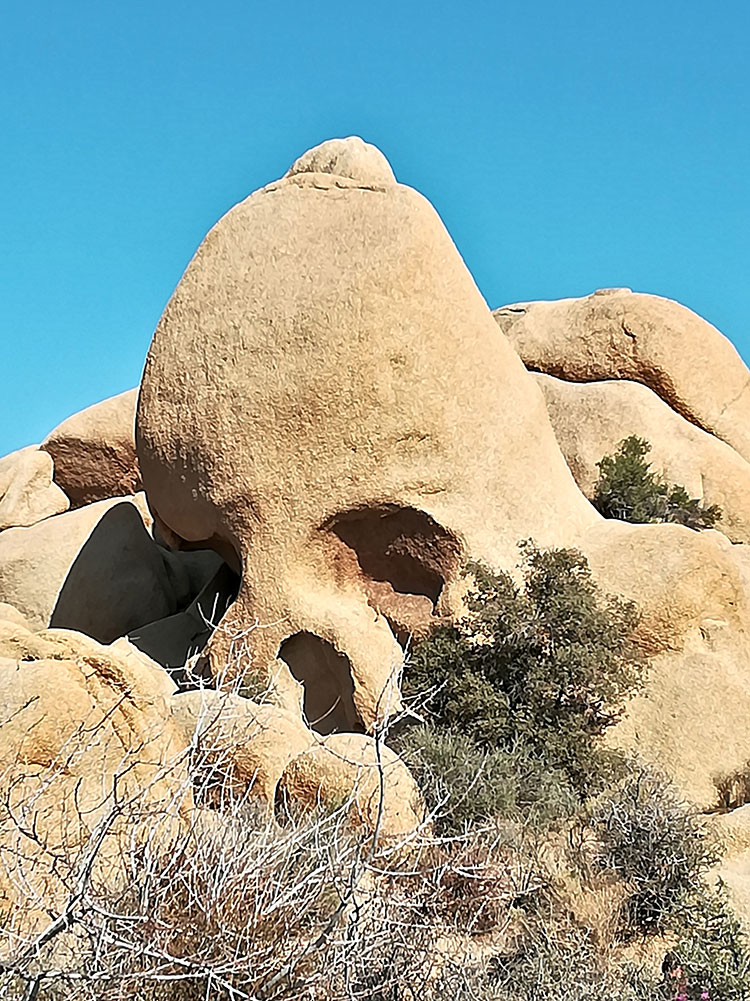
Favorite stop for park visitors featuring two hollowed-out eye sockets formed and the rock began to resemble a skull.
General Information
- Length:
- 1.7 miles loop
- Elevation Gain:
- 160 feet
- Difficulty:
- Easy
- Pet Policy:
- Pets not allowed on trails
- Seasons:
- All year, but very hot in summer
- Trailhead:
- Jumbo Rocks Campground
- Location:
- Jumbo Rocks / Skull Rock, Joshua Tree National Park, CA
- Website:
- nps.gov/places/skull-rock.htm
How to Get There
Overview
Skull Rock is one of the most famous landmarks in Joshua Tree National Park, a granite boulder with two eye-like hollows that make it resemble a human skull. The hollows formed as rain drops accumulated in small depressions and gradually eroded the granite. The Skull Rock Nature Trail connects Skull Rock with Jumbo Rocks Campground, winding through some of the park's most dramatic boulder formations.
Getting to the Trailhead
Joshua Tree National Park has three main entrances: the West Entrance near the town of Joshua Tree and the North Entrance in Twentynine Palms, both off CA-62, and the Cottonwood (South) Entrance off I-10 east of Indio. Park Boulevard and the main park roads are paved and accessible to all vehicles, and an entrance fee is required. Trailhead parking fills on weekends and holidays from fall through spring, the park's busy season. There is no water at most trailheads and cell service is limited, so bring everything you need. Skull Rock is along Park Boulevard, the park's main east-west road, with a parking area just across the road from the rock; the trail can also be started inside Jumbo Rocks Campground.
Trail Description
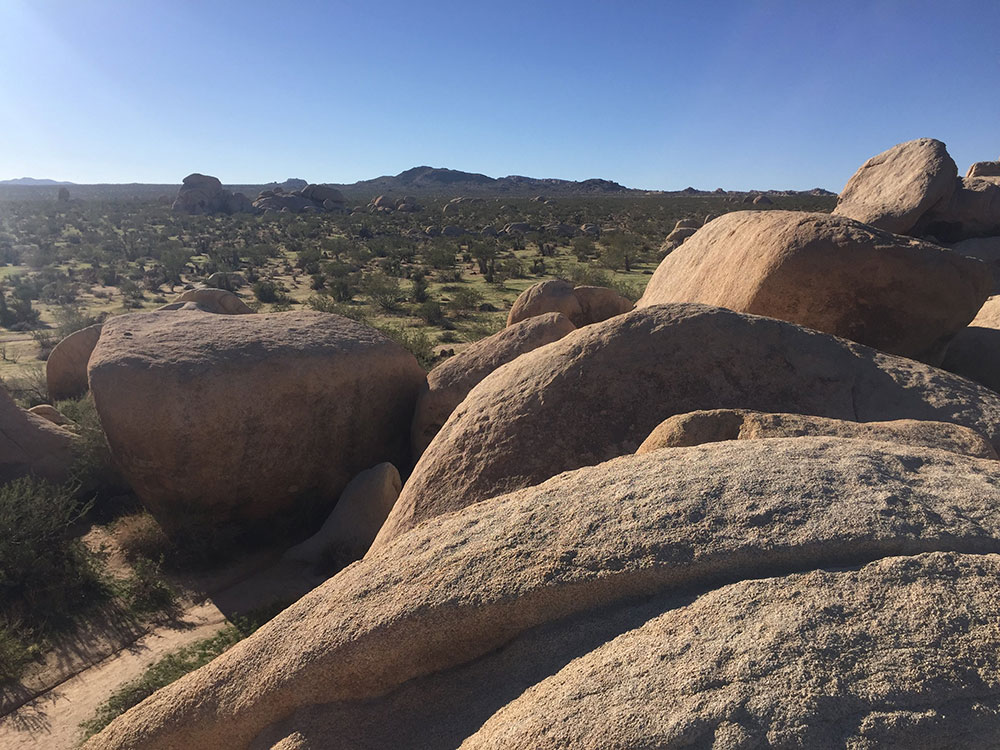
From the parking area across from Skull Rock, or from the campground across from the amphitheater, the nature trail winds through boulder piles and desert vegetation, with interpretive signs describing the plants, animals, and geology of the area. The full loop is about 1.7 miles. The trail is easy to follow and mostly flat, with a few short sections over rocks. There is little shade, so carry water and avoid the heat of summer afternoons, when temperatures regularly exceed 100 degrees.
This article uses material from nps.gov"Joshua Tree". Additional trail information is from the National Park Service page "Hiking - Joshua Tree National Park".