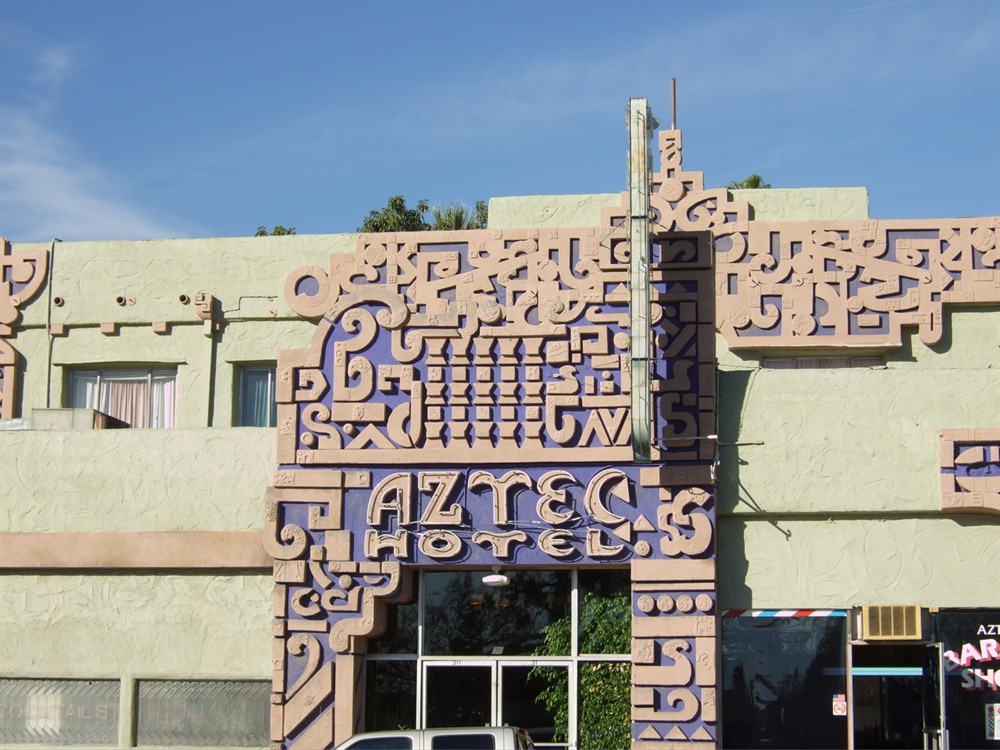

Historic Mayan Revival landmark featuring elaborate Mesoamerican-inspired architecture, decorative glyphs, and one of the nation's best-preserved examples of the 1920s fascination with ancient civilizations.
How to Get There
From Pasadena (8 mi): Take I-210 East toward Monrovia, exit at Myrtle Avenue, continue north briefly, then travel east on Foothill Boulevard to reach the historic hotel at the corner of Foothill Boulevard and Magnolia Avenue.
Overview
The Aztec Hotel in Monrovia is one of the most distinctive landmarks along historic Route 66, opened in 1925 and designed by Robert Stacy-Judd in a bold Mayan Revival style, with stepped towers, sculpted glyphs and geometric ornament. It helped spark a 1920s fascination with Mayan architecture and survives as a rare, exotic stop in the San Gabriel Valley.
This article uses material from the Wikipedia articles, National Park Service resources, and official Route 66 preservation materials for the Aztec Hotel, which are released under the Creative Commons Attribution-ShareAlike License 3.0.