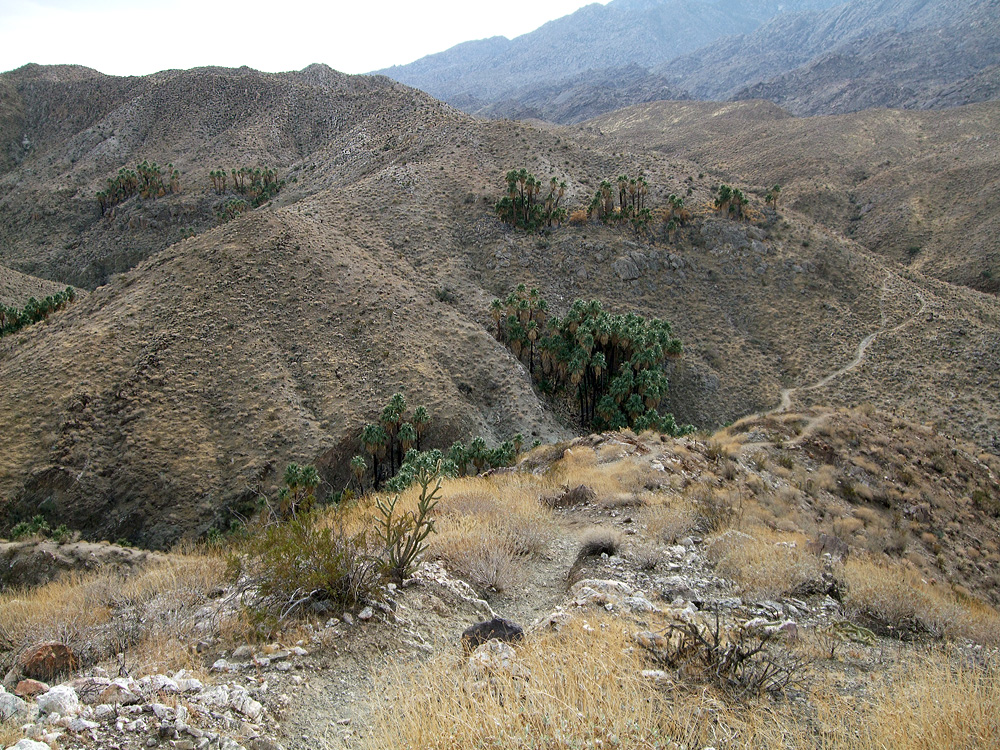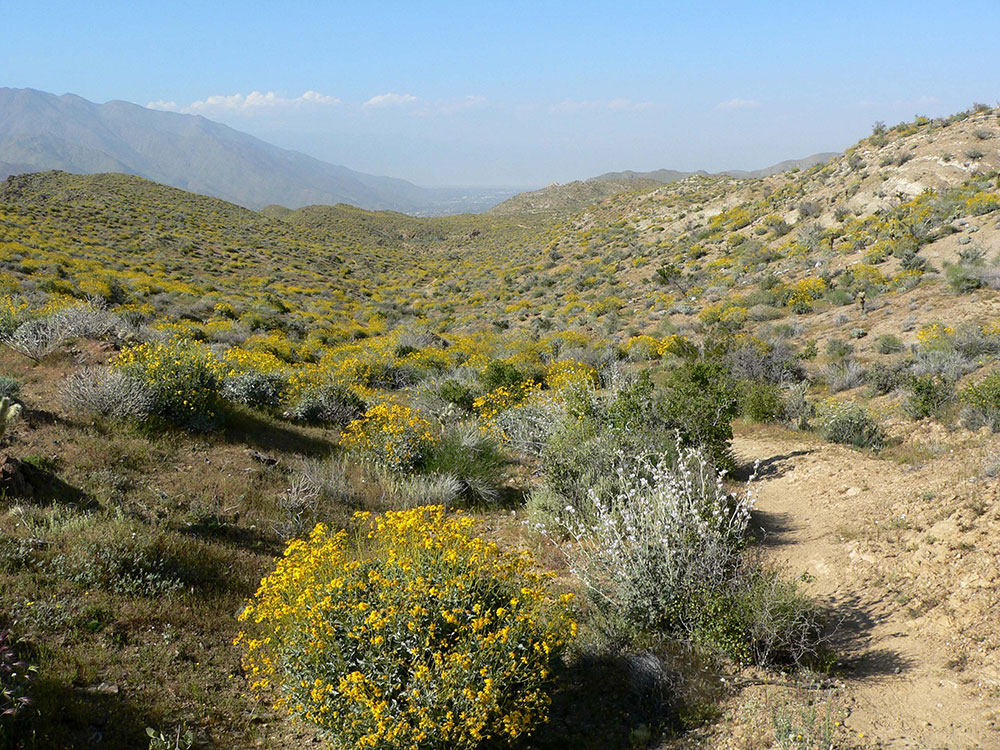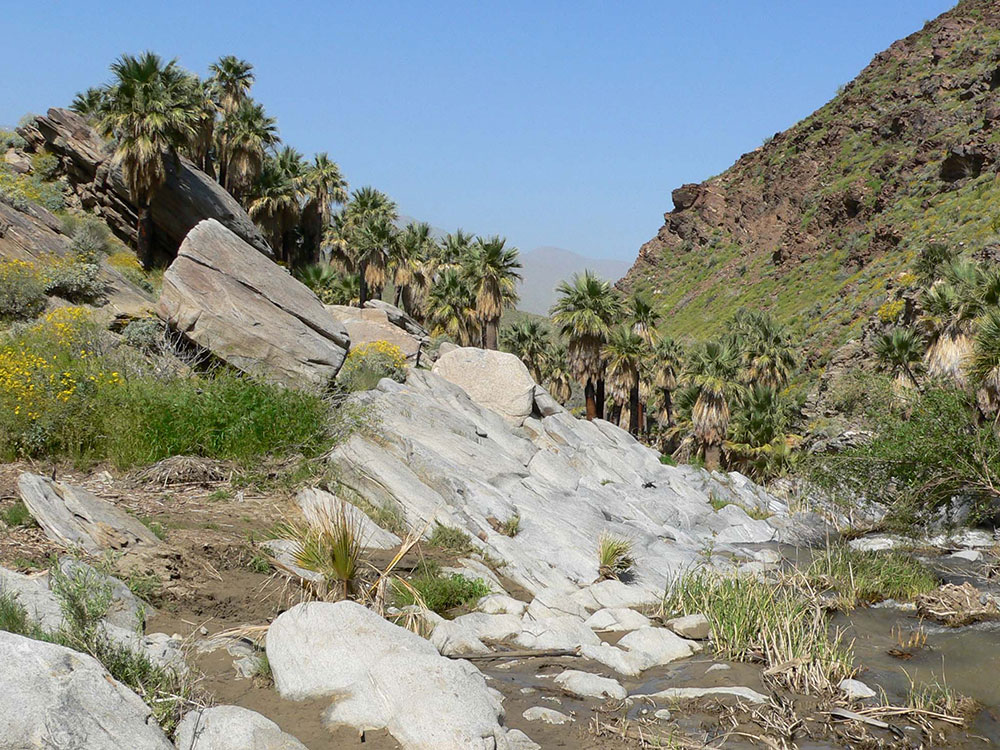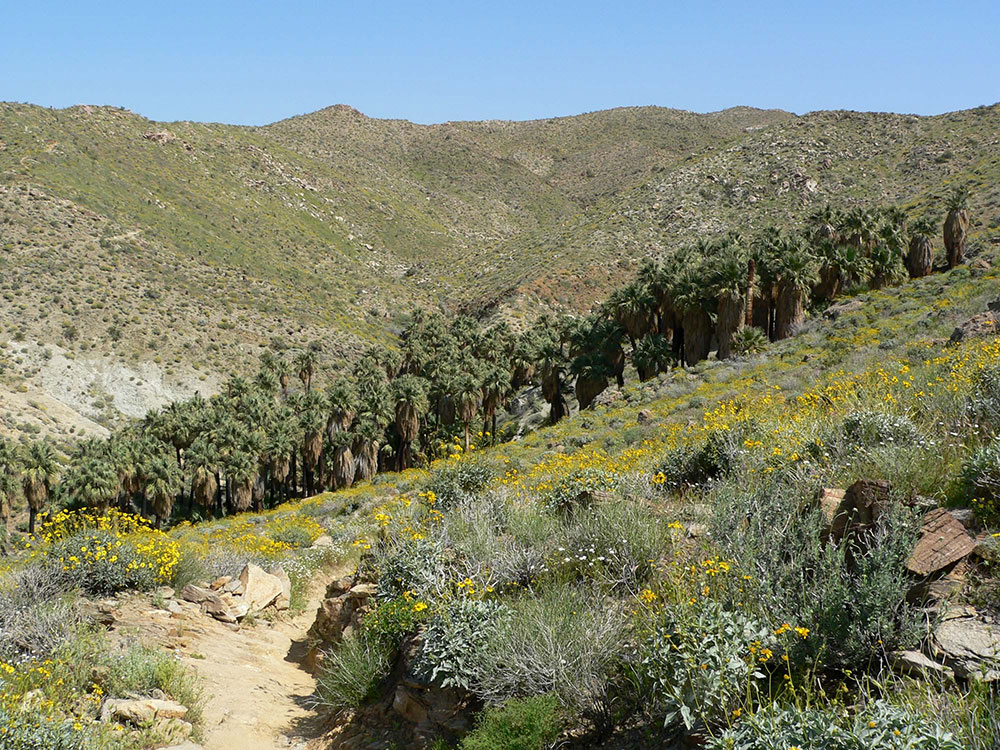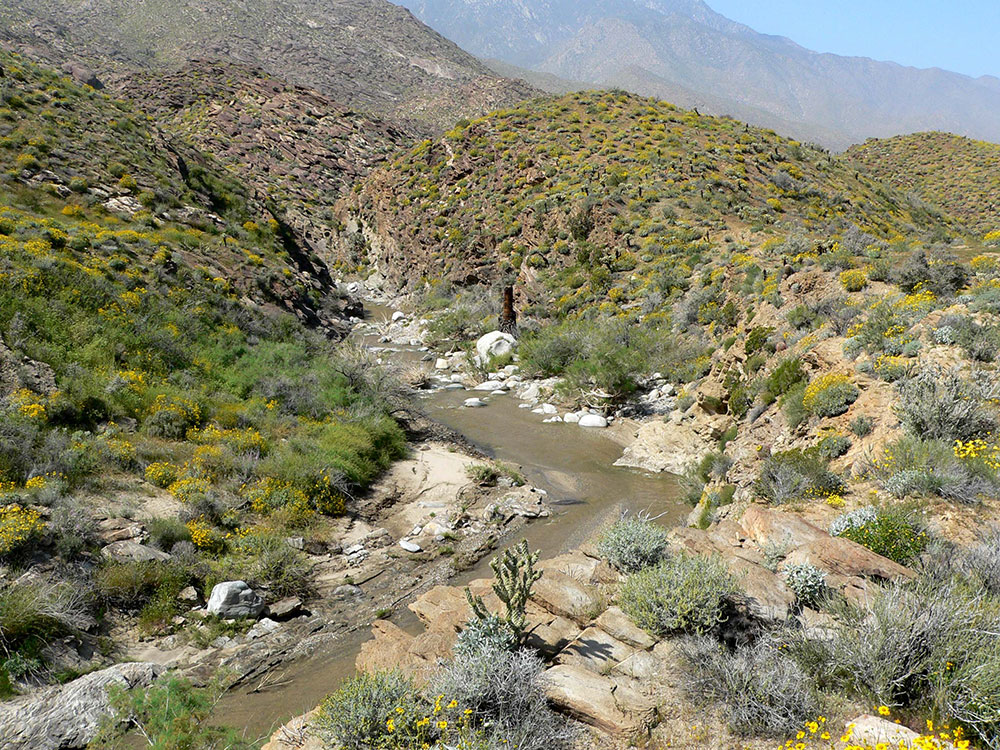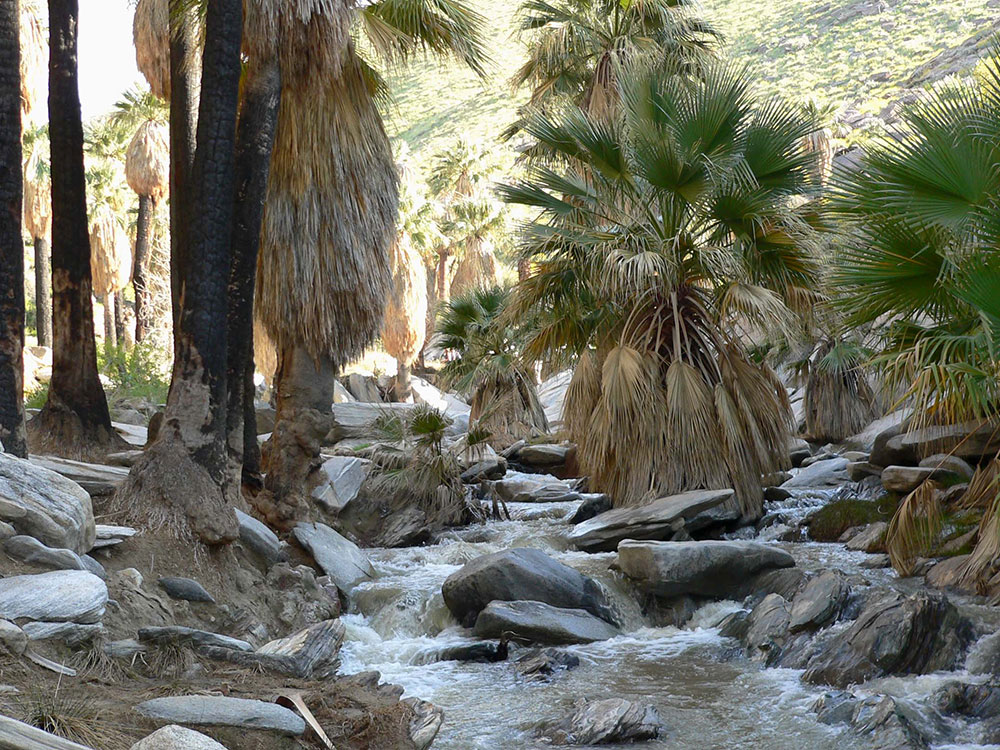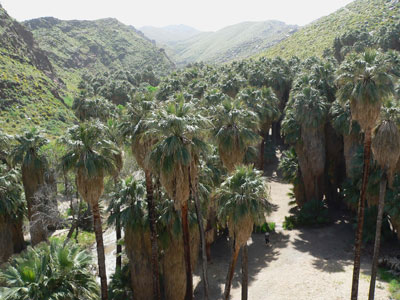

Shaded canyon corridor lined with native fan palms, seasonal streams, and desert wildlife, offering scenic trails through a unique desert oasis ecosystem.
General Information
- Hours:
-
Oct. 1 to July 4: Open aily 8am to 5pm
July 5 to Sept. 30: 8am to 5pm
(open only Friday, Saturday, Sunday) - Fees:
-
Adults: $12.00
Seniors 62+: $7.00
Children 6 to 12: $6.00
Purchase your day-hike tickets at the trail head at the Indian Canyons Toll Gate, 38520 S. Palm Canyon Dr., Palm Springs - Length:
- 2 miles roundtrip
- Elevation Gain:
- 209 feet
- Difficulty:
- Easy
- Pet Policy:
- No Pets Allowed
- Closest cities with hotels:
- Palm Springs
- Seasons:
- All year; the mountains provide a cool refuge during the long hot summers
- Location:
- Palm Canyon
- Website:
- indian-canyons.com/
How to Get There
Head east on E Alejo Rd toward N Calle Encilia. Turn right onto N Calle El Segundo. Turn right onto Ramon Rd. Turn left onto S Indian Canyon Dr. Continue onto S Palm Canyon Dr.
Overview
Palm Canyon, in the Indian Canyons south of Palm Springs, is a lush desert oasis that stretches for more than 15 miles and holds the largest natural grove of native California fan palms in the world. The canyon is on the ancestral lands of the Agua Caliente Band of Cahuilla Indians, who manage the Indian Canyons, and interpretive signs along the trail describe the traditional uses of native plants and the canyon's history. Visitors come for the towering palms, the stream, and the dramatic contrast with the surrounding desert.
Getting to the Trailhead
From downtown Palm Springs, drive south on South Palm Canyon Drive to the Indian Canyons entrance gate, where an entrance fee is charged, then continue to the Palm Canyon parking area and Trading Post. The roads are paved and accessible to all vehicles. The Indian Canyons have seasonal hours and may have reduced days in summer, so check the schedule before you go.
Trail Description
From the Trading Post, the trail descends into the canyon and follows the stream through the palm grove, with interpretive signs along the way. Hikers can follow the trail through the palms and return on a loop or the same way, for a total of about 2 miles round trip, or continue farther up the canyon on longer trails. There is little shade outside the palms, so carry water and avoid summer afternoons, when temperatures often exceed 100 degrees.
History
The Agua Caliente Band of Cahuilla Indians has lived in and around the Indian Canyons for thousands of years, using the palms, water and native plants for food, shelter and medicine. Remains of their villages, rock art and irrigation systems can still be found in the canyons. The Indian Canyons were listed on the National Register of Historic Places in 1972, and the tribe manages them for visitors today.
Things to Do
Hike Palm Canyon
The trail descends into the canyon and follows the stream through the largest native fan palm oasis in the world.
Visit the Trading Post
The Trading Post at the trailhead sells maps, Native American crafts and refreshments.
Explore Andreas and Murray Canyons
Nearby Andreas Canyon and Murray Canyon have their own palm groves, streams and rock formations.
Join a Ranger-Led Hike
Tribal rangers lead guided hikes that share the canyons' history and culture.
This article uses material from the Wikipedia articles and official tourism pages for Palm Canyon and Visit California, which are released under the https://creativecommons.org/licenses/by-sa/3.0/.