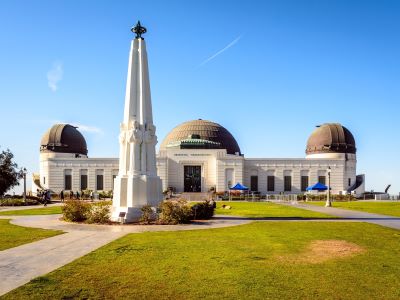

Observatory is a popular tourist attraction with a close view of the Hollywood Sign and an extensive array of space and science-related displays.
General Information
- Hours:
-
Tuesday to Friday: 12pm to 10pm
Saturday and Sunday: 10am to 10pm
- Fees:
-
- No fee for admission to the Observatory building, or telescopes
- Parking near the Observatory is limited and costs $10.00/hour during hours the building is open
- Pet Policy:
- Pets allowed in park but not in observatory
- Closest cities with hotels:
- Hollywood
- Seasons:
- All year
- Location:
- 2800 E Observatory Rd, Los Angeles, CA 90027
- Website:
- griffithobservatory.org
How to Get There
Get on CA-110 N from W 1st St and N Grand Ave. Continue on CA-110 N. Take I-5 N/Golden State Fwy to Los Feliz Blvd. Take exit 141A from I-5 N/Golden State Fwy. Continue on Los Feliz Blvd. Take N Vermont Canyon Rd to W Observatory Rd.
Overview
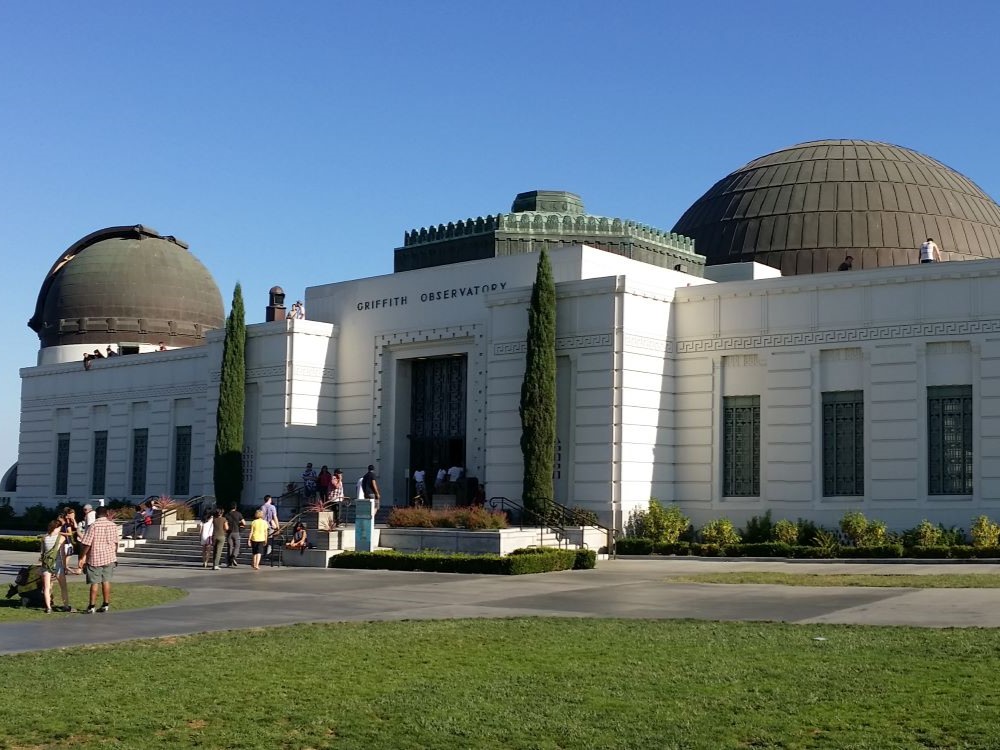
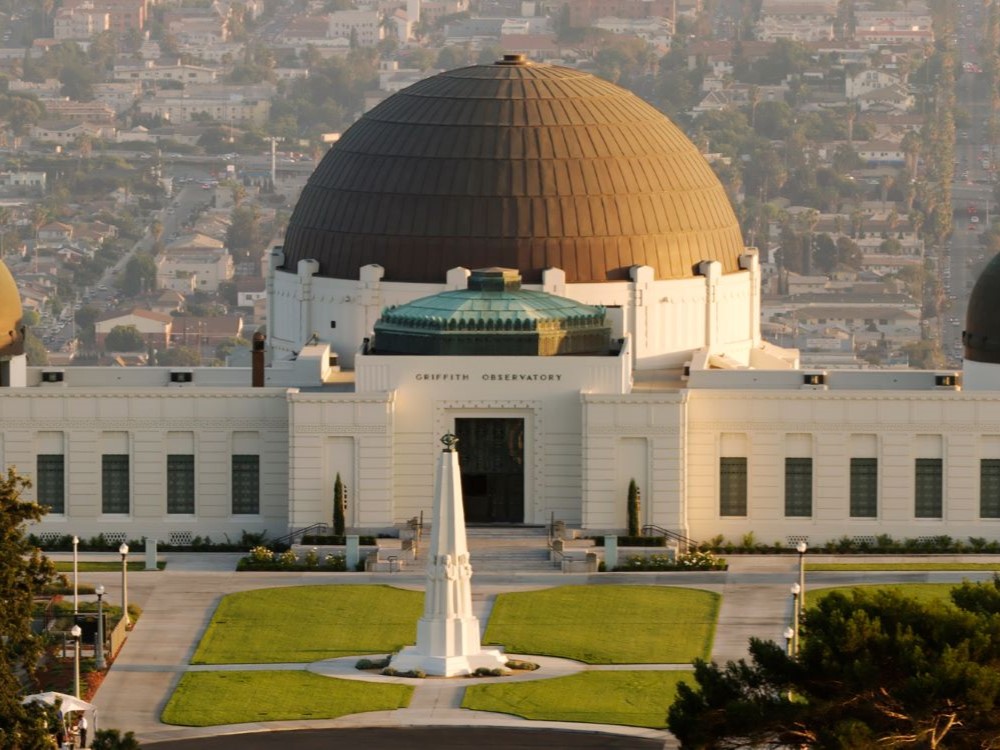
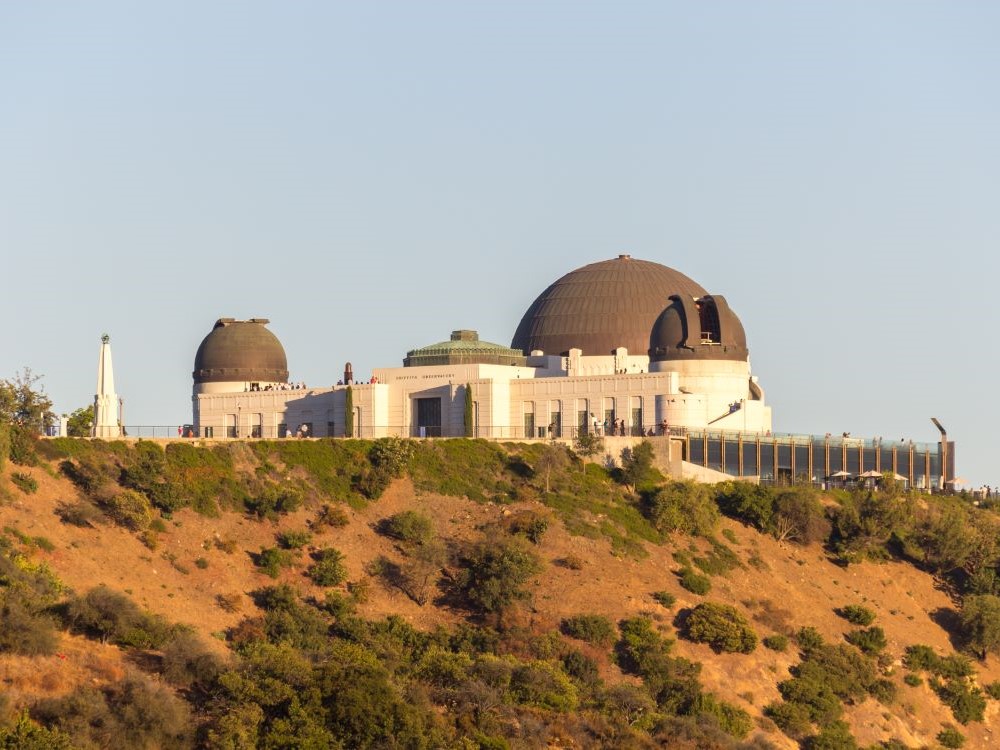
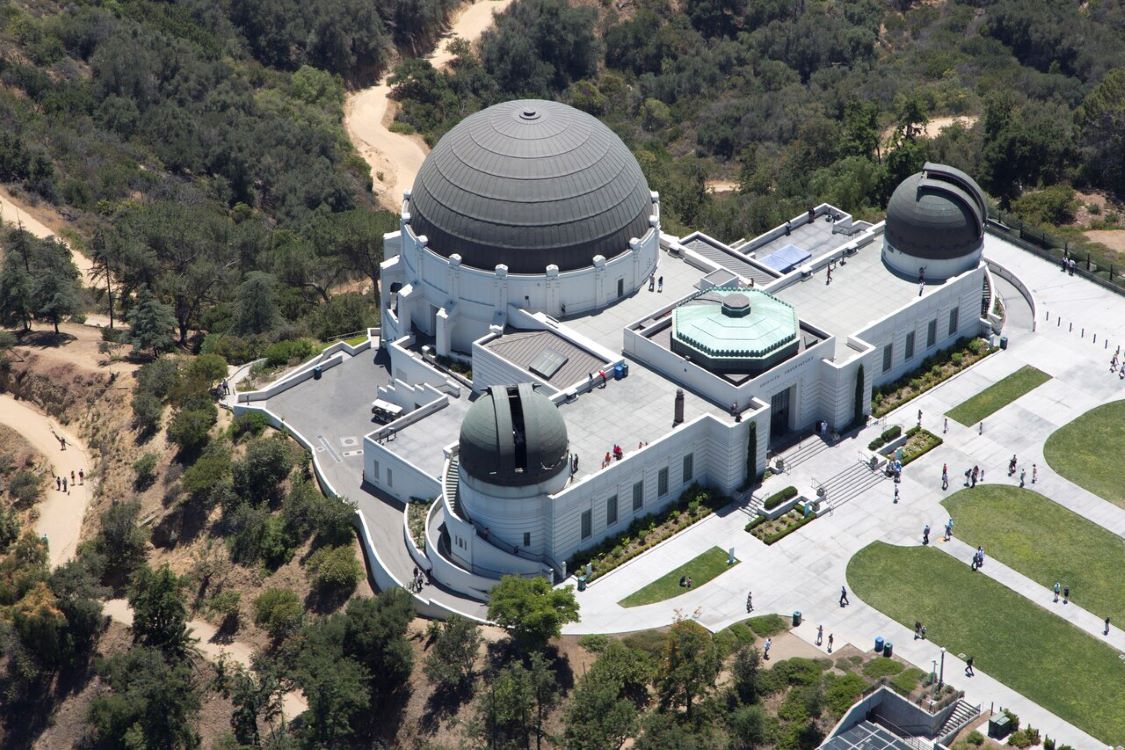
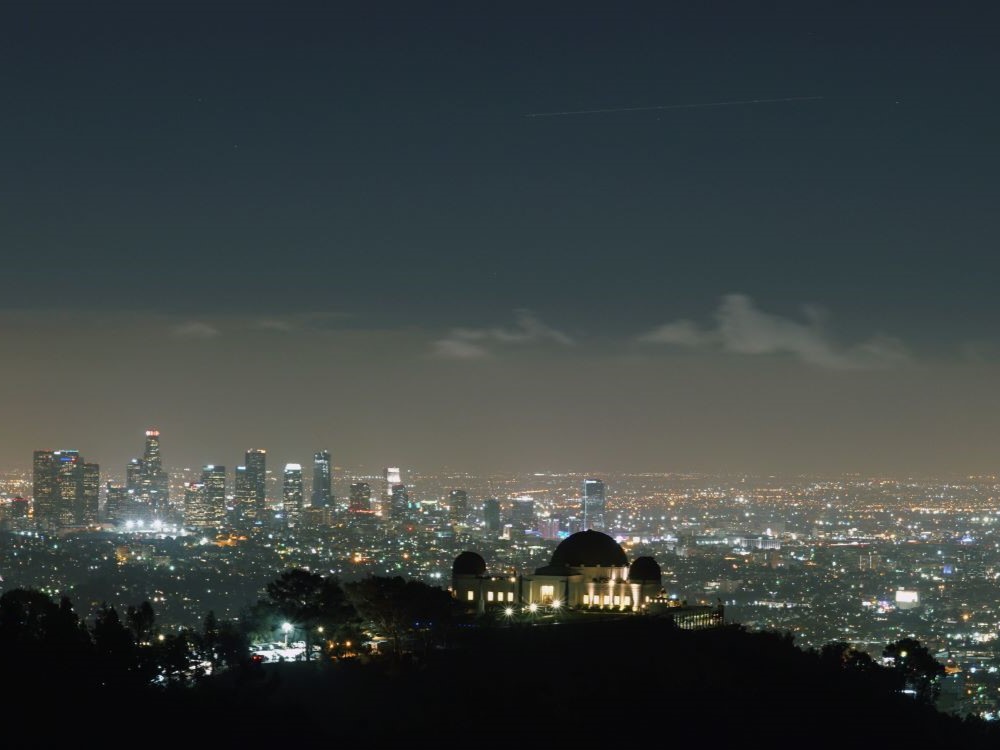
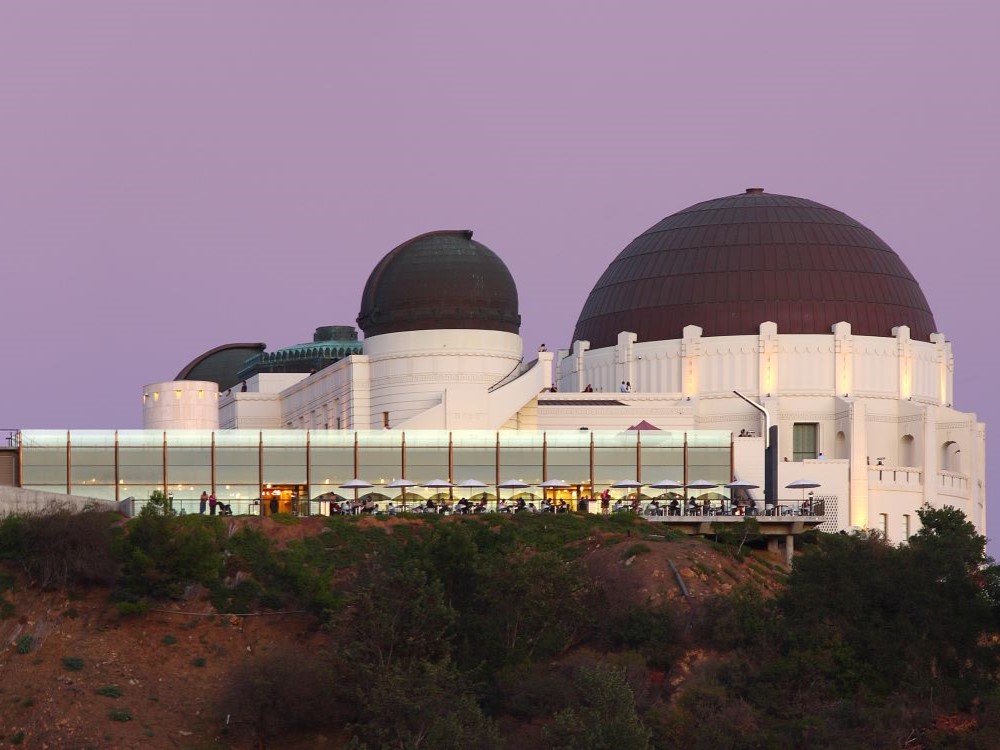
Griffith Observatory is an Art Deco landmark on the slope of Mount Hollywood in Griffith Park, with sweeping views of the Los Angeles Basin, the Hollywood Sign and the Pacific. Free since opening in 1935, it has science exhibits, a Foucault pendulum, the Samuel Oschin Planetarium shows (ticketed) and a 12-inch Zeiss telescope on the roof, open for public viewing at night. Parking is limited, so many visitors use the DASH shuttle from the Vermont/Sunset Metro station or hike up.
History
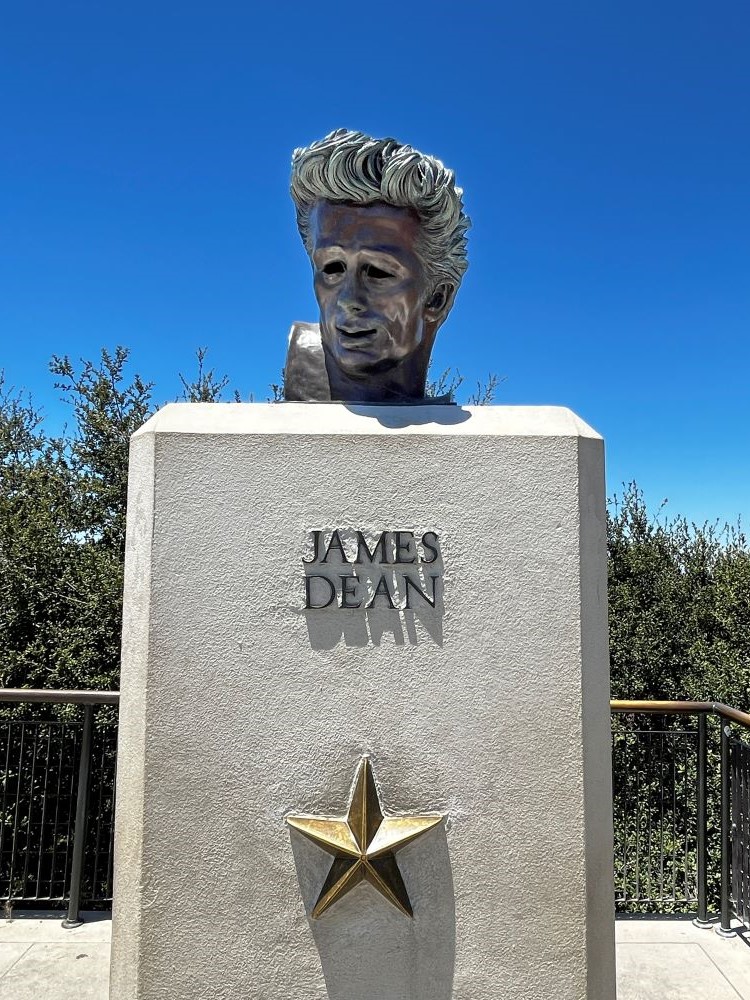
In 1896 mining and real estate developer Griffith J. Griffith gave about 3,000 acres to the City of Los Angeles for what became Griffith Park. After looking through the telescope at Mount Wilson Observatory, he decided that everyone should be able to see the sky, and when he died in 1919 his will left money for a free public observatory. Construction began in 1933 on a design by architects John C. Austin and Frederick M. Ashley, and the Art Deco building opened on May 14, 1935, with the Zeiss telescope and one of the first planetariums in the United States. The Astronomers Monument on the front lawn was built in 1934 as a Depression-era public works project. The observatory reached a wide audience in the 1955 film Rebel Without a Cause, and a bust of James Dean was added to the grounds in 1988. It closed in 2002 for a $93 million renovation and expansion that added new exhibit galleries underground, and it reopened in November 2006 with the newly named Samuel Oschin Planetarium.
Things to Do
Catch a Planetarium Show
The Samuel Oschin Planetarium shows the night sky on a 75-foot dome, with live-narrated shows running throughout the day. Tickets are sold only at the observatory on the day of the show, so buy them early on busy days.
Look Through the Zeiss Telescope
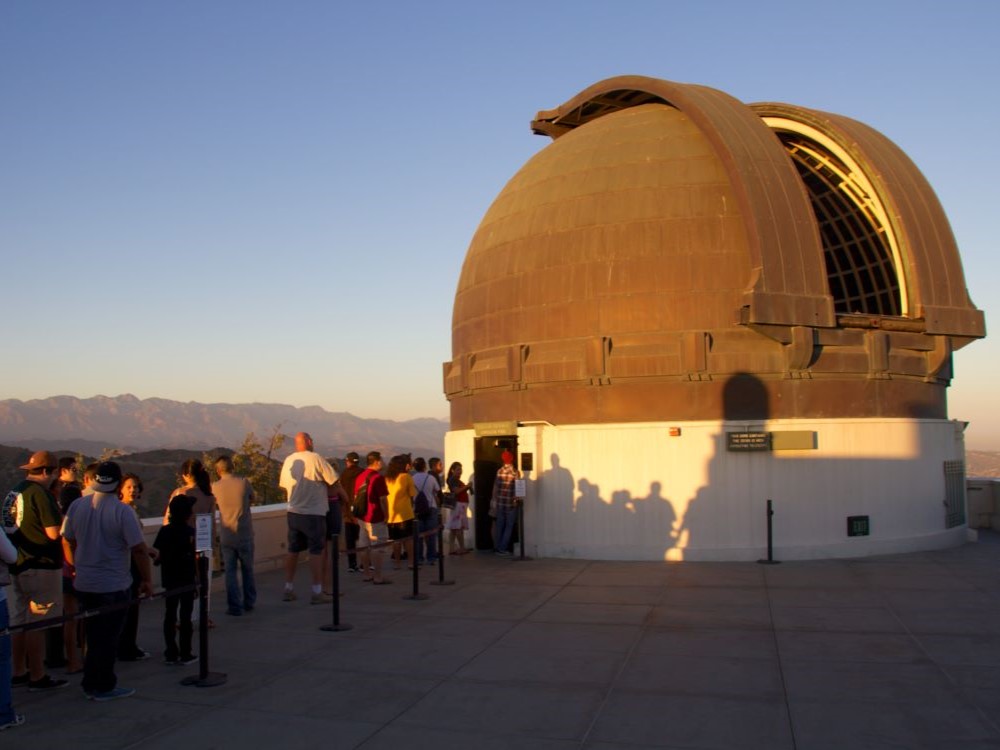
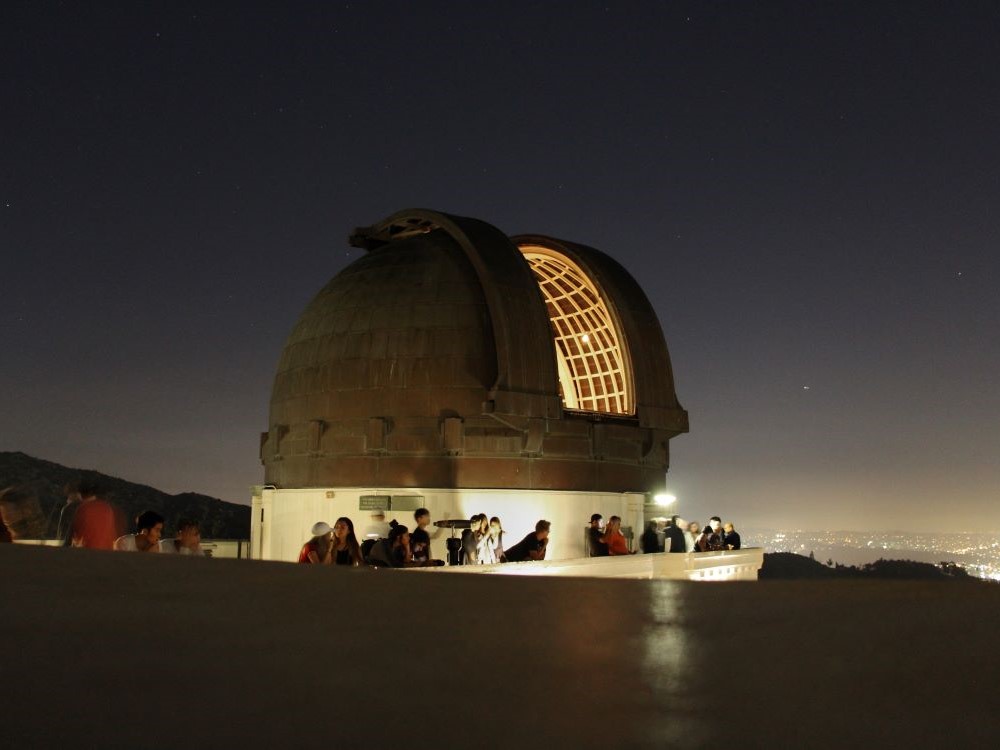
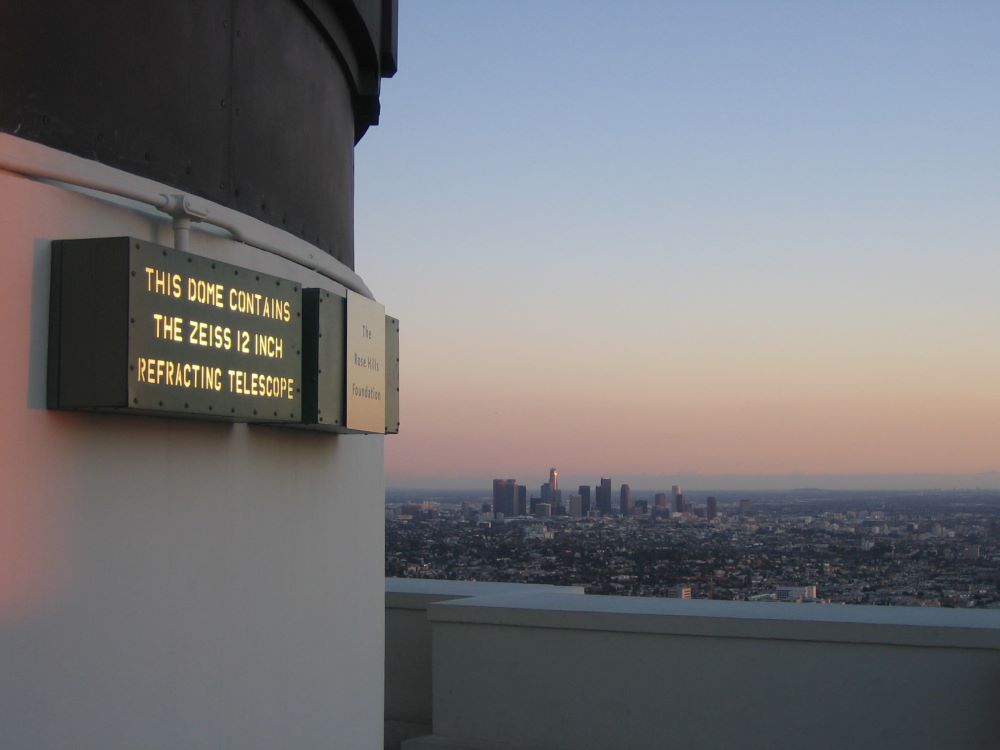
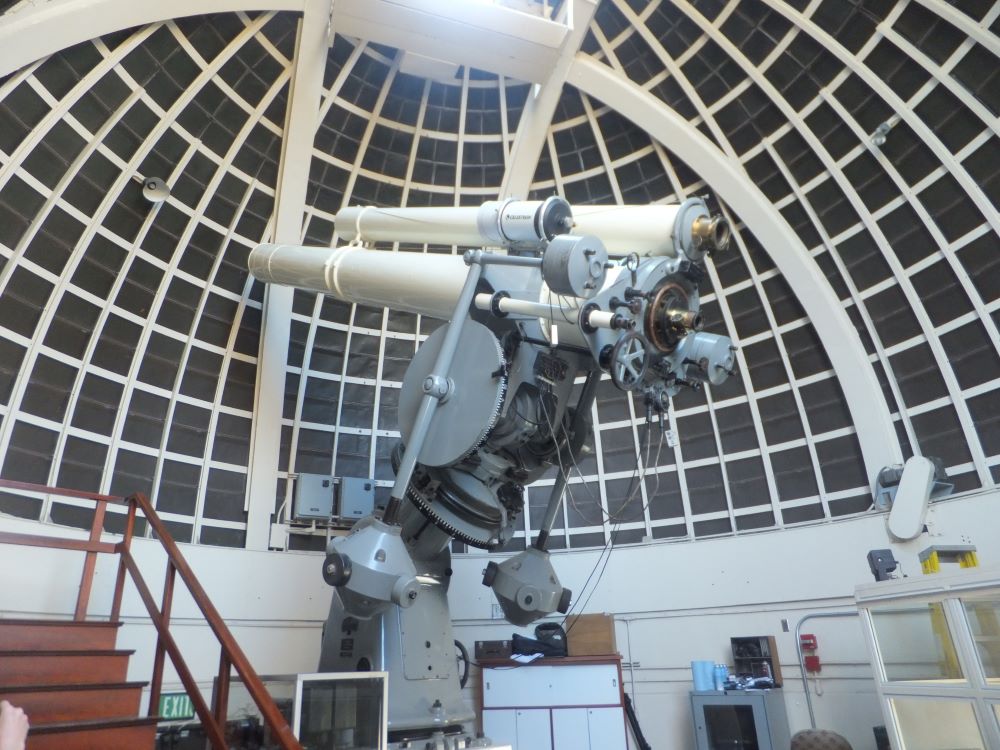
The 12-inch Zeiss refracting telescope in the rooftop dome has been used by more people than any other telescope in the world. It is free to use on clear evenings, and volunteers often set up extra telescopes on the front lawn for views of the Moon, planets and bright stars.
Explore the Exhibits
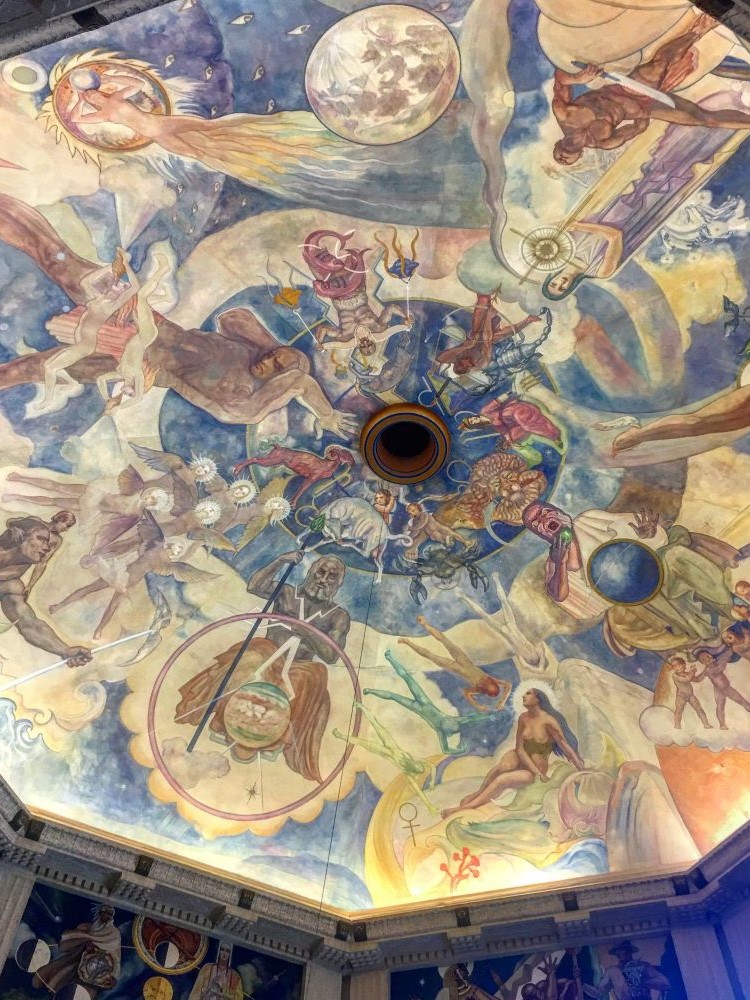
Free exhibits cover the Sun, the Moon, the planets and the history of astronomy. Highlights include the Foucault pendulum showing the Earth's rotation, a working Tesla coil, the Big Picture image of a small patch of sky packed with galaxies, and the Hugo Ballin murals in the central rotunda.
See the Hollywood Sign and City Views
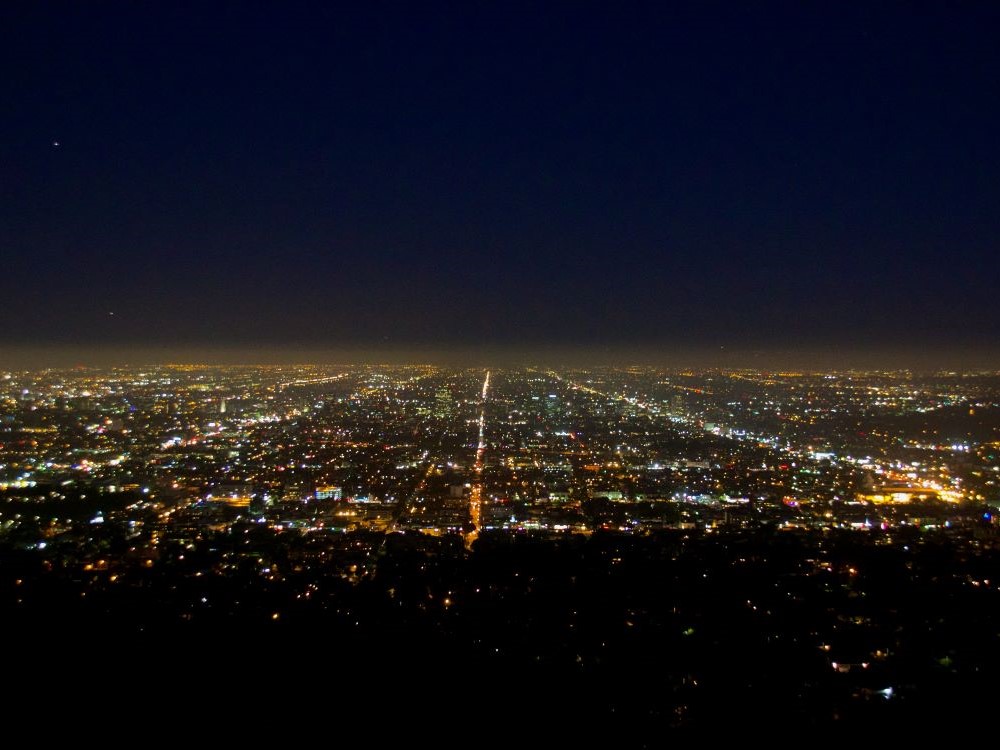
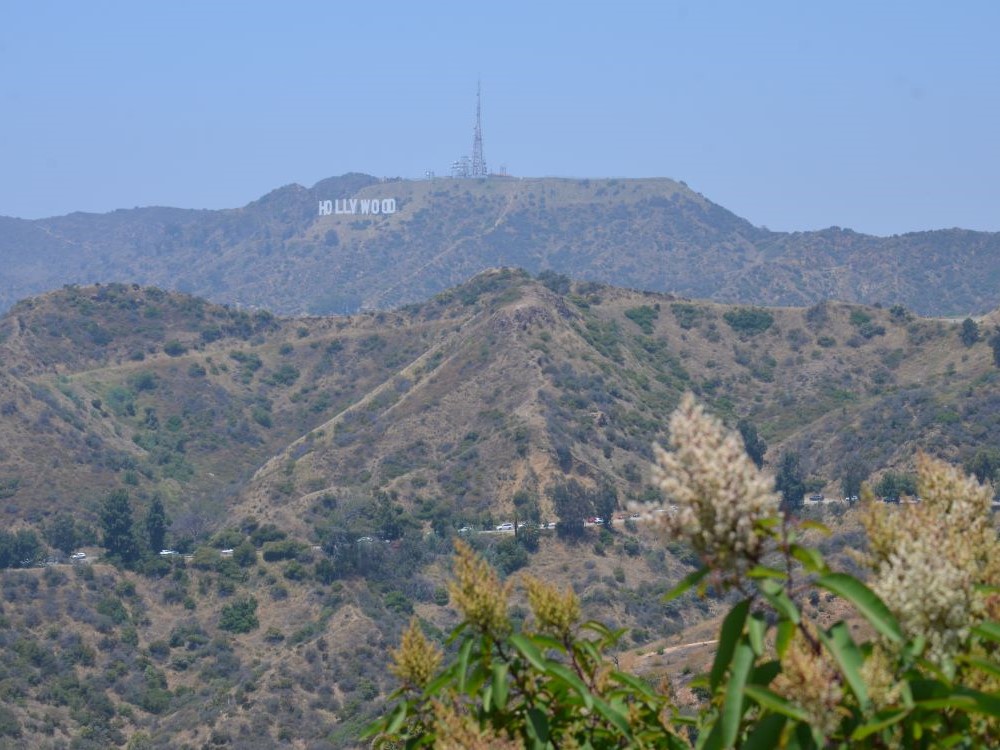
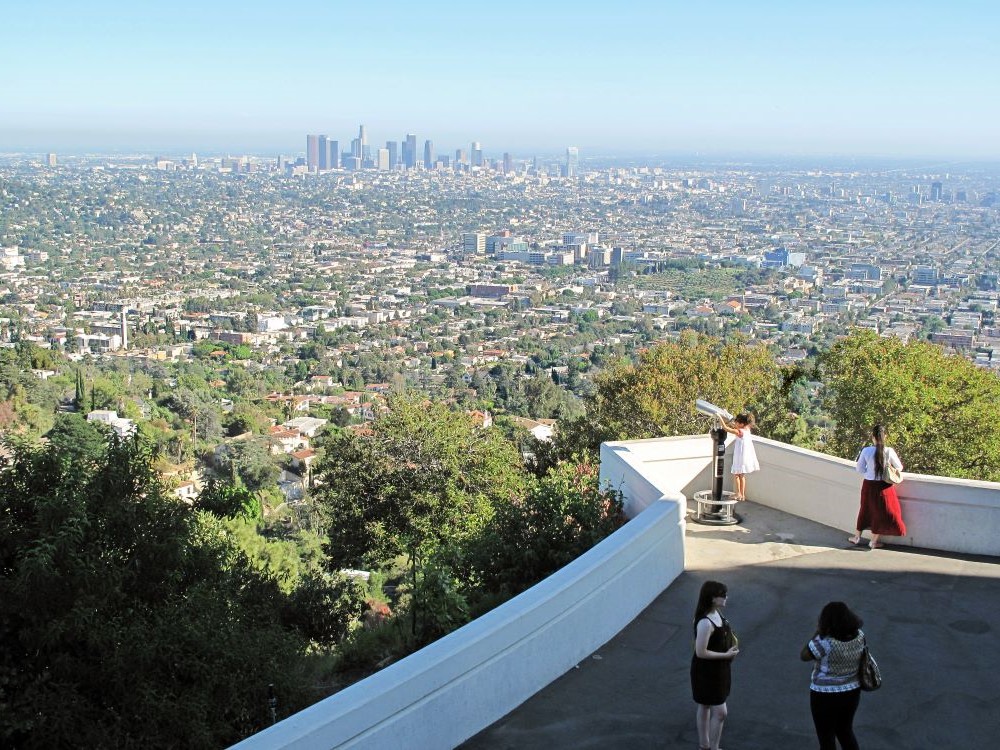
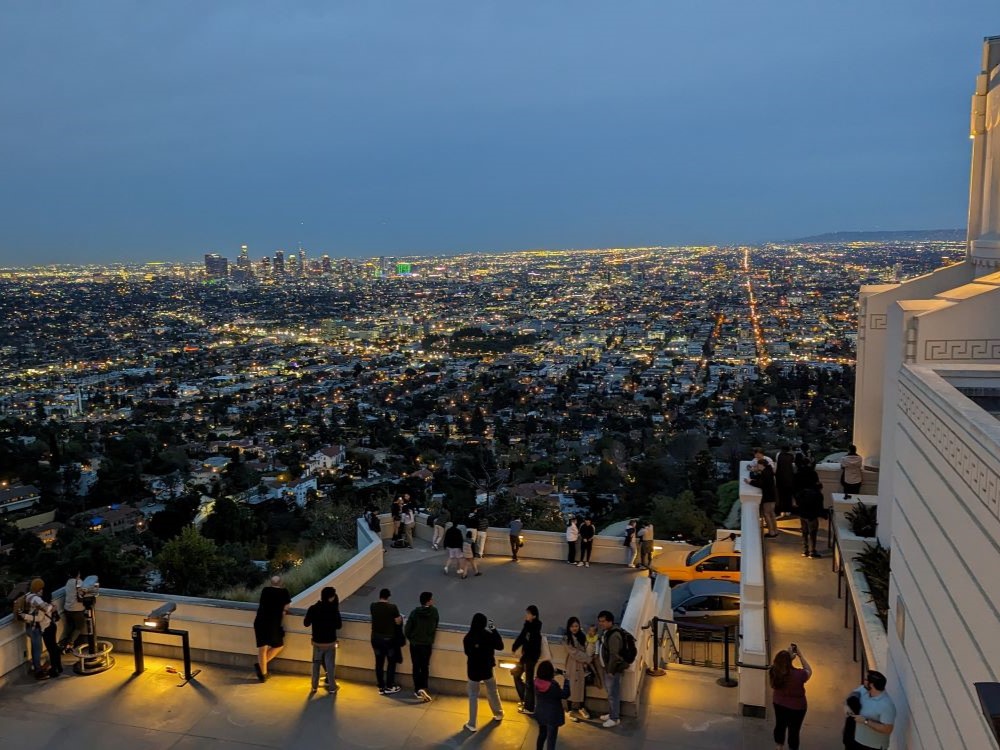
The terraces and roof deck give one of the closest public views of the Hollywood Sign, along with sweeping views of Downtown Los Angeles and, on clear days, the Pacific Ocean. Sunset and the hour after are especially popular as the city lights come on.
Visit the Astronomers Monument and James Dean Bust
The front lawn holds the Astronomers Monument, honoring six great astronomers from Hipparchus to William Herschel, and a bust of James Dean marking the filming of Rebel Without a Cause, with the Hollywood Sign in the background.
Hike in Griffith Park
Trails in Griffith Park start right from the observatory. The popular trail to the top of Mount Hollywood climbs to panoramic views over the Los Angeles Basin, and the Ferndell trail leads down through a shaded canyon to Los Feliz.
This article uses material from the Wikipedia article "Griffith Observatory", which is released under the Creative Commons Attribution-Share-Alike License 3.0. Additional information from Griffith Observatory.