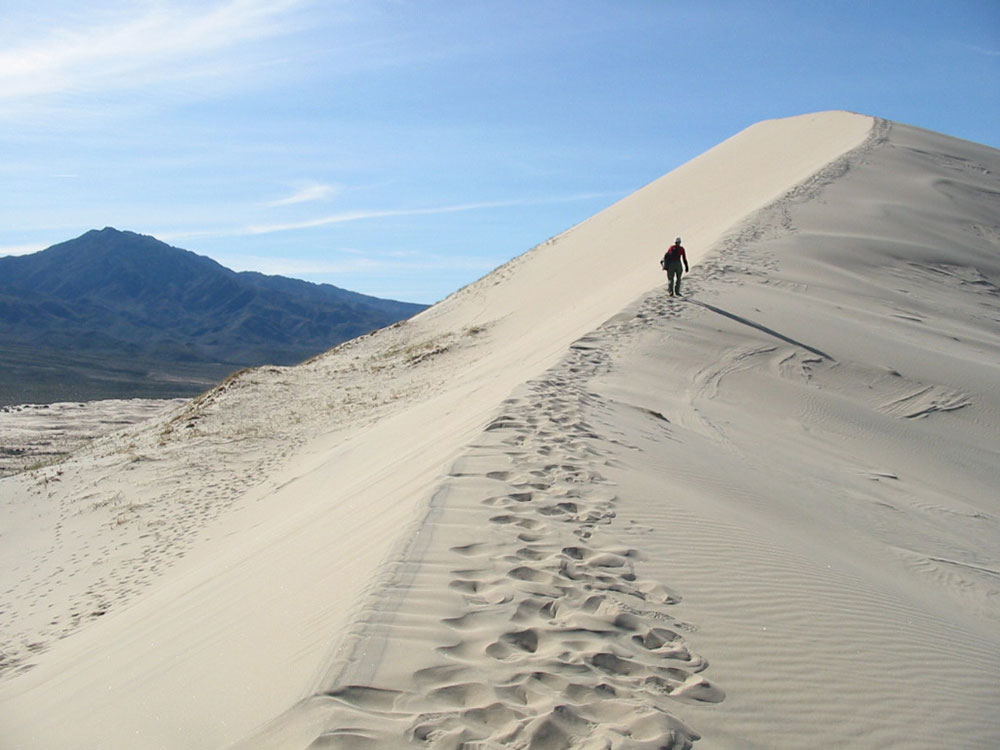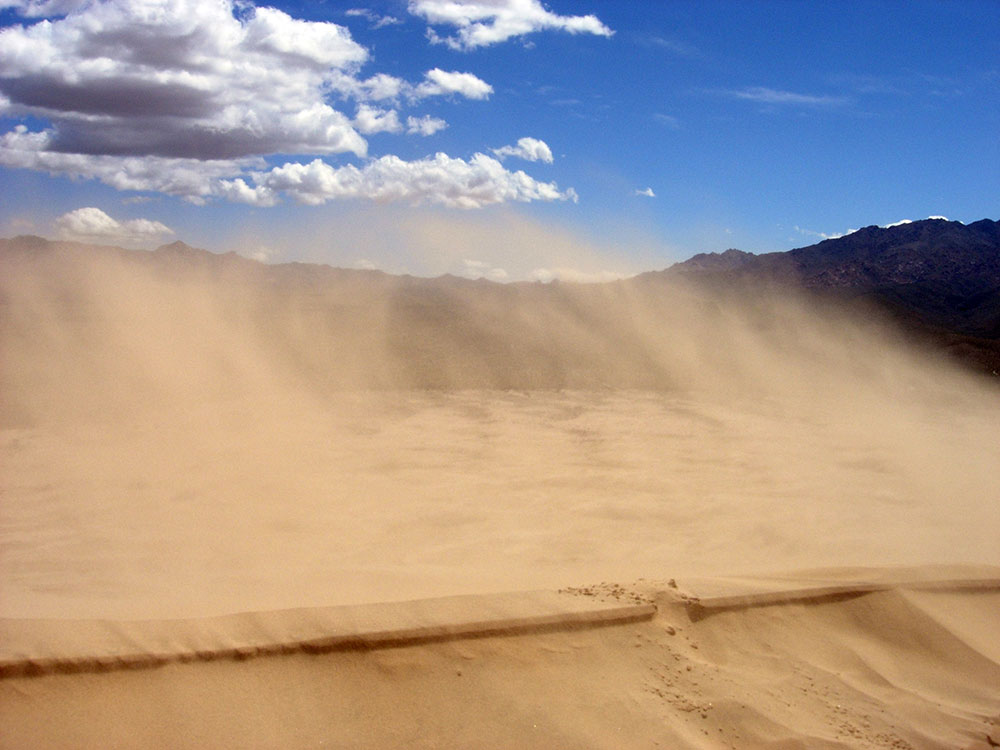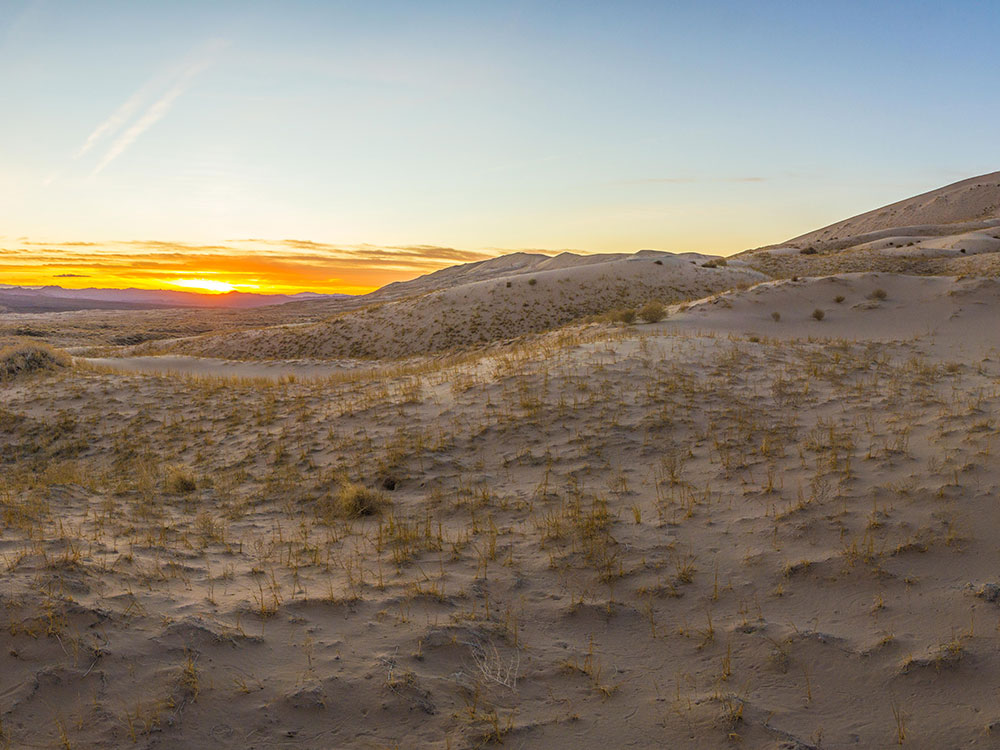

Largest field of aeolian sand deposits in the Mojave Desert, covering 45 square miles and the tallest dunes rise up to 650 feet above the surrounding terrain.
General Information
- Length:
- 3 miles roundtrip
- Elevation Gain:
- 600 feet
- Difficulty:
- Moderate
- Hours:
-
Outdoor areas: Open 24 hours a day, 365 days a year
No staffed facilities at Kelso Dunes; self-guided access only - Fees:
-
Entrance: Free
No permit or pass required to visit Kelso Dunes - Pet Policy:
- Pets are allowed on all trails
- Closest cities with hotels:
- Baker, CA (24 mi)
- Seasons:
-
Best seasons to visit: Late fall, winter, and spring
Avoid peak summer heat (June to September) - Trailhead:
- Kelso Dunes Trailhed
- Website:
- nps.gov/thingstodo/hike-the-kelso-dunes.htm
How to Get There
From Kelso Depot Visitor Center (7 mi): Drive southwest on Kelbaker Road for 3 miles, then turn right onto Kelso Dunes Road and continue 4 miles to the trailhead parking area.
Overview
Kelso Dunes is the largest dune field in the Mojave Desert, covering 45 square miles of golden quartz sand in Mojave National Preserve, with dunes rising about 650 feet above the desert floor. The dunes are famous for their "singing sand," which produces a booming or humming sound when the sand slides down the steep faces. Hikers come to climb the highest dune for sweeping views of the surrounding mountains and valleys, to hear the dunes sing, and to photograph the sculpted ridges in the soft light of morning and evening.
Getting to the Trailhead
Mojave National Preserve lies between I-15 and I-40 in the eastern Mojave Desert. There is no entrance fee, but services are extremely limited, so fill up on gas and water in Baker or Needles before entering. From the Kelso Depot Visitor Center, drive southwest on Kelbaker Road for about 3 miles, then turn right onto the graded dirt Kelso Dunes Road and continue about 4 miles to the trailhead parking area. The dirt road is usually passable for passenger cars. The trailhead has a vault toilet.
Trail Description
From the parking area, a path crosses the sandy flats toward the dunes, then fades as hikers begin climbing the dunes themselves. There is no formal trail to the summit; hikers follow the ridgelines, where the sand is firmer, to the highest dune, about 1.5 miles from the parking area. Hikers return the same way, for a total of about 3 miles round trip. To hear the dunes sing, slide down the steep faces of the dunes, where the dry sand rumbles.
Trail Conditions and Difficulty
The hike is moderate to strenuous, with about 650 to 1,000 feet of climbing through loose sand, which makes every step more tiring. There is no shade, and the sand can become extremely hot. Summer temperatures in the Mojave often exceed 100 degrees, so the best seasons are fall through spring; start early and carry plenty of water, since there is no water at the trailheads.
This article uses material from the Wikipedia article "Kelso Dunes", which is released under the Creative Commons Attribution-Share-Alike License 3.0