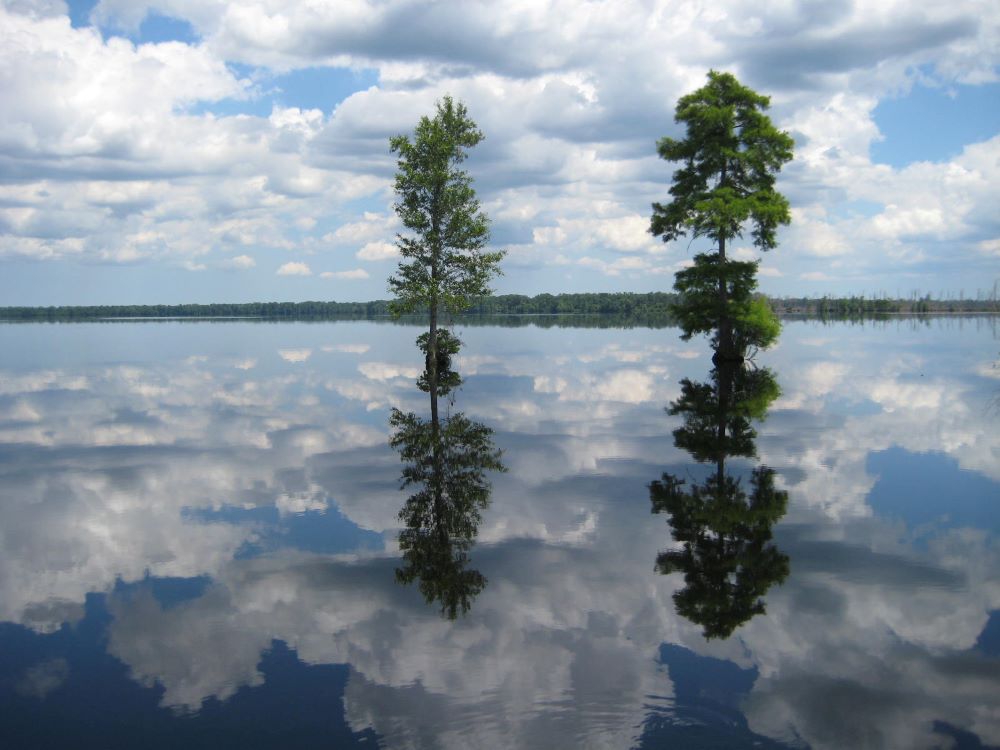

Expansive wetland ecosystem featuring forested trails, rare wildlife, and a natural lake surrounded by cypress trees.
General Information
- Hours:
-
Visitor Center: Monday to Friday, 8am to 4pm
Wildlife Drive: April–September: 7am to 7pm; October–March: 7:30am to 5pm
Trails: Open daily from sunrise to sunset - Fees:
-
Wildlife Drive (vehicle access): $5 (cash only)
All other areas: Free - Pet Policy:
- Pets are allowed on trails and roads but must be leashed at all times
- Closest cities with hotels:
- Suffolk, VA (10 mi); Chesapeake, VA (20 mi)
- Seasons:
- Best visited in spring and fall for mild weather and fewer insects
- Location:
- 3100 Desert Road, Suffolk, VA 23434
- Website:
- fws.gov
How to Get There
From Norwalk, VA (45 mi): Take US-13 S to US-58 W toward Suffolk, then turn left onto Desert Road and continue for 2 miles to reach the refuge entrance.
Overview
Great Dismal Swamp National Wildlife Refuge protects more than 112,000 acres of forested wetlands along the Virginia and North Carolina line, centered on Lake Drummond, one of only two natural lakes in Virginia. The swamp once covered over a million acres and is now one of the most significant wild areas left on the Atlantic Coast, with black bears, bobcats, otters and more than 200 bird species. It also has a deep human history: maroons, formerly enslaved people, built hidden communities in the interior, and George Washington's surveyors and canal builders came later.
Access
The Suffolk entrance is at 3100 Desert Road, about 10 miles from downtown Suffolk and 20 miles from Chesapeake. Visitors drive from I-64 and US-13 or US-17 and follow signs. Parking is free, and the Wildlife Drive charges a vehicle fee. A second entrance and visitor center are on the North Carolina side at Dismal Swamp State Park on US-17 in South Mills. There is no public transportation.
Seasons
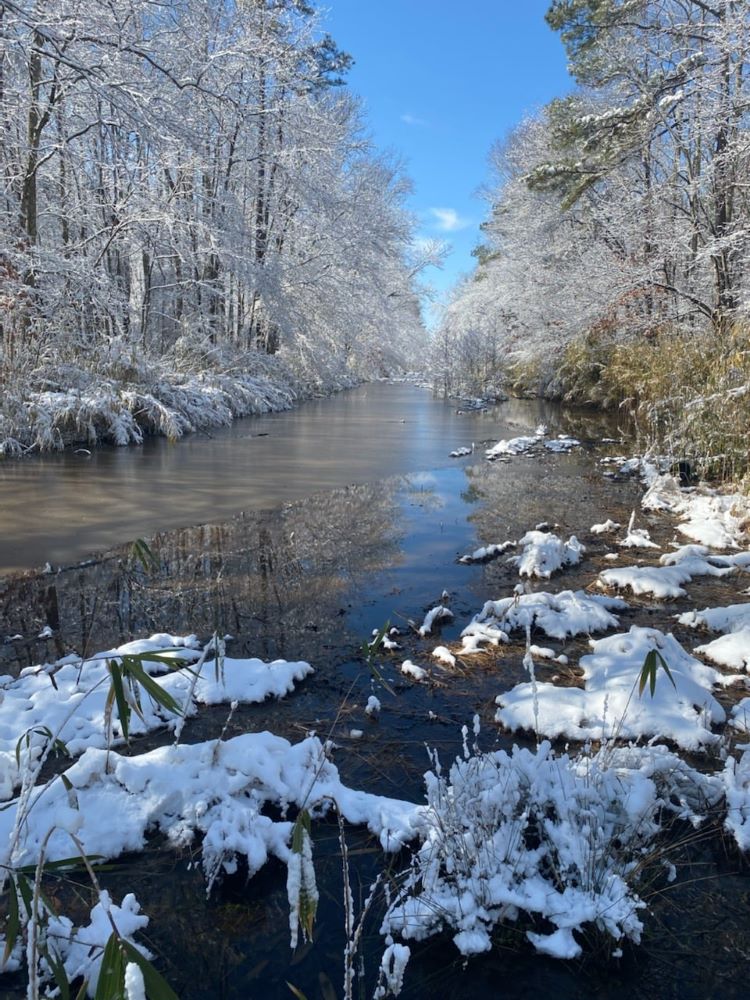
The refuge is open daily from sunrise to sunset. Spring and fall bring mild weather, fewer insects and good bird migration. Summers are hot, humid and buggy. Winters are cool and quiet, with the best views of wildlife and little foliage. Some roads and trails are closed during hunts in fall and winter.
Things to Do
Paddle to Lake Drummond
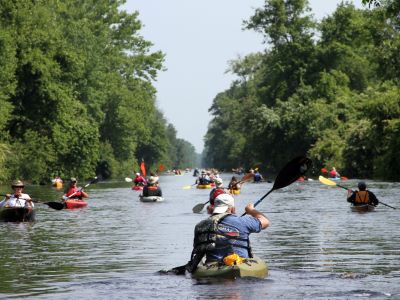
Canoe or kayak through cypress-lined waters toward the refuge's centerpiece lake.
Watch for Wildlife
Black bears, bobcats, deer, otters, warblers, hawks and owls live in the swamp.
Walk or Bike the Gravel Roads
Roads and boardwalks make it easy to explore the swamp by foot or bike.
Learn the Swamp's History
Exhibits cover Native Americans, maroon communities, Washington's canal and the timber industry.
Drive the Wildlife Drive
A seasonal drive leads to good viewing spots.
Top Trails
Washington Ditch Trail
Length: Approximately 8 miles round trip
Elevation Gain: Minimal
Difficulty: Easy
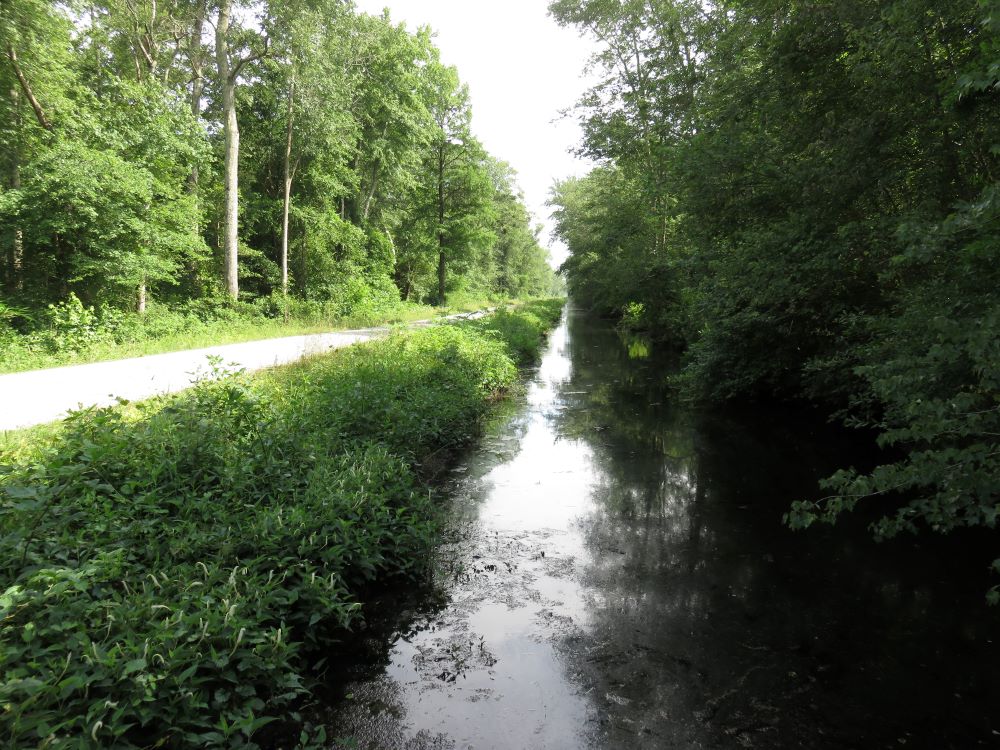
Follows a historic canal route through the heart of the swamp toward Lake Drummond, with some of the best scenery in the refuge.
Boardwalk Trail
Length: Approximately 0.5 miles round trip
Elevation Gain: Minimal
Difficulty: Easy
A short, accessible boardwalk near the visitor contact area for a quick look at the swamp.
Dismal Swamp Canal Trail
Length: 8+ miles one way
Elevation Gain: Minimal
Difficulty: Easy
Runs alongside the historic Dismal Swamp Canal, one of the oldest continually operating canals in the country, and is popular for walking and cycling.
Visitor Centers
The refuge's Suffolk visitor center is open Monday through Friday from 8 a.m. to 4 p.m. and has exhibits and staff who provide maps and tips. The Dismal Swamp State Park visitor center in South Mills, North Carolina, is near the canal and offers exhibits, a boardwalk and a welcome center. The Wildlife Drive charges a small fee, paid in cash.
Camping and Lodging
There is no camping within the refuge, but Northwest River Park in Chesapeake has a campground about 30 minutes away. Hotels and motels are in Suffolk, about 10 minutes from the refuge, in Chesapeake and Norfolk, and in Elizabeth City, North Carolina. The Outer Banks are about 1.5 hours south.
This article uses material from the Wikipedia articles and official tourism pages for Great Dismal Swamp National Wildlife Refuge, which are released under the Creative Commons Attribution-Share-Alike License 3.0. Additional information from U.S. Fish and Wildlife Service.