
National seashore which preserves the portion of the Outer Banks of North Carolina from Bodie Island to Ocracoke Island, stretching over 70 miles.
General Information
- Hours:
-
Open 24 hours a day, year-round
Beach access, scenic overlooks, wildlife viewing areas, and most outdoor recreation areas are available day and night
Some visitor centers, campgrounds, lighthouse facilities, and special-use areas operate on seasonal schedules - Fees:
-
Entrance Fee: Free
Cape Hatteras National Seashore does not charge an entrance fee
Additional fees apply for certain activities:
Cape Hatteras Lighthouse Climb (when available): Adults $8; Seniors (62+), Children 11 and under, and Visitors with Disabilities $4
Bodie Island Lighthouse Climb: Adults $10; Seniors (62+), Children 11 and under, and Visitors with Disabilities $5
Camping and Off-Road Vehicle permits require additional fees - Pet Policy:
- Pets are welcome throughout much of the national seashore but must remain on a leash no longer than 6 feet. Pets are not permitted inside buildings, on designated swim beaches, or in certain protected wildlife closure areas.
- Closest cities with hotels:
- Nags Head, NC; Buxton, NC; Avon, NC; Hatteras, NC
- Seasons:
- All year; spring and fall offer mild temperatures and fewer crowds, summer is ideal for beach activities and water sports, and winter is excellent for solitude, photography, and wildlife viewing
- Location:
- 1401 National Park Drive, Manteo, NC 27954
- Website:
- nps.gov/caha
How to Get There
From Nags Head (near major hotel chains including Holiday Inn Express, Comfort Inn South Oceanfront, Surf Side Hotel, and other Outer Banks accommodations, about 6 mi from the northern entrance): Follow NC-12 South from Nags Head across the Bodie Island causeway and continue into Cape Hatteras National Seashore, where NC-12 serves as the main route connecting the seashore's beaches, visitor facilities, campgrounds, and lighthouse areas.
Overview
Cape Hatteras National Seashore protects more than 70 miles of the Outer Banks from Bodie Island through Hatteras Island to Ocracoke Island, and is managed by the National Park Service. It was established in 1953 as the first national seashore, with land purchased partly through a gift from philanthropist Paul Mellon. The area is known for wide, undeveloped beaches, historic lighthouses and some of the best surfing on the East Coast. Its treacherous currents and shoals earned it the name "Graveyard of the Atlantic," and the history of shipwrecks and the U.S. Life-Saving Service remains a major draw, as do fishing, birdwatching and the winter waterfowl that gather on the islands.
Access
The seashore is reached by NC 12, which runs the length of the barrier islands from Nags Head south across the Bodie Island causeway and the Marc Basnight Bridge over Oregon Inlet. Communities such as Rodanthe, Avon, Buxton and Frisco lie along the road, and Hatteras Village is at the southern end of Hatteras Island. Ocracoke Island is reached only by ferry, including the state-run ferry from Hatteras Village, or by longer ferries from the mainland, so check schedules in advance. There is no public transportation, and a car is essential.
Seasons
Summer is the busiest season, with warm water, lifeguarded beaches and crowded roads, while spring and fall bring milder weather, fewer people and excellent fishing and surfing. Winter is quiet and cool, good for solitude and wildlife viewing, though some facilities close. Hurricane season runs from June through November, and storms and winter nor'easters can flood or close NC 12. Seasonal closures protect nesting shorebirds and sea turtles on some beaches, and lighthouse climbs and some visitor services operate only part of the year.
Things to Do
Swim, Surf and Relax on the Beach
Miles of open beach offer swimming, sunbathing and surfing, with designated swimming areas at some locations. Cold water and strong currents and rip tides call for caution.
Visit the Lighthouses
The Cape Hatteras Lighthouse and the Bodie Island Lighthouse are among the best-known landmarks on the coast, and both can be climbed on seasonal schedules for a fee. The Ocracoke Lighthouse can be viewed from the ground.
Fish and Paddle
Surf fishing is a long-standing tradition, particularly near Cape Point, and the sound side offers calm water for kayaking and paddleboarding.
Watch Birds and Wildlife
Migrating waterfowl, shorebirds and raptors pass through in fall and winter, and sea turtles nest on the beaches in summer. Leashed pets are allowed in many areas but not on swim beaches.
Visitor Centers
The National Park Service operates visitor centers at Bodie Island, on Hatteras Island at Buxton and on Ocracoke Island, with exhibits, ranger programs, maps and information on lighthouse climbs and beach conditions. The Hatteras Island Visitor Center includes the Museum of the Sea in the former Cape Hatteras Light Station keepers' quarters. Hours are seasonal, so check ahead.
Camping and Lodging
The seashore has National Park Service campgrounds at Oregon Inlet, Cape Point, Frisco and Ocracoke, which operate seasonally and fill quickly in summer. Hotels, cottages and vacation rentals are found along the seashore in Rodanthe, Avon, Buxton, Frisco, Hatteras and Ocracoke, and in Nags Head, Kill Devil Hills and Kitty Hawk to the north. Most of these are within one to two hours of the northern and central parts of the seashore. Reserve well ahead for summer.
This article uses material from the Wikipedia article "Cape Hatteras National Seashore", and "Cape Hatteras", which is released under the Creative Commons Attribution-Share-Alike License 3.0
Featured Locations
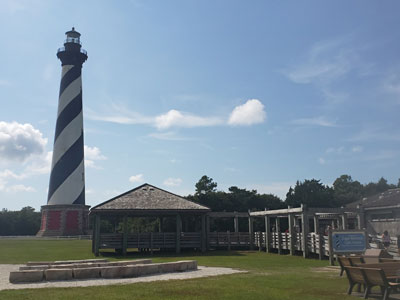
Cape Hatteras Lighthouse
Lighthouse located on Hatteras Island in the Outer Banks and is part of the Cape Hatteras National Seashore