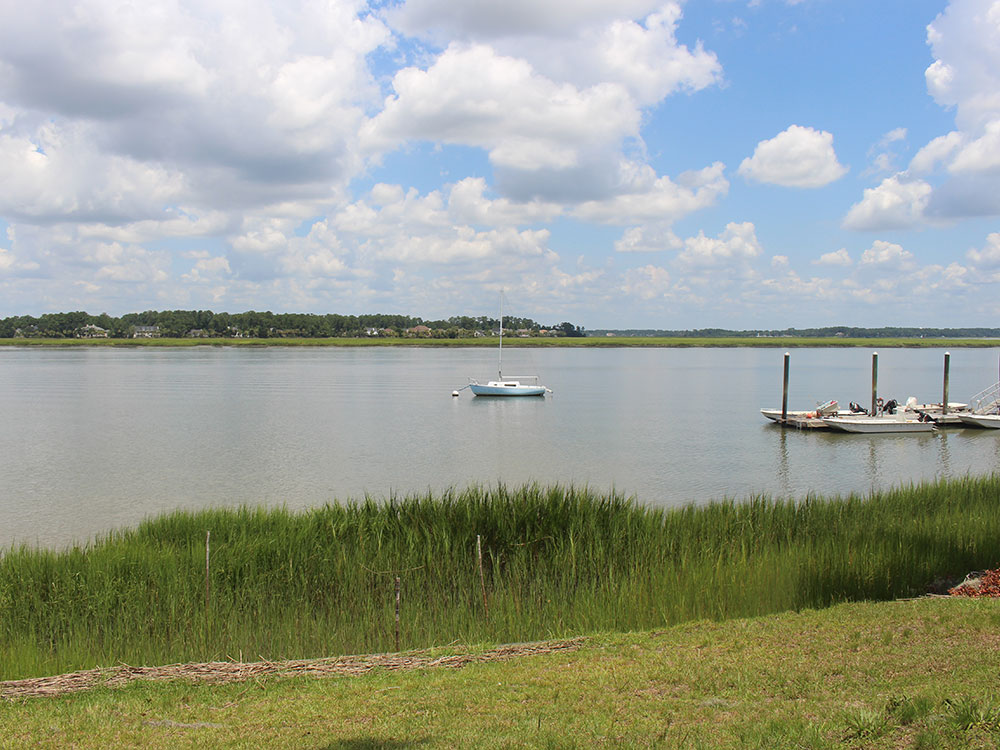
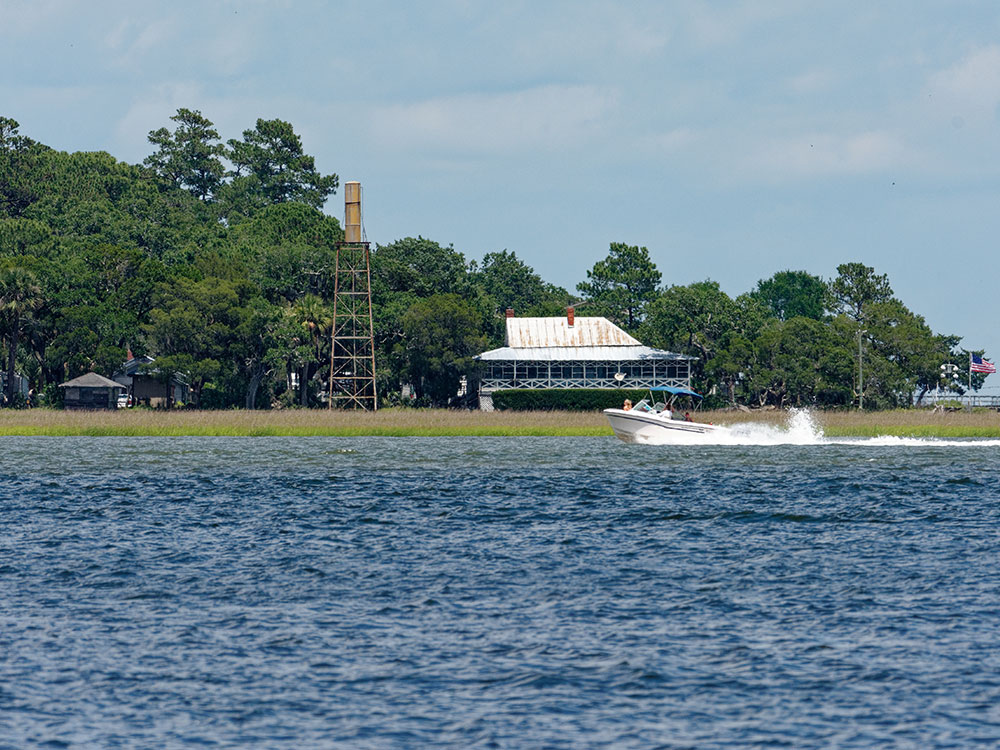
State park near Savannah that borders Skidaway narrows, a part of Georgia's intracoastal waterway with trails winding through maritime forest and past salt marsh, leading to a boardwalk and observation tower.
General Information
- Hours:
-
Cemetery Gates Open:
8an to 5pm daily - Fees:
- No fees
- Pet Policy:
- Pets and their handlers shall remain on public rights-of-way within the cemetery and shall not encroach on a cemetery lot without the consent of the lot owner
- Seasons:
- All year
Overview
Skidaway Island State Park is a quiet coastal park near Savannah on the Skidaway Narrows of the Intracoastal Waterway. Trails wind through maritime forest and along salt marsh to a boardwalk and observation tower, where deer, fiddler crabs, raccoons and egrets are common sights. The interpretive center lends binoculars and has a window for spotting migrating birds such as painted buntings. This Georgia state park is popular for easy hikes, birdwatching and camping beneath live oaks draped in Spanish moss, and it makes a relaxed escape from Savannah's busier attractions.
Access
The park is on Skidaway Island, southeast of Savannah, and is reached by the Diamond Causeway, which connects the island to the mainland. The drive from downtown Savannah takes roughly 20 to 30 minutes, and the Savannah/Hilton Head International Airport is a similar distance away. Most visitors arrive by car, since there is no public transportation to the park. The trails, boardwalk and observation tower start near the main parking area, and a day-use fee is charged per vehicle.
Seasons
Spring and fall are the best seasons, with comfortable temperatures and the migration of many birds along the coast. Painted buntings are a spring and summer highlight for birders. Summers are hot and humid, and mosquitoes, biting flies and ticks are common along the marsh trails, so bring repellent. Winters are mild, making this a good time for hiking and birdwatching with fewer insects. Hurricane season runs from June through November, and storms can close the park temporarily.
Things to Do
Walk the Boardwalk and Observation Tower
Boardwalks and platforms reach out over the marsh for views of tidal ecosystems.
Visit the Interpretive Center
Exhibits and programs explain coastal ecology and the region's natural history.
Stay Overnight
Choose a campsite under the live oaks or a camper cabin for an easy overnight near Savannah.
Top Trails
| Trail | Length | Difficulty | Highlights |
|---|---|---|---|
| Avian Loop Trail | About 0.5 miles loop | Easy | Short loop through prime wildlife habitat |
| Sandpiper Trail | About 1 mile loop | Easy | Maritime forest and marsh edge with interpretive signs |
| Big Ferry Trail | About 3 miles round trip | Easy to Moderate | Historic route to salt marsh views |
| Connector Trails | Varies | Easy | Link the forests, marshes, and observation areas for longer walks |
Visitor Centers
The interpretive center is the park's main visitor facility. It has exhibits on coastal ecology and the region's natural history, and it lends binoculars to visitors. A window overlooks a feeding area that attracts birds, including migrating species. Rangers can offer trail maps and information about programs, and the center is a good first stop before heading out to the boardwalk and observation tower.
Camping and Lodging
The park has a campground beneath live oaks and Spanish moss, with some RV sites offering sewer hookups, along with new camper cabins that have screened porches, air conditioning, a kitchen and a kids' sleeping loft. Group campgrounds are available for reunions and celebrations. Hotels, inns and bed-and-breakfasts are plentiful in Savannah, about 20 to 30 minutes away, especially in the Historic District. Wilmington Island, Tybee Island and Richmond Hill offer additional lodging within about 30 to 45 minutes, and Hilton Head Island, South Carolina, is roughly an hour away.
This article uses material from the Wikipedia article "Skidaway Island State Park", released under the Creative Commons Attribution-Share-Alike License 3.0, along with visitor and trail information from Georgia State Parks.