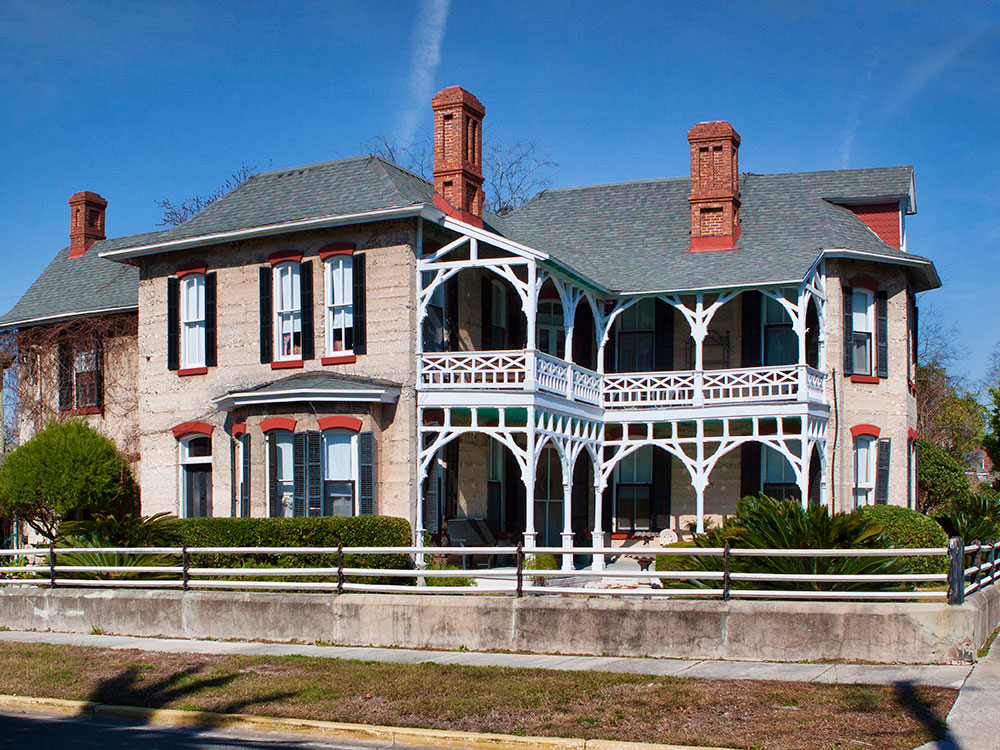
The oldest standing plantation house in the state, preserving 25 tabby slave cabins, a working kitchen house, and gardens that tell a complex story of slavery, freedom, and Sea Island cotton cultivation.
General Information
- Hours:
- Grounds & Visitor Center: Wednesday to Sunday, 9am to 4:45pm
Planter's House: Friday to Sunday, 10am–noon and 2pm–4pm
Closed Monday, Tuesday, Thanksgiving, Christmas Day, and New Year's Day - Fees:
- Admission is free
- Pet Policy:
- Leashed pets are allowed outdoors on the grounds but not inside historic buildings
- Closest cities with hotels:
- Downtown Jacksonville, FL (25 mi)
- Seasons:
- Best visited fall through spring (October–April) when temperatures and humidity are milder
- Location:
- 11676 Palmetto Ave, Jacksonville, FL 32226
- Website:
- nps.gov/timu
How to Get There
From Downtown Jacksonville (25 mi): Take I-295 to SR-105/Heckscher Drive and follow it east for about 9 miles. Turn left onto Fort George Road, a narrow marsh-lined route, and continue to the plantation entrance and parking area.
Overview
Kingsley Plantation on the northern tip of Fort George Island in Jacksonville, part of the Timucuan Ecological and Historic Preserve, holds the oldest surviving plantation house in Florida, dating to 1798. It is named for planter and slave trader Zephaniah Kingsley, but its central figure is his wife, Anna Madgigine Jai, whom he purchased in Senegal and later freed; she managed the plantation's Sea Island cotton and sugarcane operations and owned land and enslaved people herself.
What to See
- Slave cabins: a semicircle of 25 tabby (oyster shell, lime, and sand) cabins that housed about 60 people, laid out like West African villages
- Plantation house, barn, and kitchen house: along a short trail
- Setting: views of salt marsh and maritime forest
This article uses material from the Wikipedia articles and official tourism pages for Kingsley Plantation, which are released under the Creative Commons Attribution-Share-Alike License 3.0.