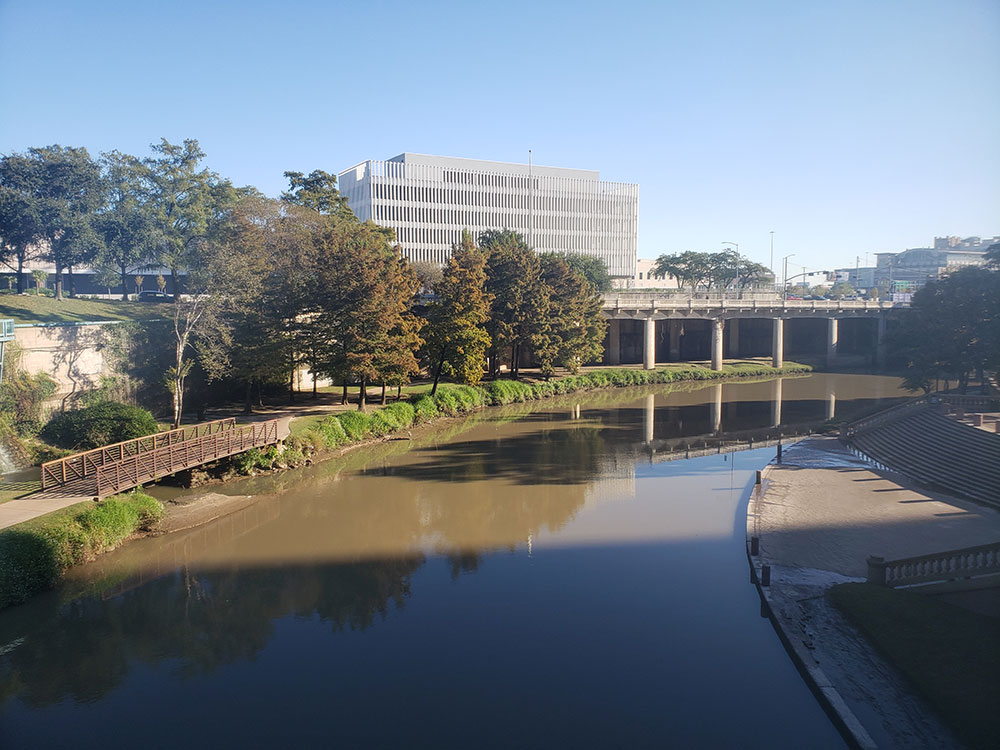
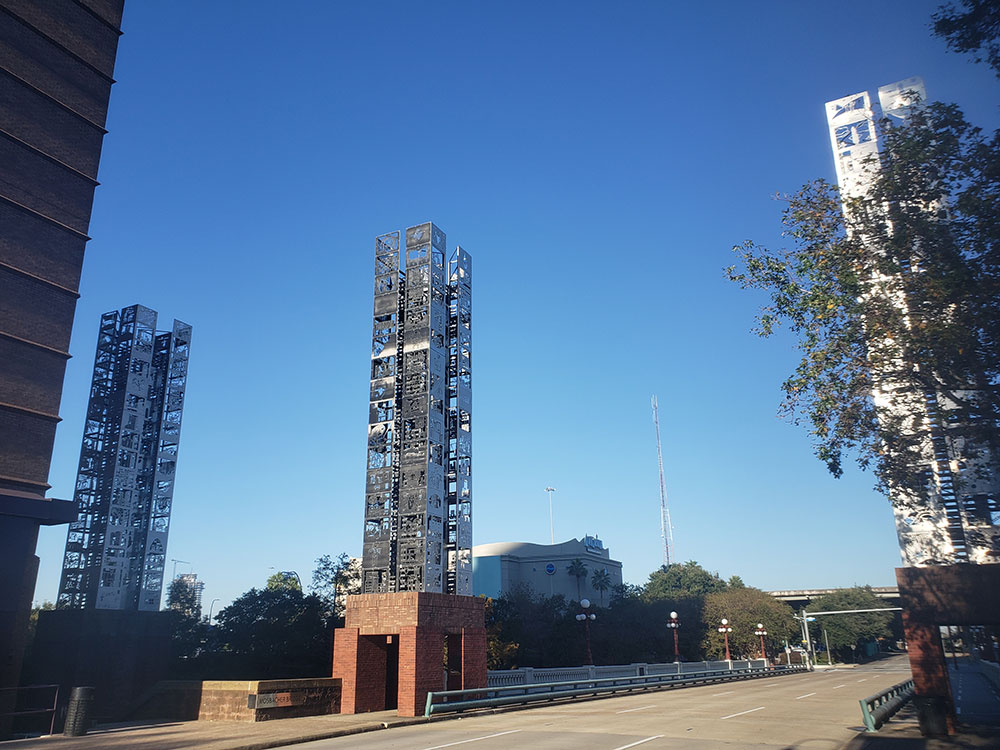
Multi-level waterfront park featuring landscaped gardens, walking paths, public art, monuments, event spaces, and scenic views of a historic bayou.
General Information
Spring and fall provide the most comfortable temperatures for outdoor activities and sightseeing
How to Get There
From Houston: Follow I-45, I-69, or local downtown streets to Texas Avenue near the Theater District, then continue to 400 Texas Avenue along Buffalo Bayou.
Overview
Sesquicentennial Park is a 22.5-acre park along Buffalo Bayou in downtown Houston, created in 1986 to mark the 150th anniversary of the founding of Houston and the Republic of Texas. Built in two phases and completed in 1998, the park flanks the bayou as it passes the Wortham Theater Center and the Houston Theater District, making it an easy add-on to a night out downtown.
The park is known for its public art, including "Seven Wonders" — a set of seven illuminated pillars by Houston artist Mel Chin — along with several sculptures by local artist Dean Ruck, including "The Big Bubble," "Site Seeing," and "Sounds from the Past."
This article uses material from the Wikipedia article "Sesquicentennial Park", which is released under the Creative Commons Attribution-Share-Alike License 3.0.