
Jackson Travel Guide
Capital city known for its pivotal role in the Civil Rights Movement, rich cultural heritage, and vibrant arts, culinary, and music scenes rooted in Southern traditions.
Places to See in Jackson
Dough4872, CC BY-SA 4.0, via Wikimedia Commons; Image Size Adjusted

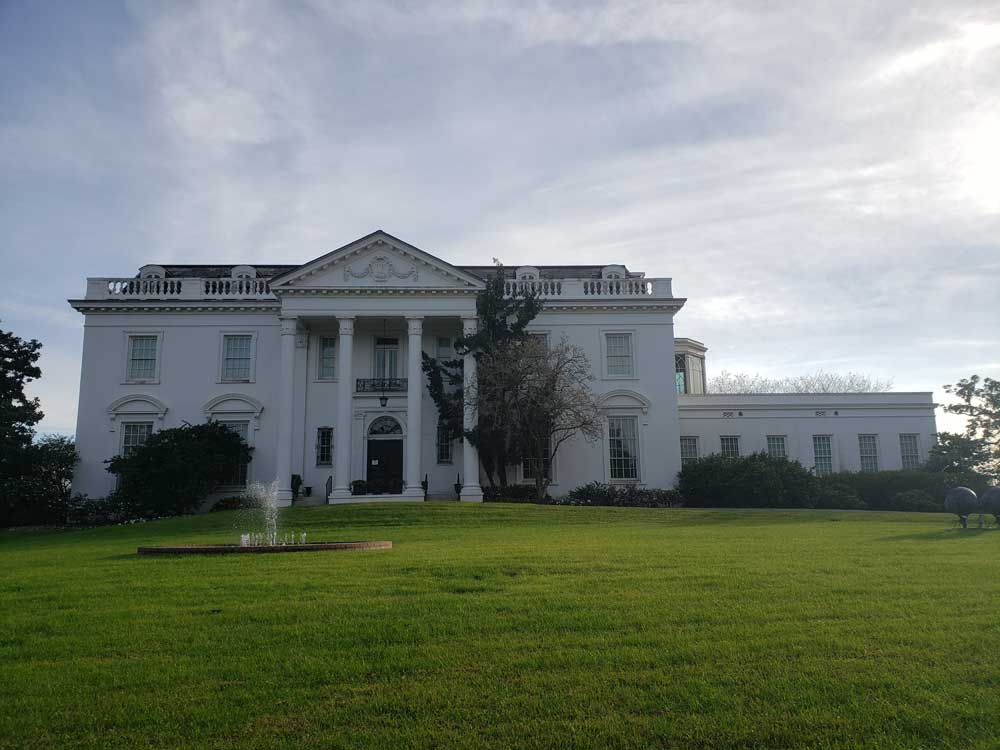
Governors Mansion
Elegant antebellum residence offering guided tours of historically furnished rooms and showcasing Greek Revival architecture.
Dough4872, CC BY-SA 4.0, via Wikimedia Commons; Image Size Adjusted
Lefleurs Bluff State Park
Lush green retreat offering nature trails, disc golf, fishing, and outdoor recreation amid forested landscapes and a scenic lake.
Dough4872, CC BY-SA 4.0, via Wikimedia Commons; Image Size Adjusted
Medgar and Myrlie Evers Home National Monument
Historic mid-century home preserved to honor the legacy of two civil rights leaders and the movement they helped shape.
Dough4872, CC BY-SA 4.0, via Wikimedia Commons; Image Size Adjusted
Mississippi Agriculture and Forestry Museum
Interactive heritage complex featuring historic buildings, farm exhibits, aviation displays, and gardens that celebrate the state’s agricultural legacy.
Dough4872, CC BY-SA 4.0, via Wikimedia Commons; Image Size Adjusted
Mississippi Civil Rights Museum and Museum of Mississippi History
Dual-museum complex offering immersive exhibits on Mississippi’s civil rights struggles and broader state history through artifacts, stories, and interactive displays.
Dough4872, CC BY-SA 4.0, via Wikimedia Commons; Image Size Adjusted
Mississippi Museum of Art
Expansive cultural hub featuring rotating exhibitions, a sculpture garden, and educational programs that celebrate Mississippi’s artistic heritage and global creativity.
Dough4872, CC BY-SA 4.0, via Wikimedia Commons; Image Size Adjusted
Mississippi Museum of Natural Science
Expansive science center featuring aquariums, nature trails, and interactive exhibits that explore Mississippi’s diverse ecosystems and wildlife.
Dough4872, CC BY-SA 4.0, via Wikimedia Commons; Image Size Adjusted
Mississippi State Capitol
Grand Beaux-Arts government building featuring marble interiors, stained glass, and historic legislative chambers open for public tours.
Dough4872, CC BY-SA 4.0, via Wikimedia Commons; Image Size Adjusted
Old Capitol Museum
Restored Greek Revival landmark offering exhibits on Mississippi’s legislative history and pivotal moments in the state’s political evolution.
Dough4872, CC BY-SA 4.0, via Wikimedia Commons; Image Size Adjusted
Smith Robertson Museum
Historic cultural center housed in Jackson’s first public school for African Americans, showcasing art, artifacts, and exhibits on Black life and legacy in Mississippi.
Dough4872, CC BY-SA 4.0, via Wikimedia Commons; Image Size Adjusted
Tougaloo College
Historic liberal arts college featuring landmark academic buildings, cultural institutions, and civil rights sites that played a significant role in the struggle for racial equality and educational advancement.
Overview
Jackson is the capital and largest city of Mississippi, on the Pearl River in the central part of the state, and it is a center of government, healthcare, and education, as well as an important city in the history of the civil rights movement. It is known as the "City with Soul" for its musical heritage and for the Mississippi Civil Rights Museum, which opened in 2017, as well as for the home of civil rights leader Medgar Evers. The city is named for Andrew Jackson, the general and president.
Visitors come to Jackson for the Mississippi Civil Rights Museum and Museum of Mississippi History, the Medgar and Myrlie Evers Home National Monument, and the Mississippi State Capitol. They also come for the Old Capitol Museum, the Mississippi Museum of Art, the Governor's Mansion, and Southern food such as the Greek-influenced dishes at the Mayflower Cafe.
History
Jackson was chosen as the capital of Mississippi in 1821 because of its central location, on the site of a trading post called LeFleur's Bluff, and it was named for General Andrew Jackson, the hero of the Battle of New Orleans. During the Civil War, the city was attacked and burned several times by Union forces in 1863, and its surviving chimneys earned it the nickname "Chimneyville." In the twentieth century, Jackson was a center of the civil rights movement: Medgar Evers, the NAACP field secretary, was assassinated at his home in 1963, and the Freedom Riders were jailed in the city in 1961. The city has since grown as a center for government and medical research.
Sightseeing and Popular Landmarks
The Mississippi State Capitol, built in 1903, is a Beaux-Arts building with a copper dome and a gold eagle on top, and it offers free tours. The Governor's Mansion, built in 1842, is one of the oldest continuously occupied governors' residences in the country, and the Old Capitol Museum is a Greek Revival building from 1839. The Evers Home is preserved as it was on the night of Medgar Evers' death, and the War Memorial Building and Smith Robertson Museum are other landmarks.
Culture and Museums
The Mississippi Civil Rights Museum has galleries on the history of the civil rights movement in the state, and the adjoining Museum of Mississippi History covers the state's history from prehistory to the present. The Mississippi Museum of Art is the largest art museum in the state, and the Mississippi Museum of Natural Science and the Mississippi Agriculture and Forestry Museum are other attractions. Smith Robertson Museum is the first public school for Black children in Jackson, now a museum, and Tougaloo College played a key role in the civil rights movement.
Parks
LeFleur's Bluff State Park is a large park on the Pearl River with a golf course, a lake, and trails, and it is also the site of the Mississippi Museum of Natural Science. The Pearl River offers paddling and fishing, and Mynelle Gardens has a botanical garden. Livingston Park and Medgar Evers Boulevard Park have local recreation, and the Ross Barnett Reservoir, north of the city, is a large lake for boating.
Seasons and Weather
Jackson has a humid subtropical climate. Summers are hot and humid, with highs in the 90s°F, and winters are mild, with highs in the 50s°F and a little snow. Spring and fall are the most comfortable seasons, and thunderstorms and tornadoes are possible in spring. Hurricane remnants can bring heavy rain in late summer and fall.
This article uses material from Wikipedia as well as information from official tourism and institutional sources. Key references include Visit Jackson, Mississippi Civil Rights Museum, Mississippi Department of Archives and History, National Park Service Medgar and Myrlie Evers Home National Monument, Visit Mississippi, and National Weather Service Jackson. Wikipedia material is from the article "Jackson, Mississippi", and is available under the Creative Commons Attribution-Share-Alike License 3.0.