
Historic site preserving former military forts, a federal courthouse, jail, and Trail of Tears history through exhibits, restored structures, and riverside walking trails.
General Information
- Hours:
- Visitor Center, Gallows, and Commissary Building: Daily, 9:00am to 5:00pm
Park grounds: Open daily from 30 minutes before sunrise until 30 minutes after sunset
Closed New Year's Day, Thanksgiving Day, and Christmas Day - Fees:
- Free admission
- Pet Policy:
- Pets are permitted on park grounds and trails when leashed. Pets are not allowed inside park buildings.
- Closest cities with hotels:
- Fort Smith, AR (0 mi)
- Seasons:
- All year; spring and fall offer the most comfortable weather for exploring outdoor exhibits and trails.
- Location:
- 301 Parker Ave, Fort Smith, AR 72901
- Website:
- nps.gov
How to Get There
From Fort Smith (2 mi): Follow Garrison Avenue toward downtown, turn south onto 4th Street, then continue to Parker Avenue and the historic site entrance.
Overview
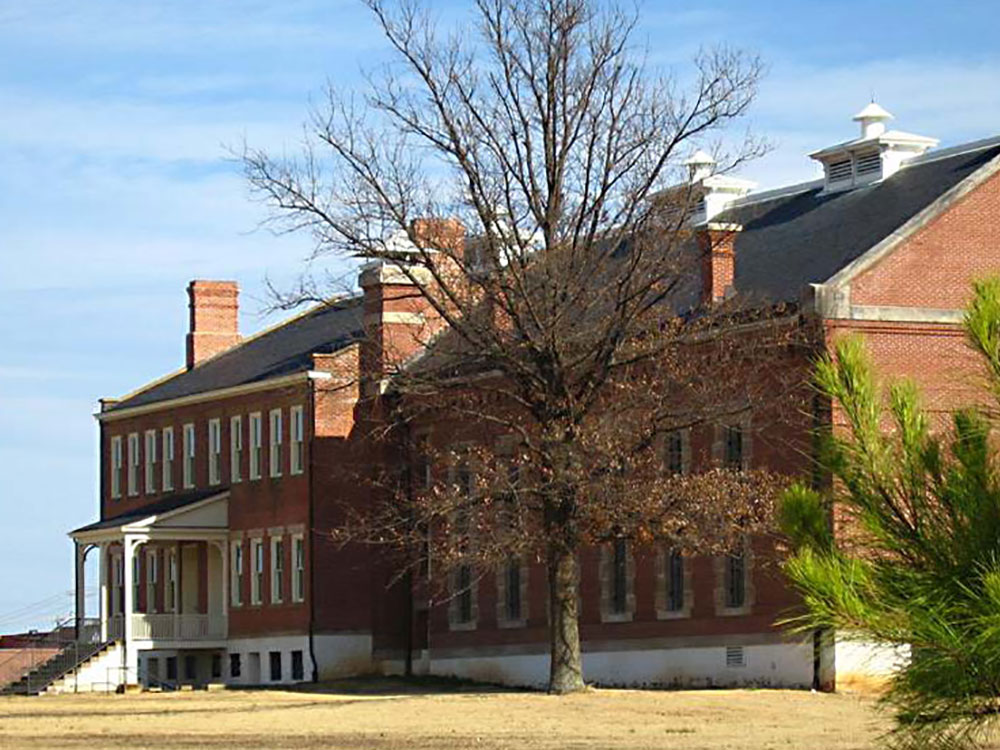
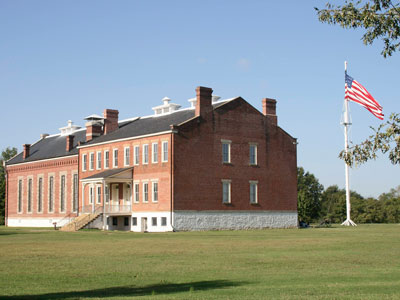
Fort Smith National Historic Site preserves the heart of a frontier town on the Arkansas River, where the United States built its first fort in 1817 and a second one that served until 1871. The site is best known for the federal court of Judge Isaac C. Parker, whose courtroom handled cases from western Arkansas and the Indian Territory beginning in 1875, and for its connection to the Cherokee Trail of Tears, which passed through Fort Smith. It became a unit of the National Park System in 1961 to protect the fort remains and the historic courthouse and jail building. Visitors come for the museum exhibits, the restored courtroom and jail, the reconstructed gallows and the riverside walk with Trail of Tears wayside exhibits.
Access
The site is in downtown Fort Smith on the Arkansas River, close to the Oklahoma line, and the park address is 301 Parker Avenue. Most visitors arrive by car on the interstate and city streets and park near the visitor center, which sits in the old Barracks/Courthouse/Jail building. Fort Smith is roughly 160 miles northwest of Little Rock and about an hour south of Fayetteville. The grounds are compact and mostly level, so the site is easy to see on foot in a couple of hours, and admission is free.
Seasons
The site is open year-round, and spring and fall bring the most comfortable weather for walking the grounds and the riverfront. Summers in western Arkansas are hot and humid, so plan outdoor time for the morning or evening and use the air-conditioned museum midday. Winters are usually mild with occasional cold snaps, and spring can bring thunderstorms. The visitor center is closed on New Year's Day, Thanksgiving and Christmas, and special programs and living history events are often held in the warmer months.
Things to Do
Explore Historic Fort Smith
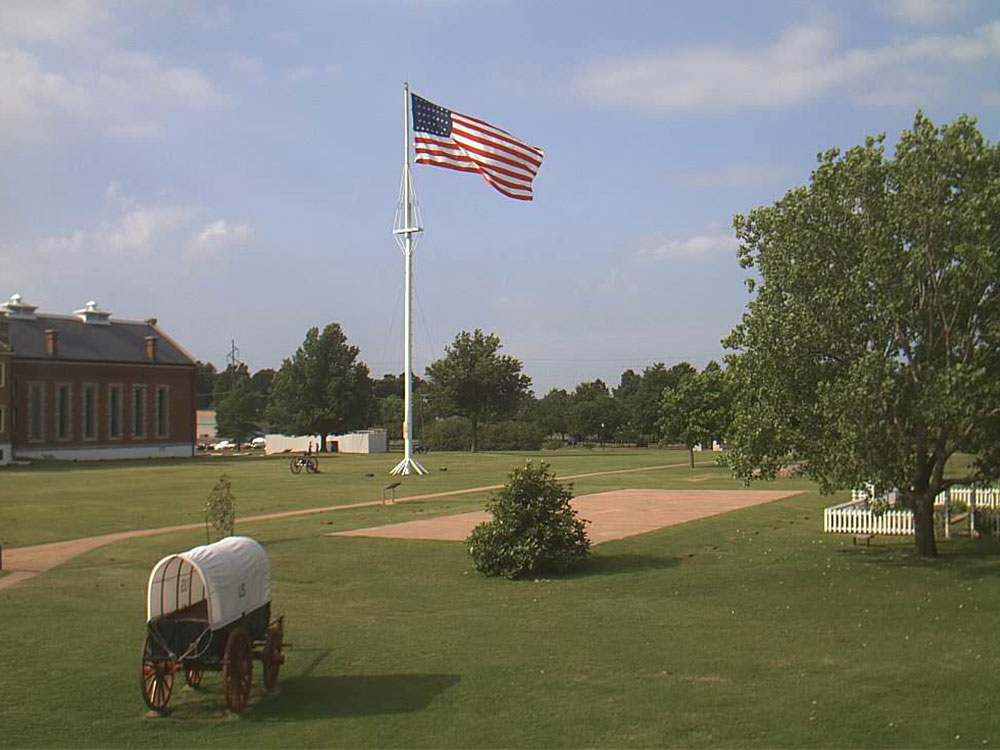
Fort Smith National Historic Site preserves the location of two frontier forts that played important roles in westward expansion, military history, and the opening of the American West. Visitors can explore restored buildings, fort foundations, and exhibits that tell the story of soldiers, settlers, Native Americans, and lawmen who shaped the region.
Visit Judge Parker's Courtroom and the Jail
One of the site's most popular attractions is the restored courtroom of Judge Isaac C. Parker, known as the "Hanging Judge." Visitors can also tour the historic jail and learn about law enforcement in the Indian Territory during the late nineteenth century.
Walk the Trail of Tears Overlook
The site commemorates the forced relocation of Native American tribes along the Trail of Tears. Interpretive exhibits and overlooks help visitors understand the significance of Fort Smith's location and its connection to this important chapter of American history.
Top Trails
Historic Grounds Walking Trail
Length: Approximately 1.0 mile round trip
Elevation Gain: Minimal
Difficulty: Easy
This self-guided route connects the fort remains, Judge Parker's Courthouse, historic jail, gallows site, and interpretive exhibits while providing a comprehensive overview of the site's history.
Riverfront Trail
Length: Approximately 1.5 miles round trip
Elevation Gain: Minimal
Difficulty: Easy
The trail follows portions of the Arkansas River waterfront, offering scenic views and interpretive information about river transportation, frontier commerce, and Fort Smith's strategic location.
Visitor Centers
The visitor center is inside the historic Barracks/Courthouse/Jail building and is the main place to start. Its exhibits cover the military history of Fort Smith from 1817 to 1871, western expansion, Judge Parker and the federal court, U.S. Deputy Marshals and outlaws, federal Indian policy and the Trail of Tears. Rangers can explain the layout of the grounds, and the courtroom and jail are part of the same building. The Commissary Building and the gallows reconstruction are a short walk away on the grounds.
Camping and Lodging
There is no camping or lodging within the historic site. Hotels and restaurants are plentiful in Fort Smith itself, including many options near downtown and along the interstate, and across the river in Van Buren. Within about an hour, Fayetteville and Rogers offer a larger range of lodging, and Russellville is roughly 80 miles east. For camping, Lake Fort Smith State Park, about 35 miles north, has a campground, and Devil's Den State Park to the north is also within a short drive.
This article uses material from the Wikipedia article "Fort Smith National Historic Site", which is released under the Creative Commons Attribution-Share-Alike License 3.0. Additional information was drawn from the National Park Service, including its visitor resources and history and culture pages.