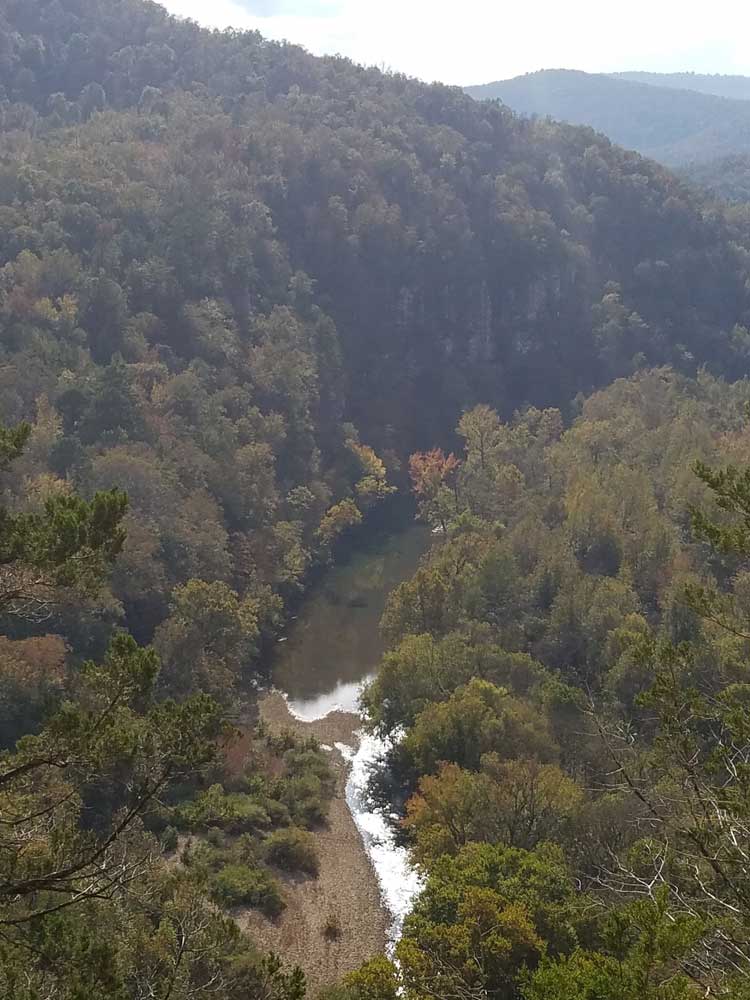
Strenuous hike that traverses the Ponca Wilderness, winding down an old wagon road descending nearly 1,300 ft. to the Buffalo River.
General Information
- Length:
- 5.9 miles roundtrip
- Elevation Gain:
- 1,076 feet
- Difficulty:
- Strenuous
- Pet Policy:
- No pets allowed
- Seasons:
- All year
- Trailhead:
- Centerpoint Trailhead
How to Get There
Travel south on Highway 43 from Harrison for 21 miles to the Centerpoint trailhead located on the left side of the highway.
Overview
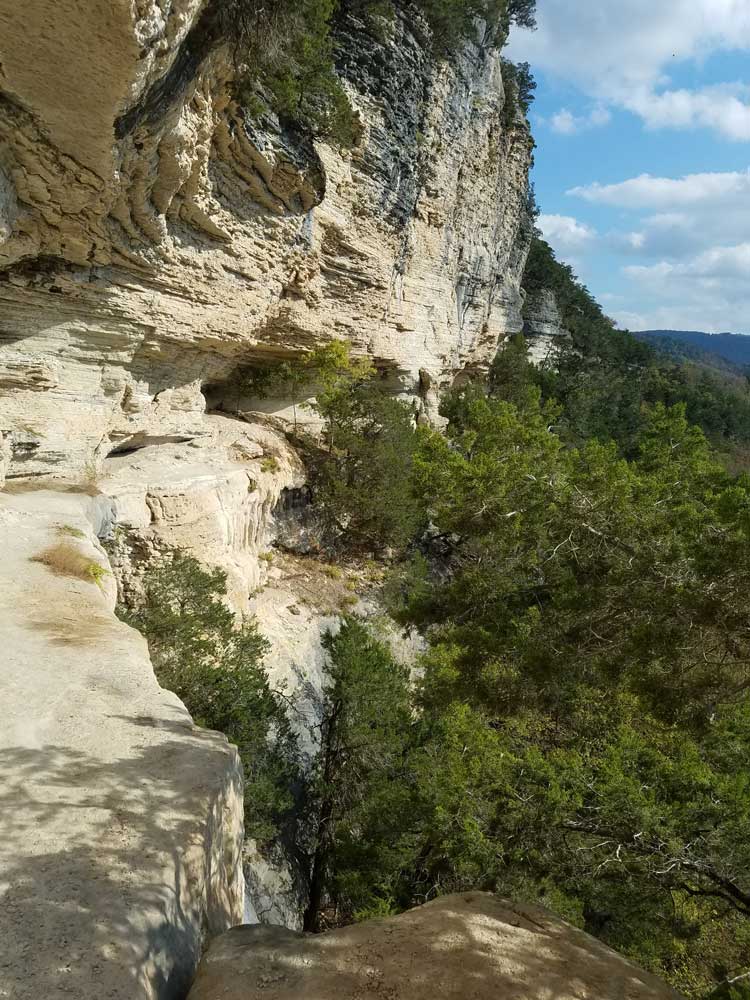
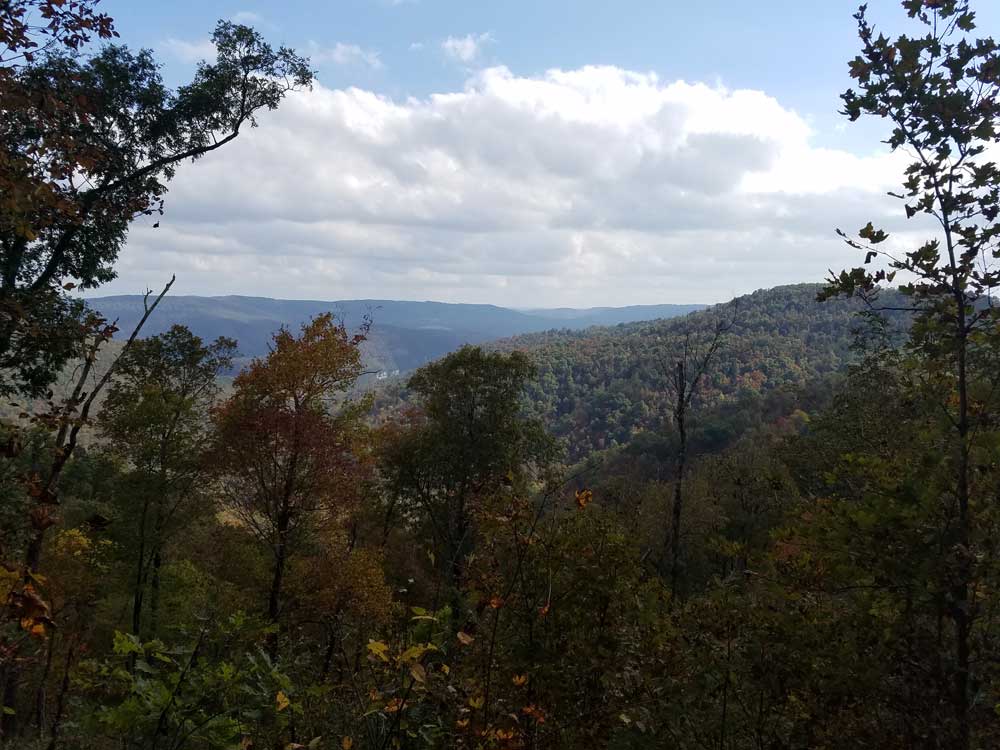
The Centerpoint Trail is a strenuous hike into the Ponca Wilderness of Buffalo National River, following an old wagon road that descends nearly 1,300 feet to the Buffalo River. It is popular as the main route to Big Bluff, the tallest bluff in the Ozarks, where the narrow Goat Trail spur clings to the cliff face about 350 feet above the river with sweeping views of the valley and the surrounding Ozark Mountains.
Getting to the Trailhead
The Centerpoint Trailhead is on the east side of AR-43, about 21 miles south of Harrison and just north of Ponca. The road is paved and suitable for all vehicles. The trailhead has a small parking area that fills on spring and fall weekends.
Trail Description
From the trailhead, the trail follows the old wagon road gradually downhill through oak and hickory forest, with occasional views of the river valley. After about 2 miles, the Goat Trail branches off toward Big Bluff, following a narrow ledge along the cliff to views high above the river. The Centerpoint Trail continues down to the Buffalo River. Most hikers visit Big Bluff and return the same way, for about 6 miles round trip. The trail meets several other wilderness trails, including the Chimney Rock, Sneeds Creek, Big Bluff, Compton, and Hemmed-In Hollow trails, so carry a map and check the signs at each junction.
Trail Conditions and Difficulty
This is a strenuous hike, with about 1,100 to 1,300 feet of elevation change, and the climb back out is steep and long; plan for most of a day. The Goat Trail is narrow and exposed, with a sheer drop to the river, so stay on the trail and keep children and dogs close. Summer is hot and humid, with ticks and chiggers common, so carry plenty of water. The trail can be icy in winter.
This article uses material from nps.gov "Buffalo National River". Additional trail and access information is from the page "Buffalo National River".