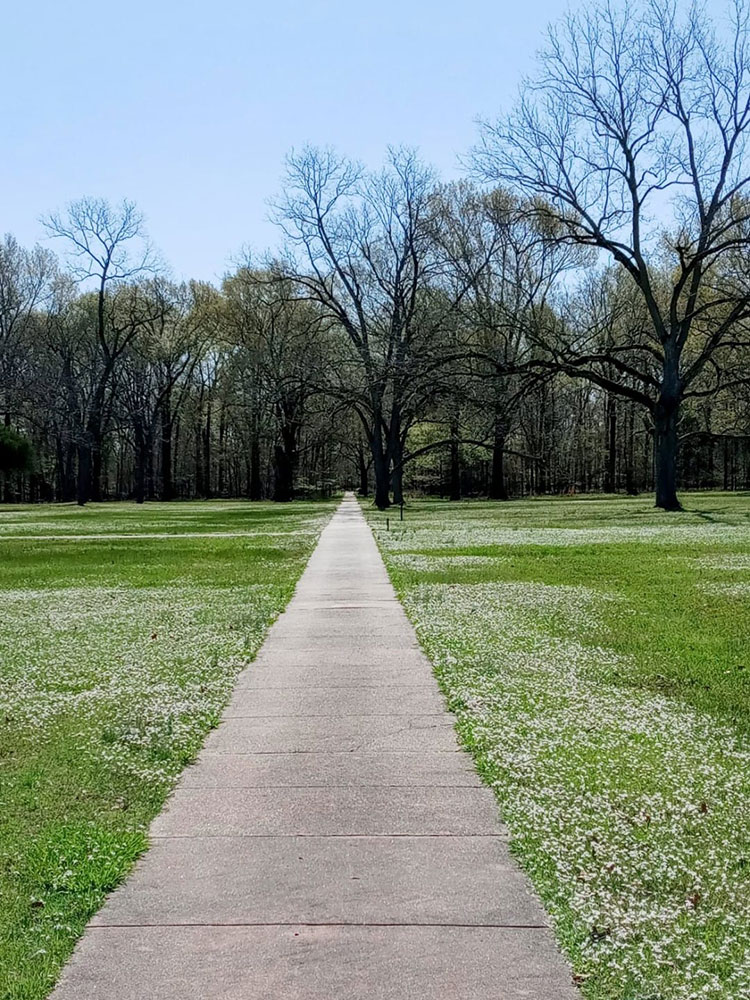

Historic park preserving the site of an early European settlement, frontier trading post, and Civil War battlefield with museum exhibits, walking trails, and cultural history displays.
General Information
Visitor Center: Thursday through Monday, 8:30am to 5:00pm
Closed Thanksgiving Day, Christmas Day, and New Year's Day
How to Get There
From Dumas (20 mi): Take US-165 N from Dumas toward Gillett, then turn onto AR-169 and continue south to Old Post Road, following signs to the memorial entrance.
Overview
The Arkansas Post (French: Poste de Arkansea) was the first European settlement in the lower Mississippi River Valley and present-day Arkansas. Henri de Tonti established it in 1686 as a French trading post on the lower Arkansas River. The French and Spanish traded with the local Quapaw people for years.
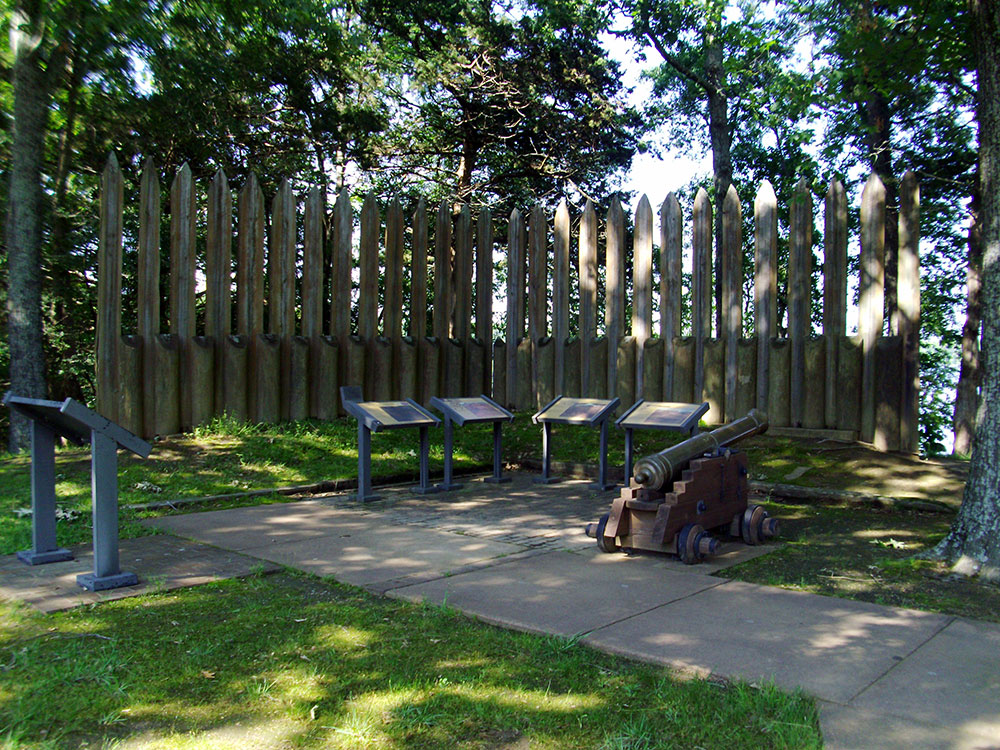
The United States, who acquired this territory in 1803 with the Louisiana Purchase, considered the site of strategic value. The United States designated Arkansas Post as the first capital of the Arkansas Territory in 1819. Little Rock was designated as the capital in 1821. During the years of fur trading, Arkansas Post was protected by a series of forts. The forts and associated settlements were located at three known sites and possibly a fourth. Some of the historic structures have been lost as the waterfront has been subject to erosion and flooding.
The land encompassing the second (and fourth) Arkansas Post site (Red Bluff) was designated as a state park in 1929. In 1960 about 758 acres (307 ha) of land at the site were protected as a National Memorial and National Historic Landmark. It commemorates the complex history of several cultures and time periods: the Quapaw, French settlers who were the first colonists to inhabit the small entrepôt, the short period of Spanish rule, an American Revolutionary War skirmish in 1783, the settlement's role as first territorial capital of Arkansas, and as the site of an American Civil War battle in 1863.
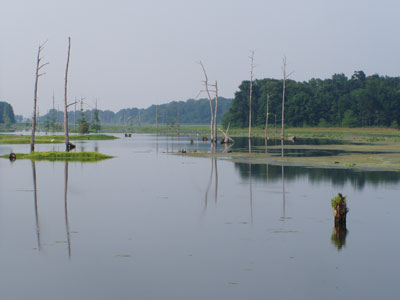
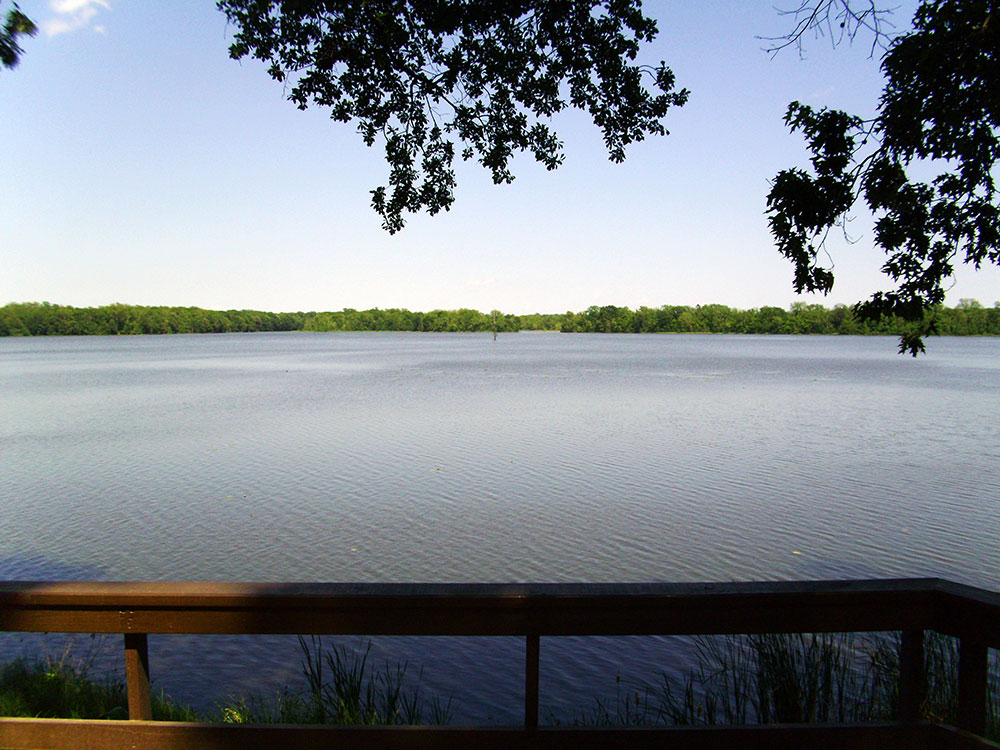
Since the 1950s, three archeological excavations have been conducted at the site. Experts say the most extensive cultural resources at the site are archeological, both for the 18th and 19th-century European-American settlements, and the earlier Quapaw villages. Due to changes in the river and navigation measures, the water level has risen closer to the height of the bluffs, which used to be well above the river. The site is now considered low lying. Erosion and construction of dams on the river have resulted in the remains of three of the historic forts now being under water in the river channel.
Things to Do
Explore Layers of American History
Arkansas Post National Memorial preserves the site of the first European settlement in the lower Mississippi River Valley and commemorates more than 300 years of history. Visitors can learn about the area's roles as a French trading post, Spanish settlement, Civil War battlefield, and early territorial capital of Arkansas.
Visit the Visitor Center and Museum
The visitor center features exhibits, artifacts, maps, and a film that interpret the site's multicultural history. Displays highlight the interactions among Native American tribes, European settlers, soldiers, traders, and settlers who influenced the development of the region.
Tour the Civil War Battlefield
The memorial preserves portions of the Battle of Arkansas Post, also known as the Battle of Fort Hindman, fought in January 1863. Visitors can explore battlefield areas, earthworks, and interpretive exhibits that explain the significance of the Union victory during the Civil War.
Top Trails
Arkansas Post Trail
Length: Approximately 1.5 miles loop
Elevation Gain: Minimal
Difficulty: Easy
This interpretive trail guides visitors through historic areas of the memorial, connecting exhibits, reconstructed features, and significant archaeological locations while explaining the site's extensive history.
Post Bayou Trail
Length: Approximately 1.0 mile round trip
Elevation Gain: Minimal
Difficulty: Easy
This scenic trail follows portions of Post Bayou and the surrounding wetlands, offering opportunities for wildlife viewing, birdwatching, and learning about the natural environment that supported centuries of settlement and trade.
Sources: National Park Service official Arkansas Post National Memorial information, including colonial history, Civil War battlefield interpretation, visitor center exhibits, archaeological resources, and visitor amenities. https://www.nps.gov/arpo/index.htm Additional historical, trail, and visitor information verified through National Park Service planning and interpretive resources. https://www.nps.gov/arpo/planyourvisit/index.htm https://www.nps.gov/arpo/learn/historyculture/index.htm
This article uses material from the Wikipedia article "Arkansas Post", which is released under the Creative Commons Attribution-Share-Alike License 3.0



_P6240048-1000.jpg)
_P6240048.jpg)