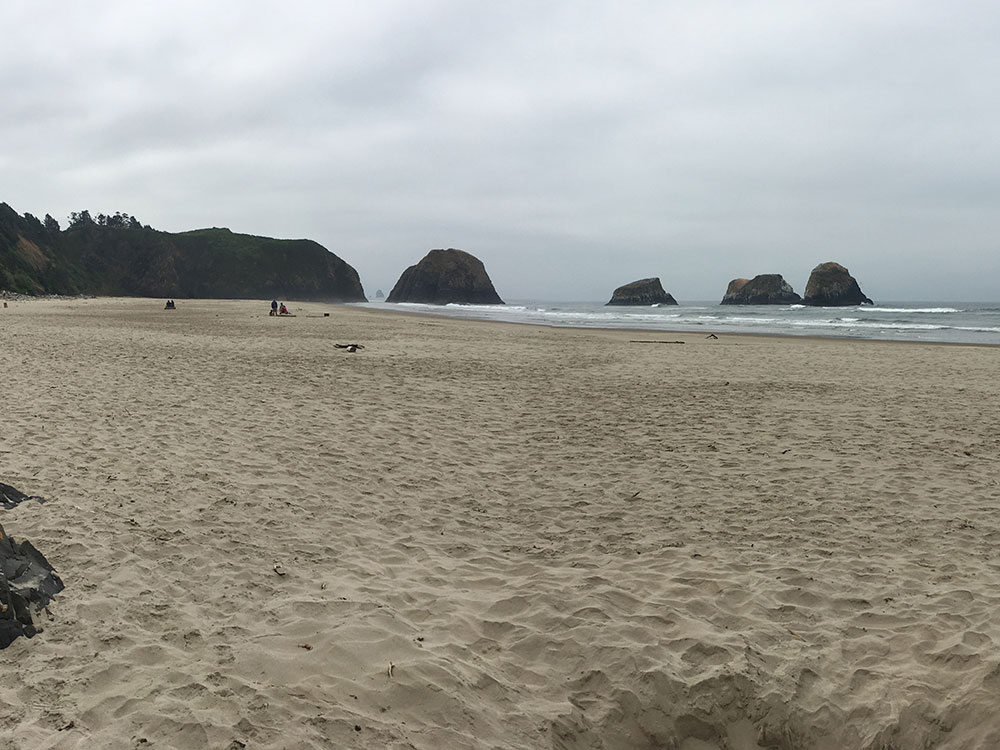
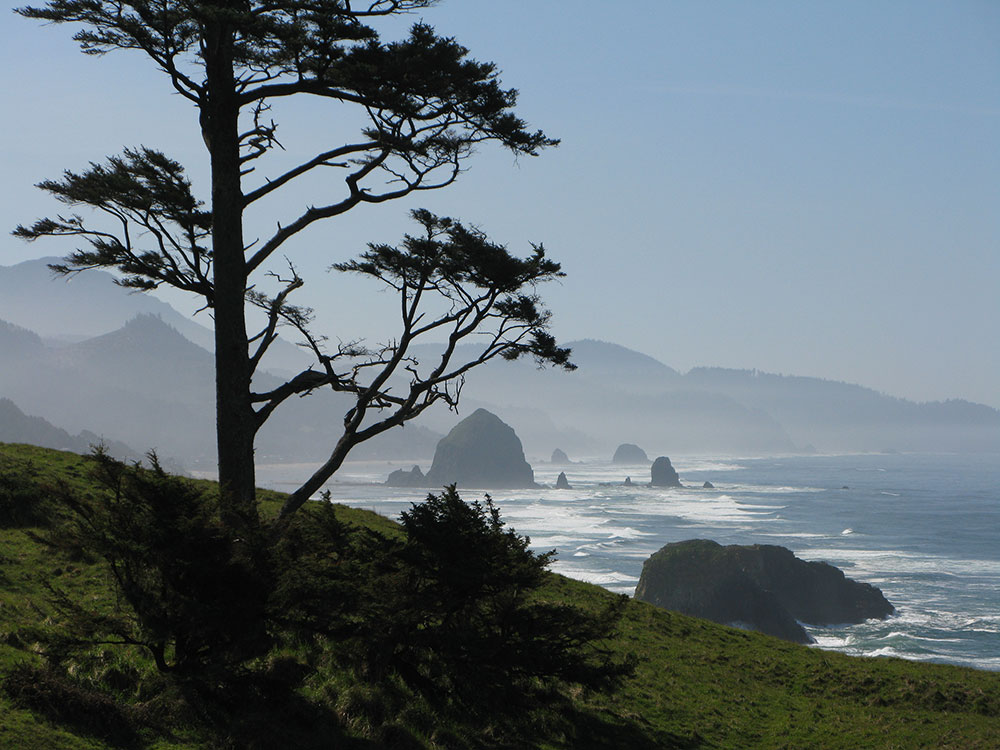
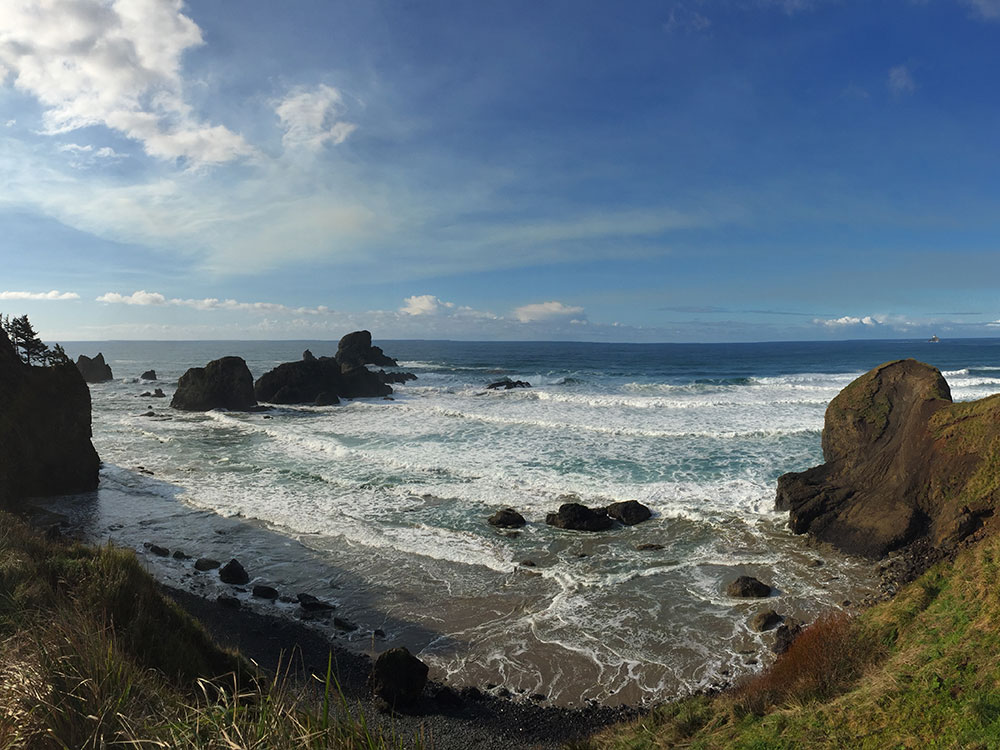
Park encompassing 9 miles of coastline between Cannon Beach and Seaside and includes Tillamook Head and part of Lewis and Clark National Historical Park
General Information
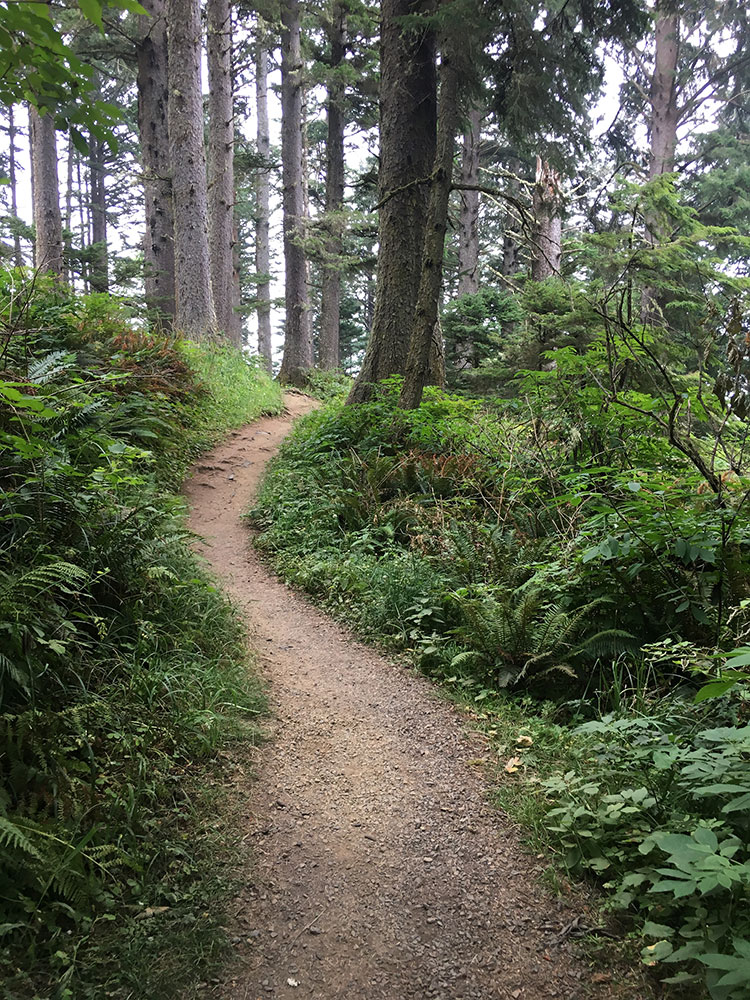
Ecola State Park is a state park located approximately 3 miles north of Cannon Beach in Clatsop County in Oregon on the Oregon Coast. It is administered by the Oregon Parks and Recreation Department. The park encompasses 9 miles (14 km) of coastline between Cannon Beach and Seaside and includes Tillamook Head. In 1806, William Clark and other members of the Corps of Discovery traveled through the area in search of a beached whale and saw burial canoes of the Tillamook; the park is included as part of Lewis and Clark National Historical Park, though separate entrance fees are charged. Archaeological sites within the park dating to as early as 1100 CE have revealed much about the Tillamook. Included within the park are 8 miles (13 km) of the Oregon Coast Trail. Scenes from several movies have been filmed at Indian Beach and other park locations.
Multiple archaeological sites located within park boundaries were added to the National Register of Historic Places in 1997.
The Bald Point Site (Smithsonian trinomial: 35CLT23) features a shell midden and possible house pit, dating to ca. 1550 CE. Associated with the Tillamook people, it has the potential to yield information related to environmental change in the Oregon Coast region, settlement and subsistence patterns, emergence of ethnographic patterns among coastal people, baseline cultural patterns prior to the arrival of European Americans, and other topics. Parts of the site have been lost to coastal erosion since the first scientific investigations in 1976, but the remaining portions appear mostly secure.
At the Ecola Point Site, several ground depressions have been interpreted by researchers as house pits, indicating the presence of a semipermanent village. Two dense shell middens have preserved extensive faunal remains, along with other artifacts. Radiocarbon dates taken at the site roughly span a period from ca. 1100 CE to ca. 1700 CE. The site has the potential to yield information related to environmental change in the Oregon Coast region, settlement and subsistence patterns, emergence of ethnographic patterns among coastal people, the change in cultural patterns from before to after contact with European Americans, and other topics.
Much of the 1985 film The Goonies was filmed within the park, as was the school picnic scene in Kindergarten Cop. Indian Beach was the filming location for the final scenes of Point Break and several scenes of Twilight. Shots of the park also appeared in the film Free Willy.
Tillamook Head is a high promontory on the Pacific coast of northwest Oregon. It is located in west-central Clatsop County, approximately 5 mi (8 km) southwest of Seaside. The promontory forms a steep rocky bluff on the ocean, approximately 1,200 ft (366 m) high, forested with Sitka spruce. It is located in Ecola State Park.
The promontory is named after the Tillamook, a Salishan-speaking tribe of Native Americans who inhabited the coast south of the promontory in the 19th century. In 1806, Captain William Clark and 12 members of the Corps of Discovery documented their journey south from Fort Clatsop, hiking over the promontory where they encountered a beached whale.
Tillamook Head is a tilted remnant of a flow of 15-million-year-old Columbia River basalt. The lava welled up near modern-day Idaho, and flooded down the Columbia Gorge. It spread along the Oregon Coast to Tillamook Head, cooling to a 600-foot thick basalt sill.
This article uses material from the Wikipedia articles "Ecola State Park", and "Tillamook Head", which are released under the Creative Commons Attribution-Share-Alike License 3.0