
National park and preserve in southwest Alaska, notable for the Valley of Ten Thousand Smokes and for its brown bears.
General Information
- Hours:
- Open year-round
Brooks Camp: June 1 through mid-September (Brooks Lodge June 1 to September 18 in 2026)
Valley of Ten Thousand Smokes bus tour: Early June through mid-September - Fees:
- No entrance fee
Fees apply for Brooks Camp Campground, Brooks Lodge, bus tours, and flights - Pet Policy:
- Pets are not allowed at Brooks Camp; check NPS regulations for other areas
- Closest cities with hotels:
- King Salmon (gateway, 20–30 min flight to Brooks Camp); Anchorage, AK (~290 mi northeast)
- Seasons:
- June–September; July and September peak for bear viewing
- Location:
- Katmai National Park, King Salmon, AK
- Website:
- nps.gov/katm
How to Get There
From Anchorage, AK (~290 mi): Fly Alaska Airlines to King Salmon Airport (AKN) ~1 hour, then take a floatplane or boat to Brooks Camp on Naknek Lake via Katmai Air or other charter services (~30 min from King Salmon).
Overview
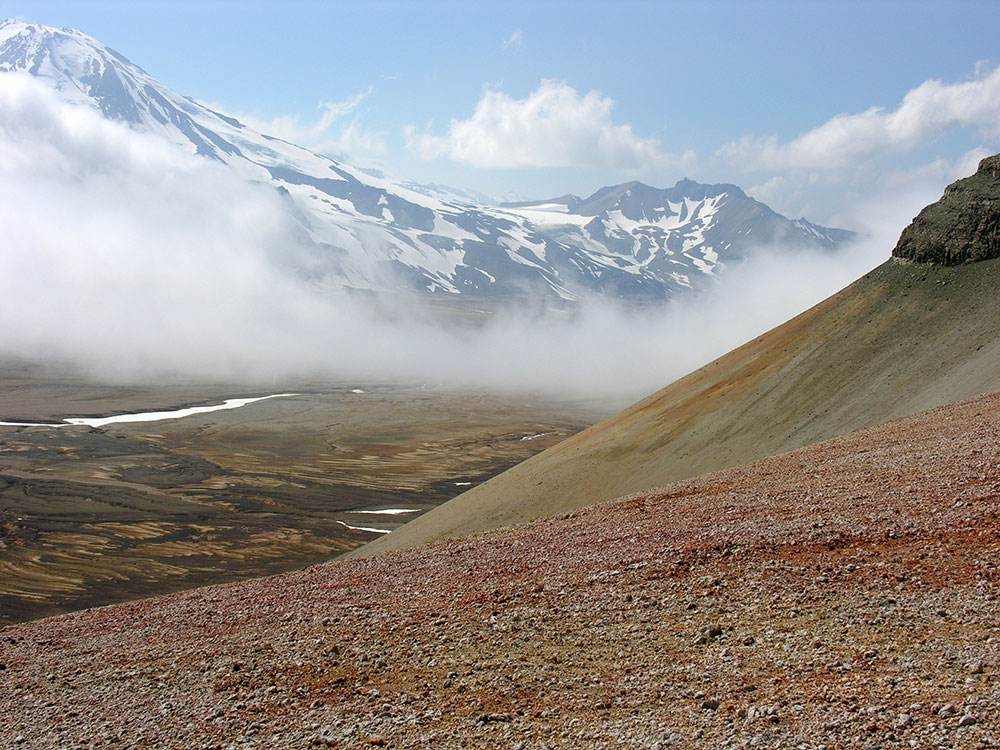
Katmai National Park and Preserve protects about 4.1 million acres of the Alaska Peninsula in southwest Alaska, a wild land of volcanoes, lakes, rivers, and rugged coastline. It is world-famous for its brown bears. About 2,200 bears live in the park, one of the largest protected populations on Earth, and at Brooks Falls, they gather each summer to catch sockeye salmon leaping up the falls. The park also holds the Valley of Ten Thousand Smokes, created in June 1912 when the Novarupta volcano erupted in the largest volcanic eruption of the 20th century, burying the valley under hundreds of feet of ash.
Katmai was proclaimed a national monument in 1918 to protect the volcanic landscape after Robert Griggs led National Geographic expeditions to the steaming valley, which gave it its name. It was expanded several times and became a national park and preserve in 1980. The area is the traditional home of Alaska Native peoples, and archaeological sites at Brooks Camp show human use going back thousands of years. Today, Katmai's bears are known around the world thanks to live bear webcams and the park's online Fat Bear Week contest each fall. Visitors come to watch bears fish from viewing platforms, explore the volcanic valley, fish for world-class rainbow trout and salmon, and experience true Alaska wilderness.
Park Sections
Most visitors go to Brooks Camp, on the shore of Naknek Lake where the Brooks River enters the lake. It is the park's main developed area, with a visitor center, lodge, campground, and bear-viewing platforms at Brooks Falls and the river's mouth. A 23-mile gravel road, the only road in the park, runs from Brooks Camp to the Three Forks Overlook above the Valley of Ten Thousand Smokes. Along the park's remote Shelikof Strait coast, places such as Hallo Bay, Geographic Harbor, and Kukak Bay are known for bear viewing in coastal meadows and on beaches. The rest of the park is wilderness, with large lakes like Grosvenor, Coville, and Nonvianuk that are home to fishing lodges. The village of King Salmon, just west of the park, is the main gateway and park headquarters.
Sightseeing and Exploring the Park
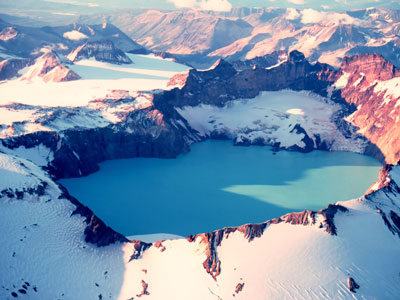
There are no scenic drives in the usual sense, but the park offers one road trip. A daily bus tour, operated by the park's concessioner, travels the 23-mile road from Brooks Camp to the Robert F. Griggs Visitor Center at Three Forks Overlook, which looks out over the ash-filled Valley of Ten Thousand Smokes and the surrounding volcanoes. In 2026, the tour ran from June 5 to September 17. At Brooks Camp, elevated bear-viewing platforms at Brooks Falls, the riverside, and the river mouth let visitors watch bears fishing from a safe distance. Visitors often wait for a turn on the popular falls platform in July. Flightseeing trips from King Salmon, Homer, Kodiak, and Anchorage fly over the park's volcanoes, crater lakes, and coastline.
Hiking
Katmai has only a few maintained trails, all near Brooks Camp. The most popular is the short, easy walk from the visitor center to the Brooks Falls viewing platform, about 1.2 miles each way. A short trail also leads to a reconstructed traditional dwelling at the Brooks River archaeological site. The Dumpling Mountain Trail climbs steeply from Brooks Camp to views over Naknek Lake and the surrounding wilderness. From Three Forks Overlook, the Ukak Falls Trail descends about 1,000 feet into the Valley of Ten Thousand Smokes, where the river has cut a narrow canyon through the ash. Experienced backpackers can explore the valley and nearby volcanoes on multi-day, off-trail routes. Because bears are everywhere, all visitors to Brooks Camp must attend a short bear safety orientation when they arrive.
Other Activities
Bear viewing is Katmai's top activity, at Brooks Camp or on guided floatplane day trips to the coast from Homer, Kodiak, Kenai, and Anchorage. Katmai is also one of Alaska's premier sport fishing destinations. The Brooks River and other streams are famous for rainbow trout and salmon, and several fly-in fishing lodges operate in the park. Paddlers can take on the Savonoski Loop, a multi-day canoe or kayak route through the park's large lakes. Other activities include backpacking in the Valley of Ten Thousand Smokes, flightseeing, and ranger programs at Brooks Camp. Visitors who can't make the trip can watch the bears online through the park's live webcams and vote in Fat Bear Week each October. Nearby, the state-run McNeil River State Game Sanctuary offers bear viewing by lottery permit.
Flora and Wildlife
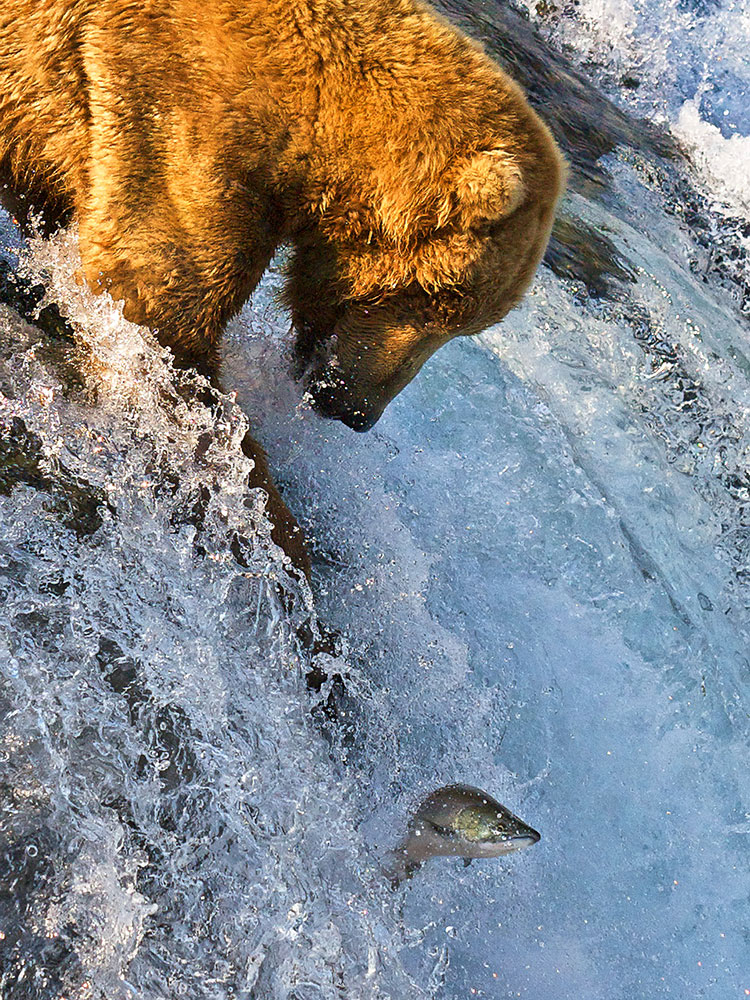
Katmai's brown bears are its most famous residents. They depend on the huge sockeye salmon runs in the Bristol Bay watershed, one of the largest in the world. At Brooks Falls, bears stand at the lip of the falls to catch jumping salmon, and by fall many have grown enormously fat before going into their dens. The park is also home to moose, gray wolves, red foxes, wolverines, river otters, beavers, and caribou. Along the coast, sea otters, harbor seals, Steller sea lions, bald eagles, and puffins are common. The park's landscapes range from spruce and birch forest and shrubby tundra to the nearly barren ash of the Valley of Ten Thousand Smokes. At Brooks Camp, visitors must stay at least 50 yards from bears (100 yards from a sow with cubs) and store all food in designated buildings.
Access
There are no roads to Katmai. Most visitors fly from Anchorage to King Salmon, about 290 miles southwest, on a roughly one-hour commercial flight. From King Salmon, floatplanes make the 20- to 30-minute flight to Brooks Camp. Some air taxi companies also fly directly from Anchorage, Homer, and Kodiak to Brooks Camp or the coast. Coastal bear-viewing areas such as Hallo Bay are most often visited on floatplane day trips from Homer or Kodiak. Flights can be delayed by weather, so it is wise to build extra time into any trip.
Seasons
Katmai is open all year, but Brooks Camp's main season runs from June 1 to mid-September. Bear viewing at Brooks Falls peaks in July, when sockeye salmon run up the river and dozens of bears fish at the falls. In August, many bears move away to feed elsewhere, so fewer are seen at the falls. They return in September to feed on spawned-out salmon in the lower river, when the bears are at their fattest and the tundra turns gold and red. On the coast, bears graze on sedges and dig for clams in June and July. Weather is cool, windy, and often wet all summer. In winter, Brooks Camp closes, and the park is rarely visited.
Camping and Lodging
Brooks Lodge at Brooks Camp offers rustic cabins and a dining room, but demand is so high that reservations are assigned by lottery, with applications accepted the year before. The Brooks Camp Campground, surrounded by an electric fence with food caches, holds a limited number of campers. Reservations on Recreation.gov are released in January and sell out fast. Elsewhere in the park, several private fly-in lodges cater mostly to anglers, including lodges on Grosvenor and Nonvianuk Lakes. Backcountry camping is allowed throughout the park. Outside the park, King Salmon and nearby Naknek have a few lodges and inns, and many visitors stay in Anchorage, Homer, or Kodiak and visit on day trips.
Visitor Centers
The Brooks Camp Visitor Center is the first stop for every visitor to Brooks Camp. Rangers there give the required bear safety orientation and provide information on bear viewing, trails, and fishing. The Robert F. Griggs Visitor Center at Three Forks Overlook has exhibits on the 1912 eruption and is reached on the Valley of Ten Thousand Smokes bus tour. In King Salmon, the King Salmon Visitor Center near the airport provides information on Katmai and other public lands in the region in summer. Hours are seasonal.
This article uses material from the Wikipedia article "Katmai National Park and Preserve", which is released under the Creative Commons Attribution-Share-Alike License 3.0. Additional material comes from nps.gov "Katmai National Park and Preserve", Recreation.gov "Brooks Camp Campground", and Katmailand "Rates and Services" and "Sightseeing Tours".
Featured Locations and Trails

Katmai National Park and Preserve, Public domain, via Wikimedia Commons; Image Size Adjusted

Brooks Camp
Attraction and archeological site in Katmai National Park and Preserve, noted for its opportunities to observe Alaskan brown bears catching fish in the falls of the Brooks River during salmon spawning season
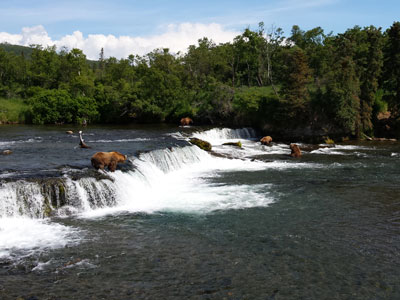
Captain Budd Christman, NOAA Corps, Public domain, via Wikimedia Commons; Image Size Adjusted
Brooks Falls
Waterfall located within Katmai National Park and Preserve in Alaska famous for watching salmon leap over the 6 foot (1.8 m) falls to get to their Brooks Lake spawning grounds
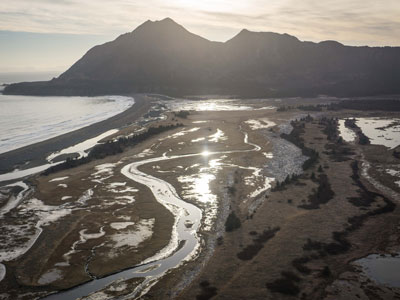
Katmai National Park and Preserve, Public domain, via Wikimedia Commons; Image Size Adjusted

Hallo Bay
Sandy bay located beneath the peaks of the Aleutian Range within Katmai National Park famous for its bear viewing
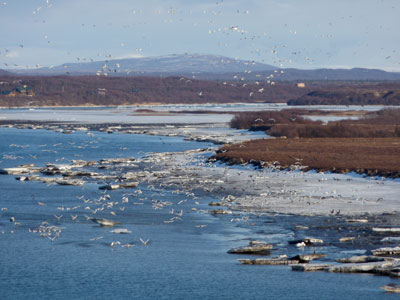
Katmai National Park and Preserve, Public domain, via Wikimedia Commons; Image Size Adjusted

King Salmon
Community in Bristol Bay Borough in Alaska home to Katmai National Park and Preserve
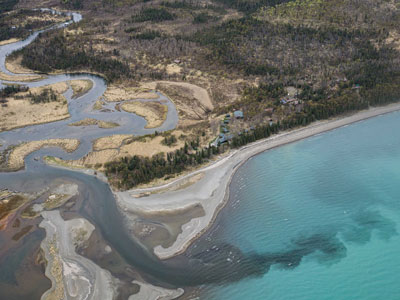
Katmai National Park and Preserve, Public domain, via Wikimedia Commons; Image Size Adjusted

Naknek Lake
Lake in southern Alaska, near the base of the Alaska Peninsula and located in Katmai National Park and Preserve, famous for its sport fishing, supporting one of the largest king salmon fisheries in southwestern Alaska
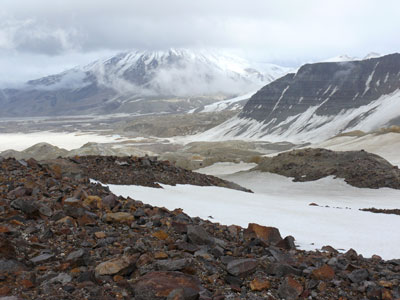
Katmai National Park and Preserve, Public domain, via Wikimedia Commons; Image Size Adjusted

Valley of Ten Thousand Smokes
Valley within Katmai National Park and Preserve in Alaska which is filled with ash flow from the eruption of Novarupta on June 6-8, 1912