Historic coastal city in Massachusetts where much of the city's cultural identity reflects its role as the location of the infamous Salem witch trials of 1692.
General Information
- Seasons:
- All year, with October the busiest month for haunted history tourism.
Overview
Salem is a historic port city on Massachusetts's North Shore, about 15 miles northeast of Boston, and it is famous around the world for the Salem witch trials of 1692, one of the most notorious episodes in colonial American history. It is also known for its maritime past, when it was one of the wealthiest ports in the young United States, for the Peabody Essex Museum, and for the author Nathaniel Hawthorne, who was born here. Every October the city is transformed by Halloween celebrations that draw hundreds of thousands of visitors.
Visitors come to Salem for its witch-related history and attractions, including the Salem Witch Museum and The Witch House, and for the Salem Maritime National Historic Site. They also come for the Peabody Essex Museum, the House of the Seven Gables, the Salem Willows amusement park, and the October Haunted Happenings festival, and the city is easy to reach by commuter rail or by ferry from Boston.
History
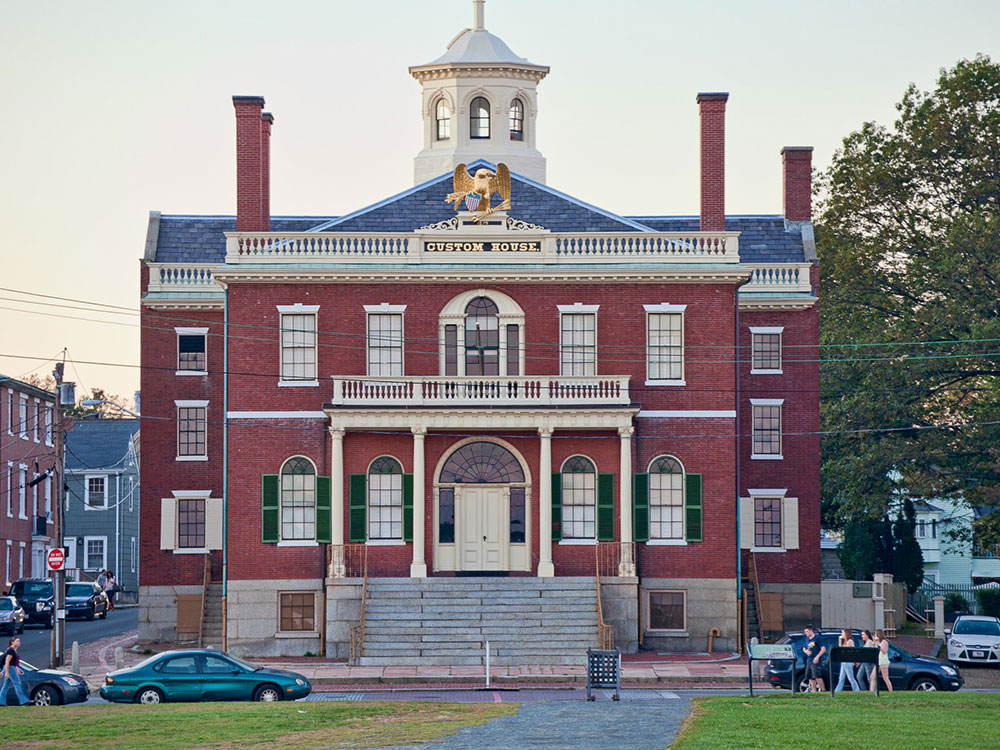
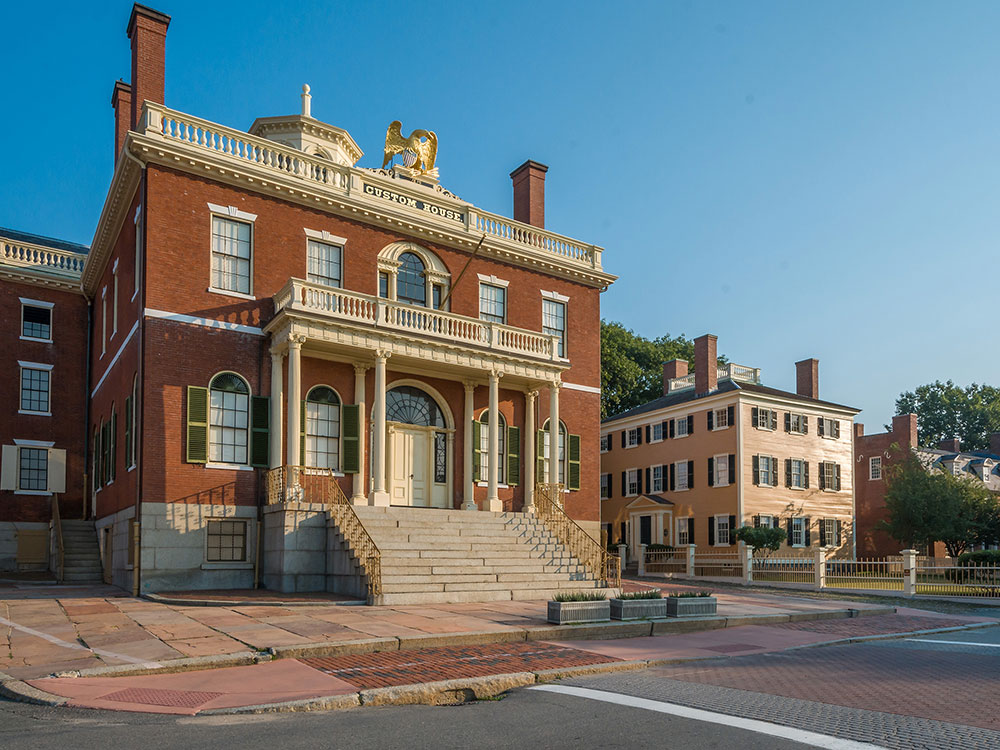
Salem was settled in 1626 by English colonists on the site of a Native American village called Naumkeag, and in 1629 it became the main port of the Massachusetts Bay Colony. In 1692, a panic over accusations of witchcraft led to the arrest of more than 200 people, and 19 were hanged, one man was pressed to death, and several others died in jail. The hysteria, which began in Salem Village (now Danvers), ended after about a year, and the trials were later seen as a warning against mob justice and false accusations. In the late 1700s and early 1800s, Salem's merchant ships, trading with Asia, made it one of the richest cities in America, and the architect Samuel McIntire designed many of its fine Federal-style mansions. Nathaniel Hawthorne, who worked in the Custom House, was born here in 1804 and wrote The Scarlet Letter and The House of the Seven Gables.
Preserved Sites of the Colonial Witchcraft Trials
Several places connected to the 1692 witchcraft trials survive in Salem and nearby Danvers. The Witch House, the 1675 home of Judge Jonathan Corwin, is the only structure still standing in Salem with direct ties to the trials, and its rooms show life in the period. The Old Burying Point Cemetery on Charter Street, dating from 1637, holds the grave of Judge John Hathorne, and next to it is the Salem Witch Trials Memorial, dedicated in 1992, with stone benches inscribed with the names of the 20 victims. Proctor's Ledge, a rocky outcropping, was confirmed in 2016 as the site of the hangings, and has a memorial. The Salem Witch Museum presents the story in a dramatic exhibit in a former church, and the Witch Dungeon Museum stages a reenactment of an examination. In Danvers, the Rebecca Nurse Homestead, home of one of the executed women, and the Salem Village Witchcraft Victims' Memorial preserve the history of the village where the accusations began.
Sightseeing and Popular Landmarks
The Salem Maritime National Historic Site has Derby Wharf, the Custom House, and the tall ship Friendship, a replica of an 1797 merchant vessel. The House of the Seven Gables, built in 1668, inspired Hawthorne's novel, and Chestnut Street is lined with fine mansions by Samuel McIntire, and Pickering Wharf is a waterfront with shops and restaurants. Pioneer Village, built in 1930, is a re-creation of a seventeenth-century village and the oldest living history museum in America.
Culture and Museums
The Peabody Essex Museum, founded in 1799, has one of the world's great collections of Asian art, along with maritime and American art and a Chinese house moved from China, and the Salem Witch Museum is one of the most visited attractions. The House of the Seven Gables and the Hawthorne birthplace are literary sites, and the Salem Maritime National Historic Site has exhibits on the city's trade. Haunted Happenings in October includes parades, tours, and costume events, and Salem is also known for its large community of modern practitioners of witchcraft.
Parks
Salem Willows Park is an oceanfront park with an amusement arcade and a pier, and Winter Island Park has a lighthouse, a beach, and a campground. Salem Common is a historic green surrounded by Federal mansions, and Forest River Park has a saltwater pool, a beach, and a nature area. The Salem Harbor Walk and the Salem Bike Path connect the waterfront to the rest of the city.
Seasons and Weather
Salem has a humid continental climate. Summers are warm, with highs in the low 80s°F, and winters are cold, with highs in the 30s°F and about 45 inches of snow. October is the busiest month, with large crowds and traffic, so visitors should book lodging and tours well in advance and consider taking the train or ferry.
This article uses material from Wikipedia as well as information from official tourism and institutional sources. Key references include Destination Salem, Salem Witch Museum, National Park Service Salem Maritime National Historic Site, Peabody Essex Museum, Mass.gov Visit Massachusetts, and National Weather Service Boston/Norton. Wikipedia material is from the articles "Salem, Massachusetts" and "Salem witch trials", and is available under the Creative Commons Attribution-Share-Alike License 3.0.
Featured Locations
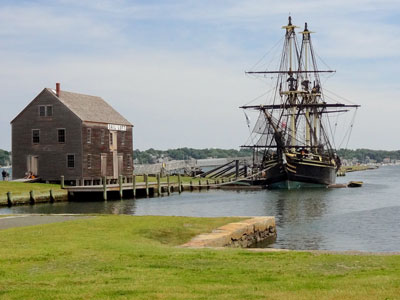
Rizka, CC BY-SA 3.0, via Wikimedia Commons; Image Size Adjusted
Salem Maritime National Historic Site
First National Historic Site established in the United States consisting of 12 historic structures, one replica tall-ship, and land along the waterfront of Salem Harbor
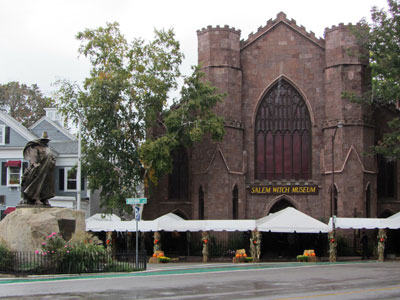
Bob Linsdell, CC BY 3.0, via Wikimedia Commons; Image Size Adjusted
Salem Witch Museum
A museum dedicated to interpreting the events of the 1692 witch trials through immersive exhibits, historical presentations, artifacts, and educational displays about one of the most famous episodes in colonial American history.
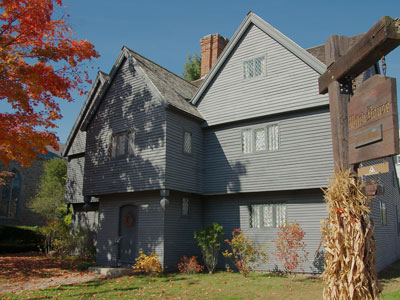


The Witch House
Historic house museum in Salem is the only structure still standing with direct ties to the Salem witch trials of 1692