Historic riverfront capital city featuring government landmarks, museums, outdoor recreation, and cultural attractions along the Missouri River.
General Information
- Closest cities with hotels:
- Pierre
- Seasons:
- All year
- Location:
- Pierre, SD 57501
- Website:
- visitpierre.com
How to Get There
From Rapid City (190 mi): Take I-90 E toward Wall, continue east to US-83 S near Murdo, then follow US-83 south directly into the city along the Missouri River.
Overview
Pierre (pronounced "peer") is the capital of South Dakota, on the east bank of the Missouri River near the geographic center of the state, and it is one of the smallest state capitals in the country, with a population of only about 14,000. It is known for its location at the Missouri River and Lake Oahe, for its rich history of Native American and fur trade sites, and for its small-town, outdoorsy feel. The city is also known for its fishing, particularly for walleye and salmon on Lake Oahe.
Visitors come to Pierre for the South Dakota State Capitol, the South Dakota Cultural Heritage Center, and the Fort Pierre Chouteau National Historic Landmark. They also come for the Verendrye Museum and the Casey Tibbs Rodeo Center across the river in Fort Pierre, and for fishing and boating on Lake Oahe, and it is a quiet and affordable stop for travelers along U.S. Highway 14.
History
The Arikara and Lakota peoples lived along this part of the Missouri River, and in 1743 two sons of the French explorer La Verendrye buried a lead plate near present-day Fort Pierre to claim the region for France, and the plate was found in 1913. Fort Pierre, a major fur trading post on the west bank, was established in 1832 by the American Fur Company and named for Pierre Chouteau Jr. The city of Pierre was founded in 1880 as the western terminus of the Chicago and North Western Railway, and it was chosen as the state capital in 1889 and confirmed in 1904 by a vote of the people. The Oahe Dam, completed in 1962, created Lake Oahe, one of the largest reservoirs in the country.
Sightseeing and Popular Landmarks
The South Dakota State Capitol, built in 1910 in a neoclassical style with a stained glass dome, offers free tours and sits near Capitol Lake, which has paths and a fountain. The Fort Pierre Chouteau National Historic Landmark is the site of the old fur trading post, and the Verendrye Museum has exhibits on the area's early history and the Verendrye Plate. The Oahe Dam and Visitor Center, a few miles north of the city, has tours of the dam and views of the reservoir.
Culture and Museums
The South Dakota Cultural Heritage Center has exhibits on the history of the state, from Native American cultures to the gold rush and the Dakota boom. The Casey Tibbs South Dakota Rodeo Center honors the famous bronc rider Casey Tibbs and the state's rodeo heritage, and the Verendrye Museum covers local history. The Pierre Players community theater provides local performances.
Parks
Pierre has a number of parks along the Missouri River. LaFramboise Island Nature Area is a large island park connected by a causeway, with trails and wildlife viewing, and Griffin Park and Steamboat Park have playgrounds and boat ramps. Lake Oahe has boat ramps, campgrounds, and fishing opportunities, and the Fort Pierre National Grassland, south of town, has prairie scenery and trails. The Oahe Downstream Recreation Area has fishing and camping below the dam.
Seasons and Weather
Pierre has a semi-arid continental climate. Summers are hot, with highs in the upper 80s°F, and winters are cold and windy, with highs in the 20s and 30s°F and about 25 inches of snow. Spring and fall are mild but short, and severe thunderstorms and blizzards are possible. The best time to visit is from late spring through early fall.
This article uses material from Wikipedia as well as information from official tourism and institutional sources. Key references include Pierre Convention & Visitors Bureau, Travel South Dakota, South Dakota State Historical Society, Oahe Dam, and National Weather Service Aberdeen. Wikipedia material is from the article "Pierre, South Dakota", and is available under the Creative Commons Attribution-Share-Alike License 3.0.
Featured Locations
Dough4872, CC BY-SA 4.0, via Wikimedia Commons; Image Size Adjusted

Casey Tibbs Rodeo Center Museum
Two-level museum honoring rodeo legends with exhibits of championship memorabilia, bronze statues, western murals, and panoramic views of the Missouri River.
Dough4872, CC BY-SA 4.0, via Wikimedia Commons; Image Size Adjusted
Fort Pierre Chouteau National Historic Landmark
Open prairie site with interpretive signage marking the location of a once-thriving 19th-century fur trading post central to early frontier commerce.
Dough4872, CC BY-SA 4.0, via Wikimedia Commons; Image Size Adjusted
South Dakota State Capitol
Beaux-Arts style building featuring marble staircases, terrazzo tile mosaics, and historic legislative chambers with intricate architectural details.
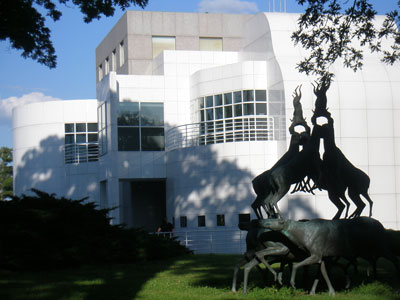
Des Moines Guy, CC BY-SA 3.0, via Wikimedia Commons; Image Size Adjusted

South Dakota State Historical Society Museum
State history museum preserving artifacts, exhibitions, and educational resources that interpret the people, cultures, events, and landscapes that shaped South Dakota.
Dough4872, CC BY-SA 4.0, via Wikimedia Commons; Image Size Adjusted
Verendrye Museum
Historic museum housed in a 1930s American Legion Hall featuring regional artifacts, pioneer memorabilia, and exhibits on early Missouri River exploration.