.jpg)
Park commemorating passage of the Homestead Act of 1862, which allowed any qualified person to claim up to 160 acres of federally owned land in exchange for five years of residence and the cultivation of the property
General Information
Crete, 29 miles
Lincoln, 45 miles
How to Get There
From Lincoln (45 miles): Take N 13th St to E O St. Turn right at the 1st cross street onto E O St. Get on US-77 S/Homestead Expy from Rosa Parks Way. Merge onto US-77 S/Homestead Expy. Continue on W Hickory Rd. Drive to NE-4 E in Blakely.
Overview
Homestead National Historical Park commemorates passage of the Homestead Act of 1862, which allowed any qualified person to claim up to 160 acres (0.65 km2) of federally owned land in exchange for five years of residence and the cultivation and improvement of the property. The Act eventually transferred 270,000,000 acres (1,100,000 km2) from public to private ownership.
The park is five miles (8 km) west of Beatrice, Nebraska on a site that includes some of the first acres successfully claimed under the Homestead Act. The national monument was first included in the National Register of Historic Places in 1966.
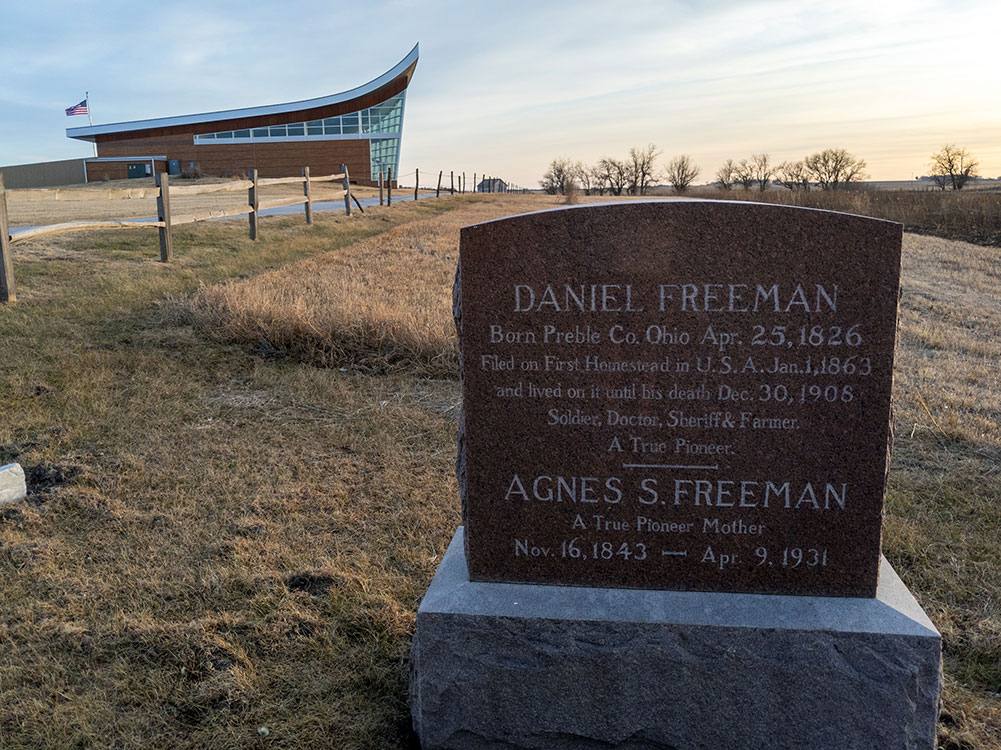
TheHomestead Heritage Center, dedicated in 2007, contains exhibits that treat the effect of the Homestead Act on immigration, agriculture, native tribes, the tallgrass prairie ecosystem, and federal land policy. The roof line of the center resembles a "single bottom plow moving through the sod," and the parking lot measures exactly one-acre (4,000 m2). A separate Education Center features science and social science presentations that can be shared with classrooms anywhere in the United States through distance-learning.
The park includes 100 acres (0.40 km2) of tallgrass prairie restored to approximate the ecosystem that once covered the central plains of the United States—and that was nearly plowed into extinction by the homesteaders. This restoration, which necessitates regular mowing, haying, and prescribed burns, has been managed by the National Park Service for more than 60 years and is the oldest in the National Park System. The park maintains about 2.7 miles (4.3 km) of hiking trails through the prairie and the woodland surrounding Cub Creek, accessible via all-terrain wheelchair.
The Homestead Heritage Center overlooks the 100 acres of restored Tallgrass prairie found at Homestead National Historical Park. A three-mile (4.8 km) trail system winding through the prairie allows further exploration of this ecosystem.
Things to Do
Discover the Story of the American Homestead Movement
Homestead National Historical Park, located near Beatrice, Nebraska, commemorates the Homestead Act of 1862, one of the most influential laws in American history. The act allowed eligible settlers to claim public land, helping shape the settlement and development of the American West. The park preserves the site of one of the first successful homestead claims and offers visitors a chance to explore the history, culture, and landscapes associated with the nation's homesteading era.
Visit the Homestead Heritage Center
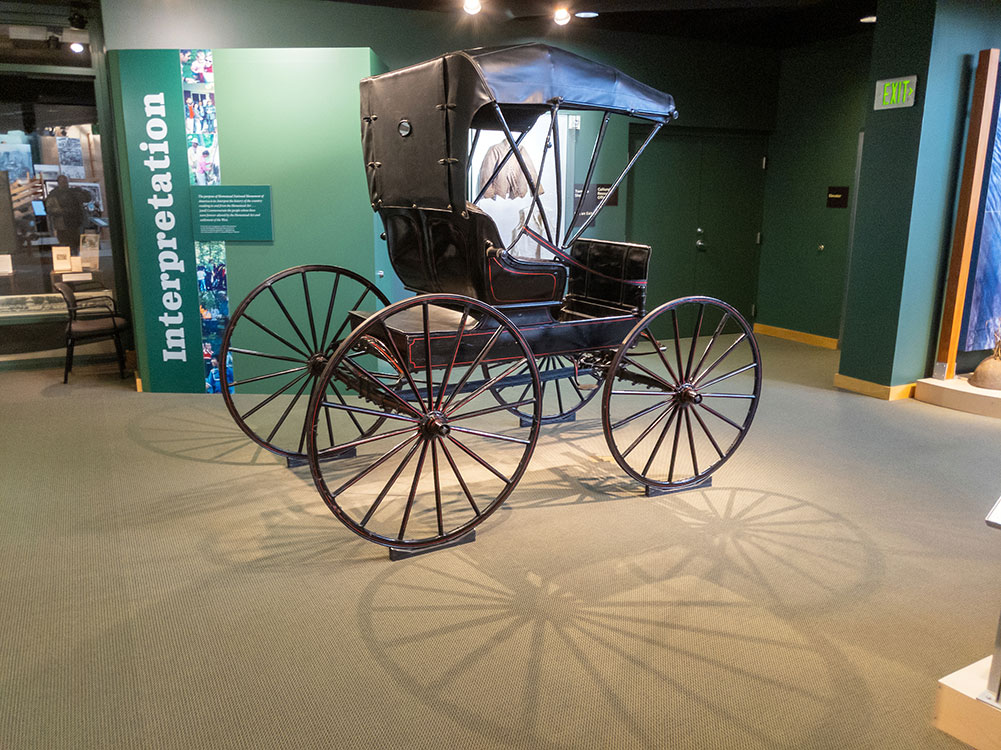
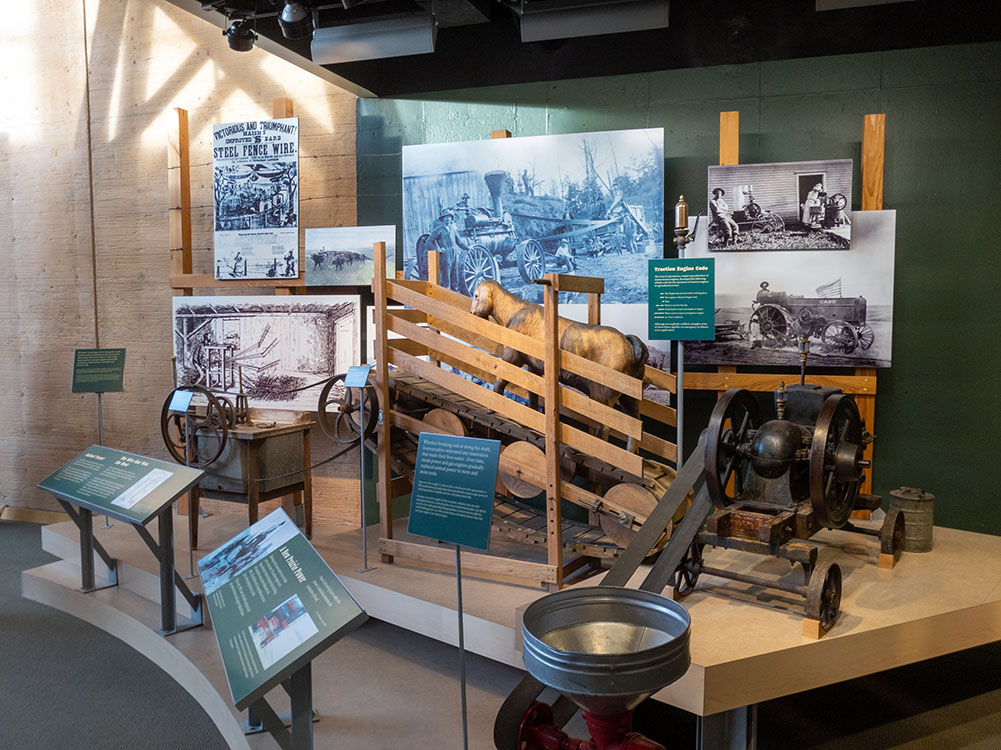
The Homestead Heritage Center features interactive exhibits, historical artifacts, films, and educational displays that explain the impact of the Homestead Act on immigrants, settlers, Native American communities, agriculture, and the expansion of the United States. The center serves as the primary introduction to the park's rich historical themes.
Tour the Palmer-Epard Cabin
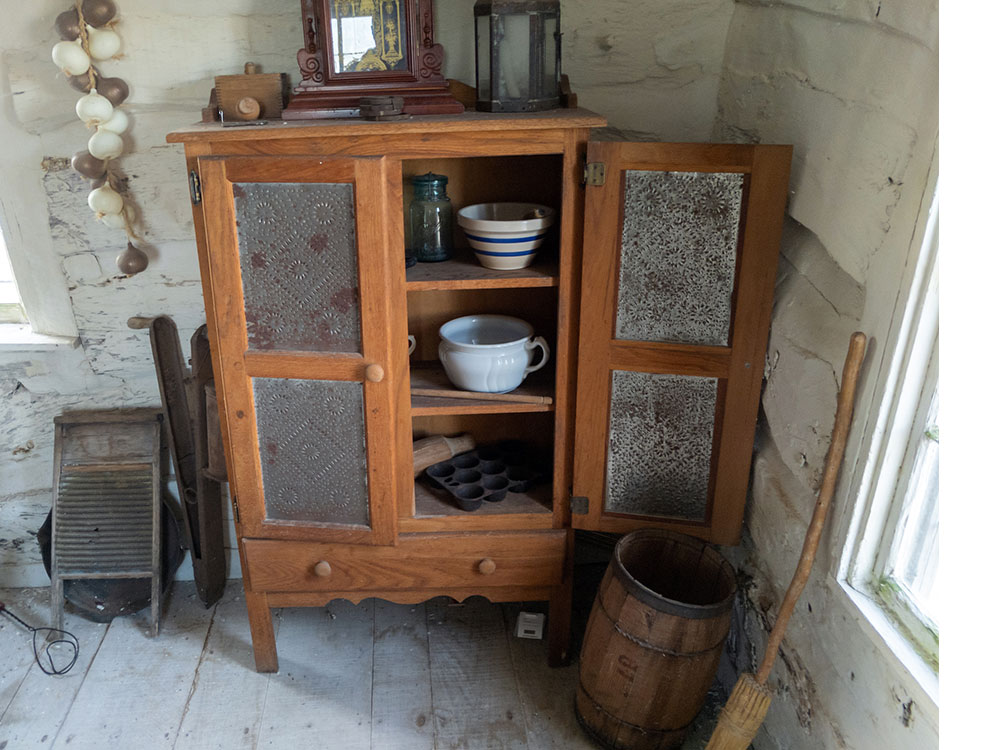
One of the park's highlights is the historic Palmer-Epard Cabin, a rare log cabin built by early homesteaders. Visitors can step inside and gain insight into frontier life, pioneer challenges, and the resourcefulness required to settle the Great Plains during the nineteenth century.
Experience Tallgrass Prairie Restoration
The park protects and restores native tallgrass prairie similar to what early settlers encountered when arriving in Nebraska. Visitors can observe native grasses, wildflowers, pollinators, birds, and seasonal changes throughout one of the largest prairie restoration projects managed by the National Park Service.
Explore Agricultural and Cultural History
Interpretive exhibits and programs explore farming technology, immigration, community development, and the diverse experiences of the millions of people who participated in the homesteading movement. The park highlights how homesteading shaped both Nebraska and the nation.
Top Trails
Homestead Trail
Length: Approximately 2.7 miles loop
Elevation Gain: Minimal
Difficulty: Easy
This scenic trail passes through restored tallgrass prairie and connects several of the park's key attractions. Visitors can enjoy wildlife viewing, prairie landscapes, and interpretive signage that explains homestead history and ecology.
Woodland Loop Trail
Length: Approximately 1 mile loop
Elevation Gain: Minimal
Difficulty: Easy
This peaceful trail explores wooded habitats along Cub Creek and provides opportunities to observe birds, native plants, and seasonal wildflowers while experiencing a different side of the park's landscape.
Prairie and Heritage Walk
Length: Approximately 1.5 miles round trip
Elevation Gain: Minimal
Difficulty: Easy
Visitors can walk through restored prairie environments while learning about prairie ecology, agricultural history, and the challenges faced by early homesteaders.
Historic Site Walking Tour
Length: Approximately 0.5 miles
Elevation Gain: Minimal
Difficulty: Easy
This short route connects the Heritage Center, Palmer-Epard Cabin, Freeman School, and other historic features, providing a comprehensive overview of the park's cultural and historical significance.
Sources: National Park Service official Homestead National Historical Park information, including details on the Homestead Act of 1862, Homestead Heritage Center, Palmer-Epard Cabin, prairie restoration, trails, and educational programs. https://www.nps.gov/home
Additional information verified through National Park Service visitor resources covering the Homestead Trail, Freeman School, tallgrass prairie restoration, pioneer history, and visitor experiences throughout Homestead National Historical Park.
In 1867, George W. Palmer built the Palmer-Epard Cabin from mixed hardwoods about 14 miles (23 km) northeast of the park. It measures 14 by 16 feet (4.3 m x 4.9 m) and is representative of the local construction style. Palmer lived in the cabin with his wife and ten children. Between 1875 and 1880, a 10-by-12-foot (3.0 m x 3.7 m) lean-to was added to the rear of the cabin, and the Palmers continued to live in it until 1895, when it was sold to nephews Eugene Mumford and William Foreman. A few years later, the farm was sold to Lawrence and Ida Mumford Epard, who lived in the cabin for nearly 40 years. The cabin was donated to the park in 1950 and has been moved and restored several times in intervening years.
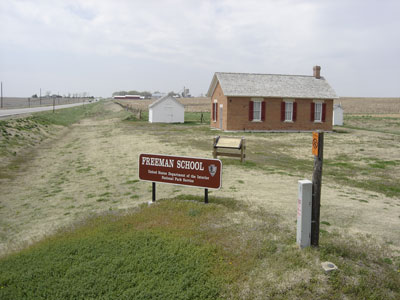
The Freeman School, built of foot-thick red brick with carved limestone lintels, was the longest continuously used one-room school in Nebraska (1872-1967). The school also served as a Lutheran church, a polling place for Blakely Township, and a community center for debates, clubs, and box socials. The National Park Service restored the school to appear as it did during the 1870s.
The Freeman School was the focus of an early, influential judicial decision regarding separation of church and state. In 1899, Daniel Freeman sued the school board after a teacher, Edith Beecher, refused to stop praying, reading the Bible, and singing gospel songs in her classroom. In Freeman v. Scheve, et al. (1902), the Nebraska Supreme Court ruled that Beecher's activities violated provisions of the Nebraska constitution.
This article uses material from the Wikipedia article "Homestead National Historical Park", which is released under the Creative Commons Attribution-Share-Alike License 3.0