
Powerful living memorial to the Holocaust featuring historical exhibitions, survivor testimonies, and educational programs that confront hatred and promote human dignity.
General Information
- Hours:
- Daily: 10:00 a.m. – 5:30 p.m.
Closed: Yom Kippur and December 25
Last entry to the Permanent Exhibition: 4:30 p.m. - Fees:
-
Admission is free
Timed-entry tickets required for the Permanent Exhibition from March 1 to August 31 (subject to $1 transaction fee)
Other exhibitions do not require tickets - Pet Policy:
- Pets are not allowed
- Seasons:
- All year; Spring and Fall recommended for comfortable weather and lighter crowds
- Location:
- 100 Raoul Wallenberg Pl SW, Washington, DC 20024
- Website:
- ushmm.org
How to Get There
From Smithsonian Metro Station, walk west on Independence Avenue SW, turn left on Raoul Wallenberg Place SW, and continue north to the museum entrance.
Overview
The United States Holocaust Memorial Museum near the National Mall documents, studies, and interprets the history of the Holocaust as a living memorial to its millions of victims. Visitors come to learn through artifacts, photographs, film, and eyewitness testimonies. Timed passes are advised at busy times, and the permanent exhibition is not recommended for young children.
The Holocaust: Permanent Exhibition
The permanent exhibition spans three floors in a chronological narrative: the Nazi assault from 1933 to 1939, the "Final Solution" from 1940 to 1945, and the last chapter covering liberation and its aftermath.
Daniel's Story
This exhibition for children ages 8 and up tells the Holocaust through the eyes of a boy in a Jewish family.
Special Exhibitions on Genocide and Human Rights
Rotating exhibits examine other genocides and mass atrocities and issues of human rights.
Hall of Remembrance
The six-sided Hall of Remembrance is a quiet memorial space with an eternal flame, where visitors can pause and reflect.
Notable Artifacts
Among the objects that make a lasting impression are:
- Railcar: a freight car of the type used to deport Jews to killing centers
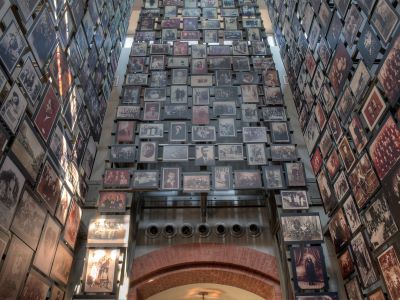
- Tower of Faces: photographs of the residents of the Lithuanian town of Eishishok, most of whom were killed
- Auschwitz barracks: a barracks from the Auschwitz-Birkenau camp
This article uses material from the Wikipedia articles and official tourism pages for the United States Holocaust Memorial Museum, which are released under the Creative Commons Attribution-Share-Alike License 3.0.

