
Smithsonian National Museum of Natural History

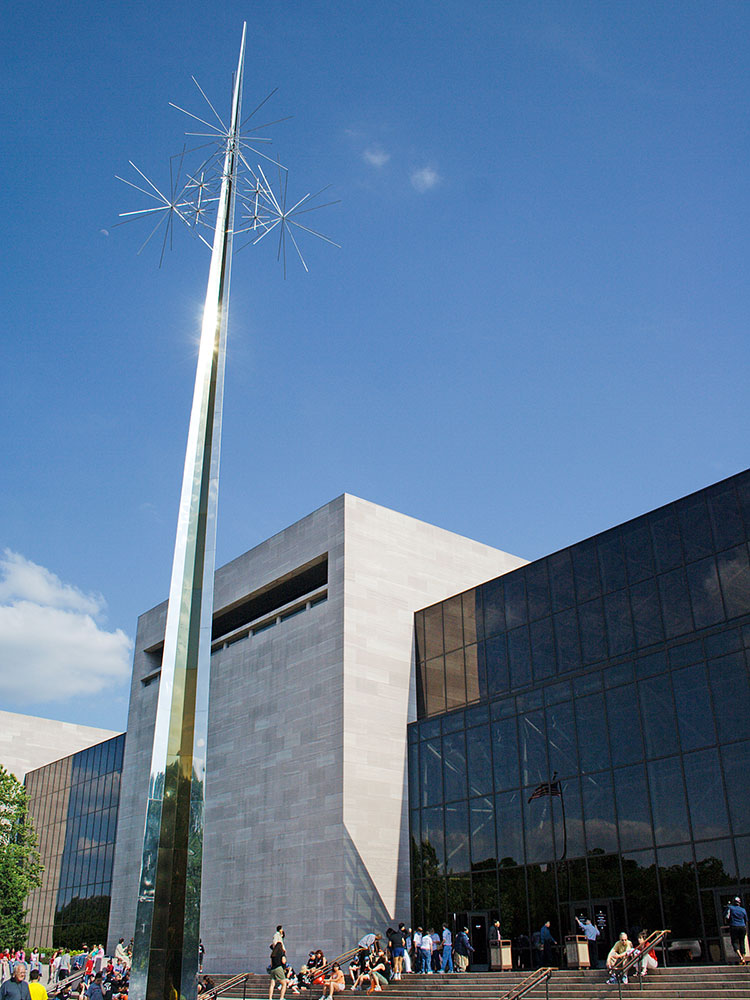
Smithsonian National Museum of Natural History, Washington, D.C.

Pedro Szekely from Los Angeles, USA, CC BY-SA 2.0, via Wikimedia Commons; Image Size Adjusted

A world-renowned museum showcasing extensive collections of fossils, minerals, gemstones, cultural artifacts, human origins exhibits, wildlife specimens, and scientific discoveries spanning Earth's history.

General Information
Hours:
Daily: 10:00am to 5:30pm
Closed December 25
Last entry is typically permitted until closing time
Fees:
Free admission
Some special exhibitions may require separate paid tickets
Pet Policy:
Pets are not allowed inside the museum
Closest cities with hotels:
Washington, DC
Seasons:
All year; spring and fall generally offer the most comfortable weather for exploring nearby National Mall attractions
Location:
/?api=1&query=10th+Street+and+Constitution+Avenue+NW+Washington+DC+20560" rel="noopener" target="_blank">10th Street and Constitution Avenue NW, Washington, DC 20560
Website:
history.si.edu/" rel="noopener" target="_blank">naturalhistory.si.edu

From Arlington, VA (5 mi): Take I-395 or US-50 into Washington, DC, continue toward the National Mall, and proceed to 10th Street NW and Constitution Avenue NW where the museum is located.

Overview

The Smithsonian National Museum of Natural History is one of the most visited museums in the world, inviting travelers to explore billions of years of Earth's history through extraordinary collections and immersive exhibitions. Opened in 1910 as part of the Smithsonian Institution, the museum houses more than 146 million specimens and artifacts spanning geology, paleontology, anthropology, zoology, and botany. Visitors are greeted by the museum's grand rotunda before embarking on a journey through halls filled with towering dinosaur skeletons, rare gemstones, ancient fossils, and exhibits that reveal the remarkable diversity of life on Earth.

Among the museum's most celebrated attractions are the Hall of Fossils, the Deep Time exhibition, and the National Gem Collection, which includes the legendary Hope Diamond. Travelers can trace the evolution of life from prehistoric oceans to modern ecosystems, examine evidence of human origins, and discover how scientists study climate, biodiversity, and planetary change. Interactive displays and state-of-the-art exhibits make complex scientific concepts accessible while encouraging visitors of all ages to develop a deeper appreciation for the natural world.

Beyond its public galleries, the museum functions as a leading scientific research institution with experts conducting studies across the globe and preserving collections of immense scientific importance. Research conducted by Smithsonian scientists contributes to the understanding of ecosystems, extinct species, cultural history, and environmental change. For tourists exploring the National Mall, the museum offers a unique opportunity to experience wonder, discovery, and education under one roof, making it one of the essential cultural destinations in the nation's capital.

This article uses material from the Wikipedia articles and official tourism pages for the https://naturalhistory.si.edu/>, which are released under the Creative Commons Attribution-Share-Alike License 3.0.
Lincoln Memorial Gettysburg Address
David Bjorgen, CC BY-SA 3.0, via Wikimedia Commons; Image Size Adjusted
Lincoln Memorial Statue
Pedro Szekely from Los Angeles, USA, CC BY-SA 2.0, via Wikimedia Commons; Image Size Adjusted