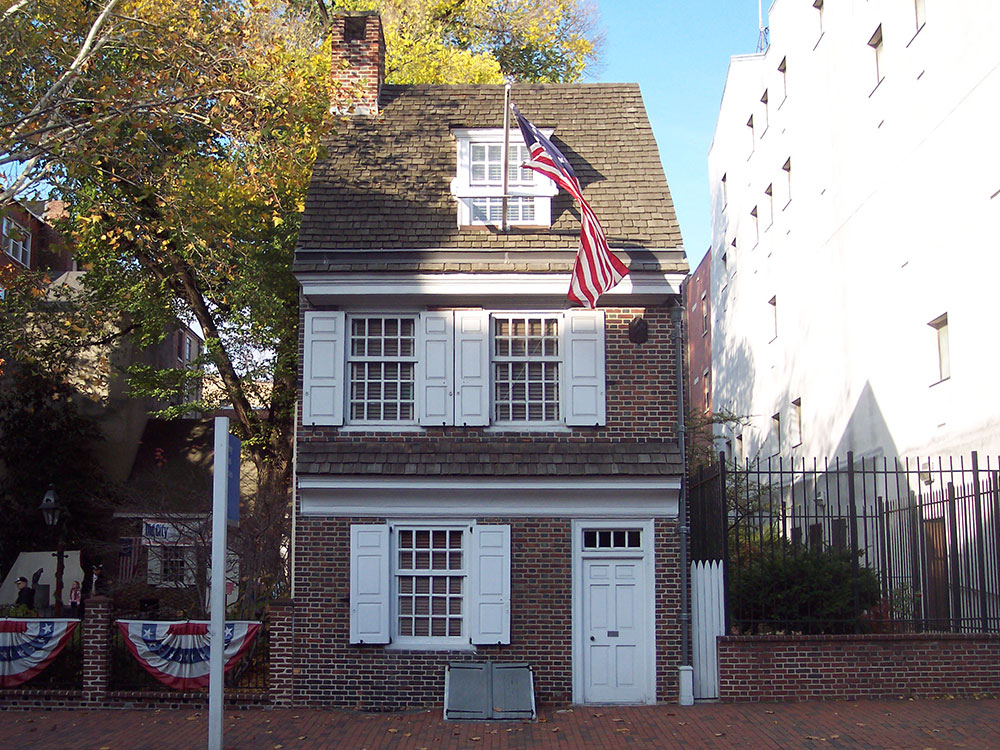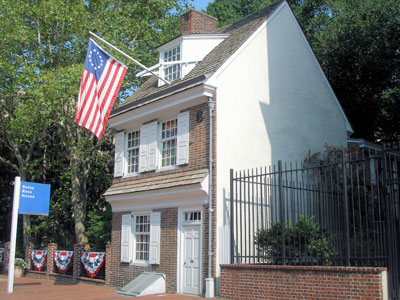
Landmark purported to be the site where the seamstress and flag-maker Betsy Ross (1752-1836) lived when she is said to have sewed the first American Flag
General Information
December to February: Wednesday to Monday (closed Tuesdays): 10am to 5pm
Adults: $10.00
Children (ages 6-12)/Seniors (65+)/Students/Military (with ID): $8
How to Get There
Head south on S 15th St toward S Penn Square. S 15th St turns slightly left and becomes S Penn Square. Keep left to stay on S Penn Square. Turn right onto Market St. Turn left onto N Front St. N Front St turns left and becomes Arch St.
Overview
The Betsy Ross House on Arch Street is a colonial-era house purported to be where seamstress Betsy Ross (1752-1836) sewed the first American flag. The story comes largely from her grandsons and the 1876 Centennial, and the best archival evidence suggests she lived in an adjacent house, but it remains a popular stop several blocks from Independence Hall. The front of the building dates to about 1740, in Pennsylvania colonial style.
This article uses material from the Wikipedia article "Betsy Ross House", which is released under the Creative Commons Attribution-Share-Alike License 3.0