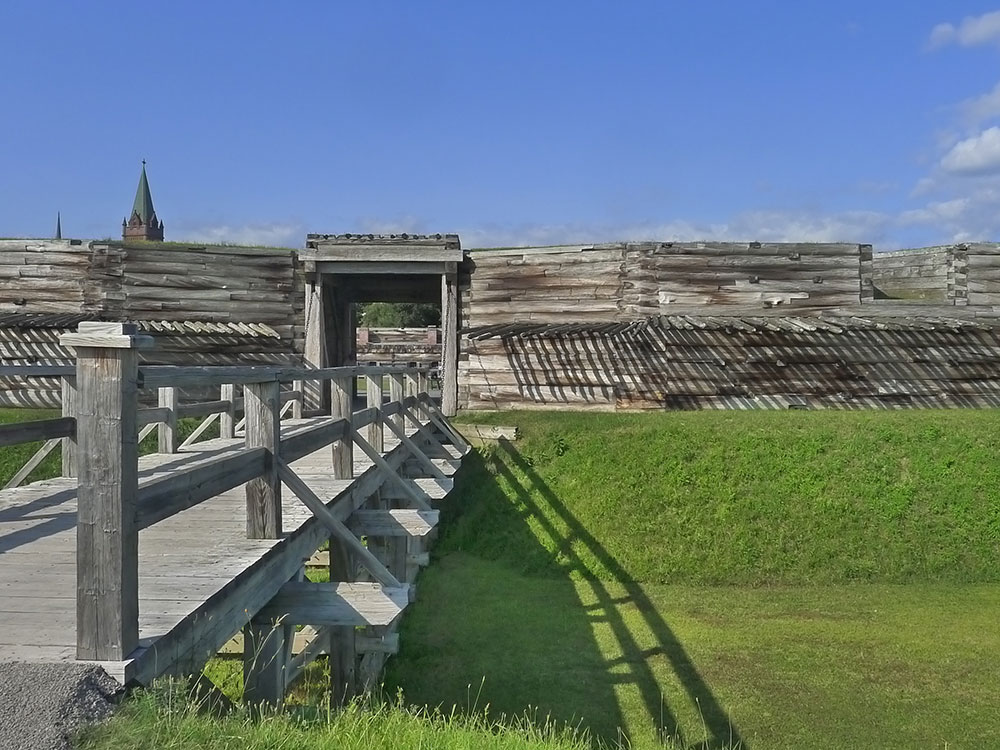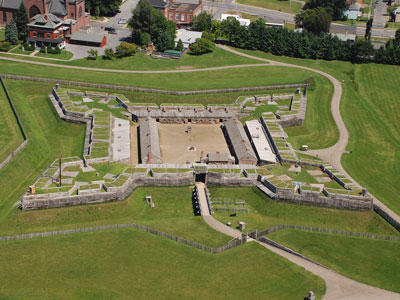
Fort Stanwix National Monument

NPS Photo, Public domain, via Wikimedia Commons; Image Size Adjusted

Reconstructed colonial fortress and bastion fort built to guard a portage known as the Oneida Carry during the French and Indian War

General Information

Hours:
Wednesday–Sunday: 9am–5pm
Closed Monday, Tuesday, Thanksgiving, Christmas, and New Year's Day
Fees:
Free admission
Pet Policy:
Leashed pets welcome on the grounds; not permitted inside visitor center or historic buildings
Closest cities with hotels:
Rome, NY; Utica, NY (15 miles east)
Seasons:
Year-round (Wed–Sun); spring through fall for full programming and living history demonstrations
Location:
100 N James St, Rome, NY 13440
Website:
nps.gov/fost

From Utica, NY (approximately 15 miles): Take I-90 W to Exit 32 (NY-233), then follow NY-233 N into downtown Rome. Turn left onto N James St — the fort entrance is at the corner of N James St and Spring St in the heart of downtown Rome.

Fort Stanwix was a colonial fortress whose construction commenced on August 26, 1758, under the direction of British General John Stanwix, at the location of present-day Rome, New York, but was not completed until about 1762. The bastion fort was built to guard a portage known as the Oneida Carry during the French and Indian War. Fort Stanwix National Monument, a reconstructed structure built by the National Park Service, now occupies the site.

Fort Stanwix is historically significant because of its successful defense by American troops during an August 1777 siege. The fort had been built by the British in 1758 at a strategic site along the water route from Lake Ontario to the Hudson River. After American forces captured and rebuilt the fort during the American Revolutionary War, they were besieged by a British army that invaded from Canada via Lake Ontario, hoping to reach the Hudson River. The British force abandoned the siege, a consequence that helped lead to the defeat of a larger British army during the Saratoga campaign.

Fort Stanwix was also the site of the 1768 Treaty of Fort Stanwix between Britain and Native American tribes, as well as of the 1784 Treaty of Fort Stanwix between the tribes and the American government.

Besides the fort reconstruction itself, the national monument includes three short trails that encircle it, one of which follows a portion of the Oneida Carry. The Marinus Willett Collections Management and Education Center preserves the monument's 485,000 artifacts and documents, displays exhibits about Fort Stanwix and the Mohawk Valley, and serves as a regional tourism center.

This article uses material from the Wikipedia article "Fort Stanwix", which is released under the Creative Commons Attribution-Share-Alike License 3.0
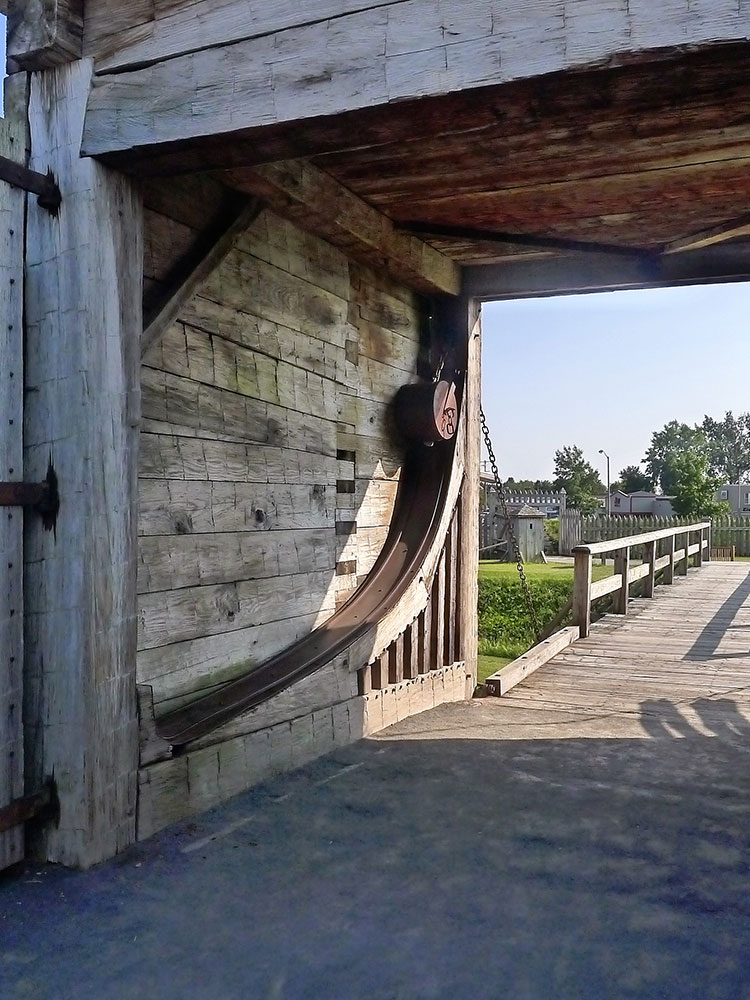
Horsedentist, CC BY-SA 4.0, via Wikimedia Commons; Image Size Adjusted