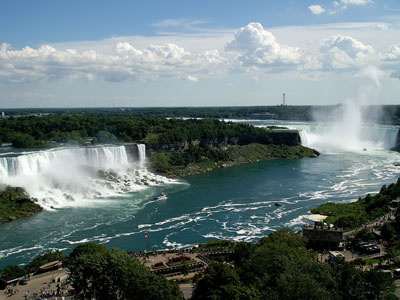

Finger Lakes Travel Guide
Scenic region characterized by long glacial lakes, dramatic waterfalls, deep gorges, rolling vineyards, and abundant opportunities for outdoor recreation and wine tasting.
Places to See in Finger Lakes
Sdetwiler, CC BY-SA 4.0, via Wikimedia Commons; Image Size Adjusted

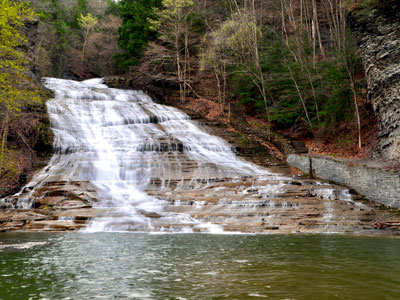
Buttermilk Falls State Park
Park featuring a deep shale gorge, multiple cascading waterfalls, wooded hiking trails, and a stream-carved landscape.
Tim Sackton from Somerville, MA, CC BY-SA 2.0, via Wikimedia Commons; Image Size Adjusted

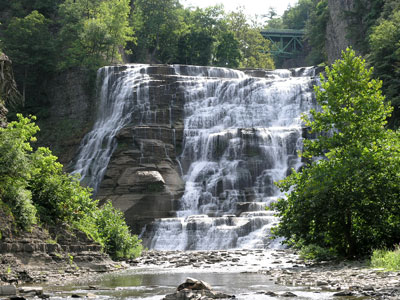
Ithaca Falls
Large cascading waterfall with a broad rock face, powerful year-round flow, and a scenic creek gorge that attracts visitors for nature viewing and photography.
Andrea Pagani, CC BY-SA 3.0, via Wikimedia Commons; Image Size Adjusted

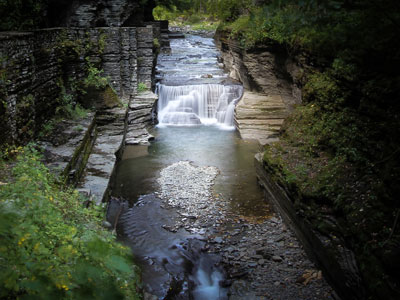
Robert H. Treman State Park
Winds past twelve cascading waterfalls through a steep gorge, including a 115-foot plunge, alongside a stone-lined pool fed by the creek.
DanielPenfield, CC BY-SA 4.0, via Wikimedia Commons; Image Size Adjusted

Stony Brook State Park
Carves a series of cascades and potholes into red sandstone, with a rim-top trail overlooking the gorge and a stream-fed pool for swimming.
Michael C. Rygel, CC BY-SA 3.0, via Wikimedia Commons; Image Size Adjusted

Taughannock Falls State Park
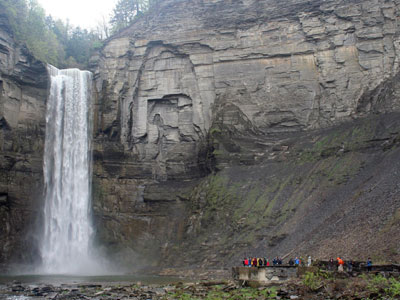
Drops water in a single sheer plunge taller than Niagara Falls, framed by 400-foot cliffs along a flat, half-mile gorge trail.

King of Hearts, CC BY-SA 4.0, via Wikimedia Commons; Image Size Adjusted

Triphammer Falls
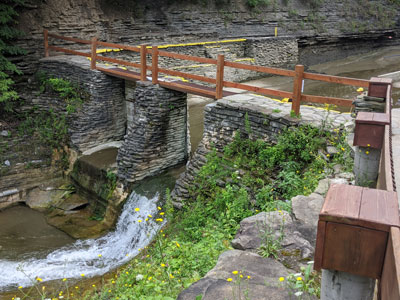
Tumbles roughly 60 feet through a narrow rock channel beside a hydroelectric station, visible from an adjoining footbridge.
BrianAdler, Public domain, via Wikimedia Commons; Image Size Adjusted

Watkins Glen State Park
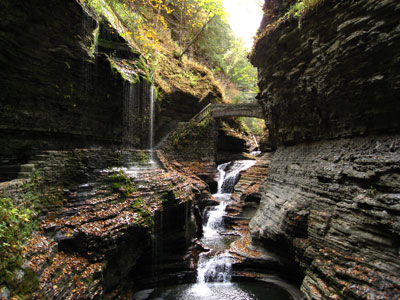
Threads an 800-step stone stairway past nineteen waterfalls, carved tunnels, and arched bridges within a narrow gorge.
Overview
The Finger Lakes are eleven long, narrow, north-south lakes in central New York, carved by glaciers into overdeepened valleys. The region is famed for wine, lakeside towns, and gorge state parks with spectacular waterfalls, and it is a favorite weekend getaway for travelers from across the Northeast.
Highlights include the waterfalls and gorges at Watkins Glen, Taughannock Falls, Robert H. Treman, and Buttermilk Falls, along with wineries, farm stands, and boating and hiking.
Geography
The lakes were carved by advancing and retreating glaciers over the last two million years. Cayuga Lake is 435 feet deep and Seneca Lake is 618 feet deep and 38 miles long, making them among the deepest lakes in the United States, with bottoms below sea level. The long lakes moderate the climate on their shores, which helps grapes and fruit crops thrive. Streams cutting down to the lakes created dozens of gorges and waterfalls, such as Watkins Glen with 19 waterfalls and Taughannock Falls at 215 feet.
History
The Cayuga, Seneca, Onondaga, and other Haudenosaunee (Iroquois) nations lived around the lakes, and tradition holds that the lakes were formed by the hands of the Great Spirit. The Sullivan Expedition destroyed many Haudenosaunee villages in 1779, and European-American settlement followed. The Erie Canal opened in 1825, and the region became a center of reform movements, including the 1848 Women’s Rights Convention in Seneca Falls and Harriet Tubman’s home in Auburn. Cornell University was founded in Ithaca in 1865, and Dr. Konstantin Frank’s 1950s plantings of European grapes helped establish the wine industry.
Cities and Towns
Ithaca, home to Cornell University and Ithaca College, has waterfalls such as Ithaca Falls and Triphammer Falls right in town. Watkins Glen, Skaneateles, Geneva, Canandaigua, Penn Yan, and Hammondsport are lakeside towns with historic downtowns and wineries. Seneca Falls and Auburn are important history stops.
National Protected Areas
Women’s Rights National Historical Park in Seneca Falls preserves the site of the 1848 Seneca Falls Convention. Harriet Tubman National Historical Park in Auburn includes her home and the Home for the Aged, and the Erie Canalway National Heritage Corridor follows the historic canal across the region’s northern edge. Montezuma National Wildlife Refuge at the north end of Cayuga Lake is an important stop for migrating birds.
State Parks and Historic Sites
Watkins Glen State Park has a gorge trail with 19 waterfalls, and Taughannock Falls State Park has one of the tallest single-drop waterfalls east of the Rockies. Robert H. Treman, Buttermilk Falls, and Stony Brook state parks all have gorges and swimming holes. Letchworth State Park, the “Grand Canyon of the East,” lies just to the west.
Seasons and Best Time to Visit
Summer is the main season for swimming, boating, and wine touring, and the lakes warm up by July. Fall brings colorful leaves, grape harvest festivals, and cooler temperatures that are good for hiking. Spring has the strongest waterfall flows, though some gorge trails stay closed until May because of ice. Winter is snowy and quiet, with skiing at Greek Peak and holiday events, and gorge trails at Watkins Glen and Taughannock typically close from mid-November to May.
This article uses material from the Wikipedia article "Finger Lakes", which is released under the Creative Commons Attribution-Share-Alike License 3.0. Additional information is from New York State Parks, the National Park Service pages for Women’s Rights National Historical Park and Harriet Tubman National Historical Park, and Finger Lakes Tourism.