

Soaring 19th‑century landmark and seat of city government, celebrated for its clock‑tower silhouette, ornate masonry, and status as one of America’s great historic city halls.
General Information
Closed weekends and city holidays (hours may vary by department)
200 E Wells St, Milwaukee, WI 53202
How to Get There
From downtown Milwaukee: Milwaukee City Hall is centrally located in the East Town neighborhood, just east of the Milwaukee River. It is accessible on foot from the RiverWalk, by public transit routes along Water Street and Wells Street, or by car with parking garages available nearby.
Overview
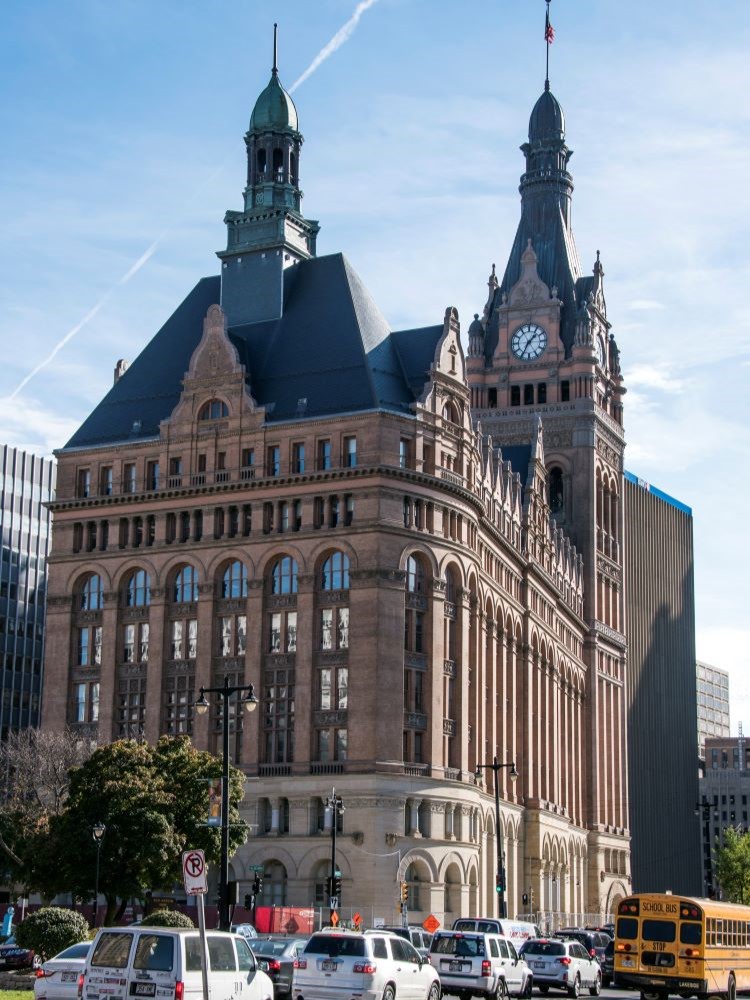
Milwaukee City Hall is one of the city’s most commanding architectural landmarks and has anchored the downtown skyline since its completion in 1895. Designed by local architect Henry C. Koch, the building is a standout example of Flemish Renaissance Revival architecture—a style reflected in its stepped gables, ornate stonework, and richly detailed façade. Rising more than 390 feet to the top of its flagpole, City Hall was once among the tallest buildings in the United States and remained Milwaukee’s tallest structure until the 1970s.
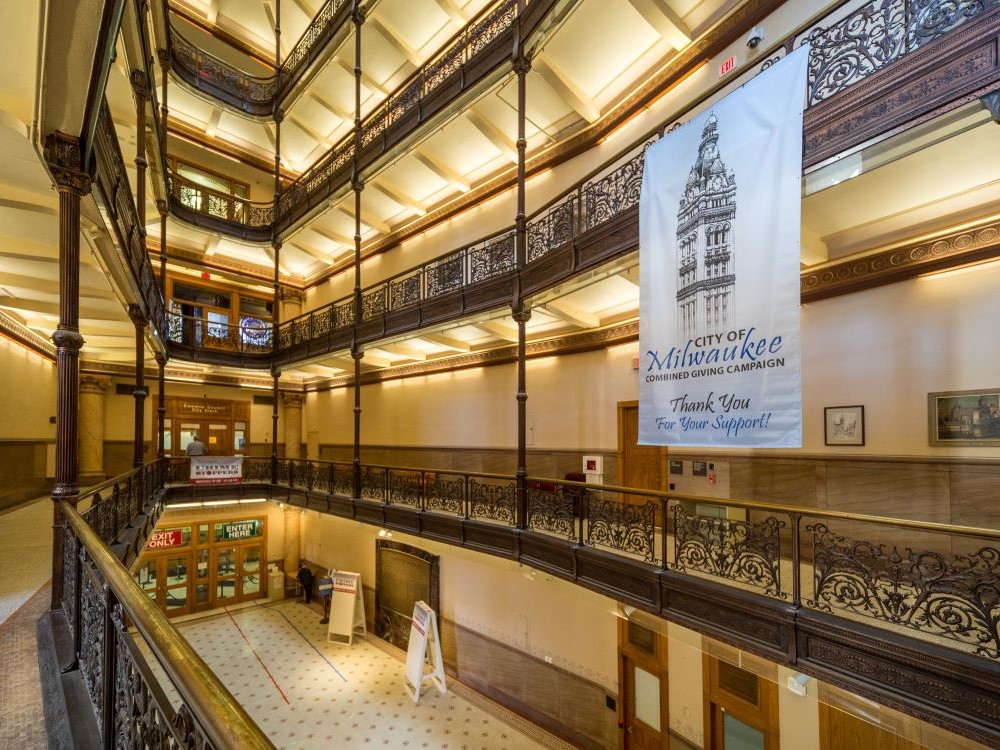
Constructed with more than eight million bricks and featuring an innovative open‑atrium interior that rises eight stories, City Hall was both an engineering feat and a statement of civic ambition. Inside, visitors encounter marble and mosaic floors, decorative iron railings, historic elevators, and views upward to a glass skylight that fills the central space with natural light. The tower houses an enormous bell—named Solomon Juneau after Milwaukee’s first mayor—as well as a massive four‑sided clock that continues to mark time over the city.
Beyond its architectural presence, Milwaukee City Hall remains an active seat of government, housing the mayor’s office, Common Council chambers, and numerous city departments. Listed on the National Register of Historic Places and designated a National Historic Landmark, it symbolizes Milwaukee’s late‑19th‑century rise as a major American city. Whether admired from the street, explored during special tours, or encountered as part of a walk through the riverfront district, City Hall stands as a lasting testament to Milwaukee’s civic identity and architectural heritage.
This article uses material from official publications and publicly available historical resources related to Milwaukee City Hall, including municipal records and historical references, which are released under the Creative Commons Attribution-Share-Alike License 3.0.


-750.jpg)
.jpg)
-750.jpg)
.jpg)