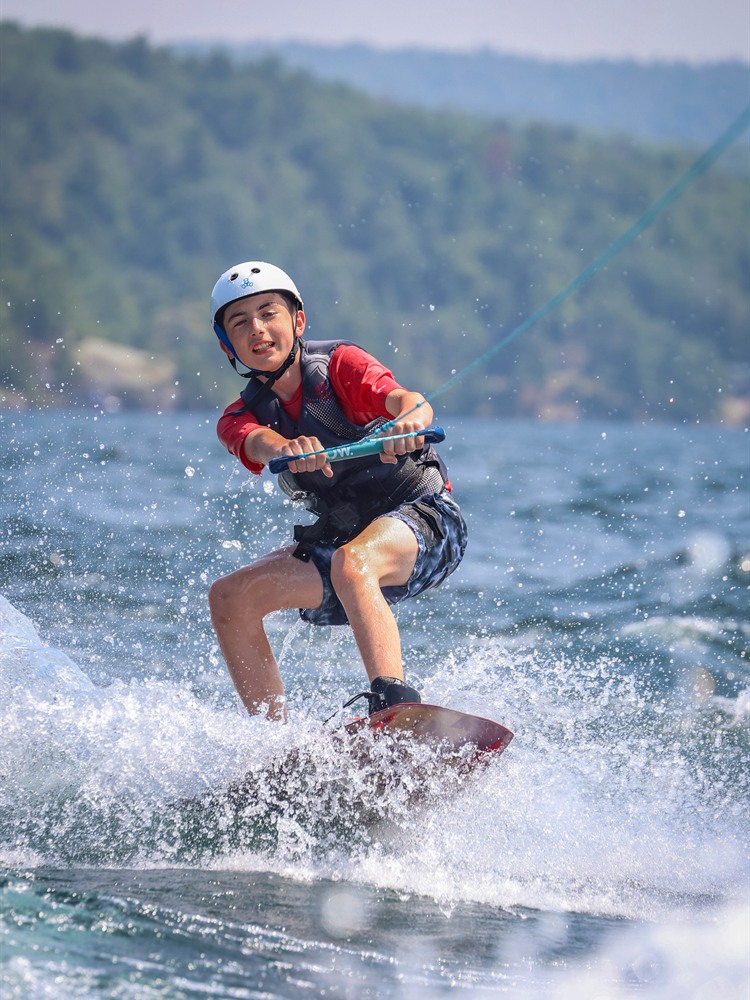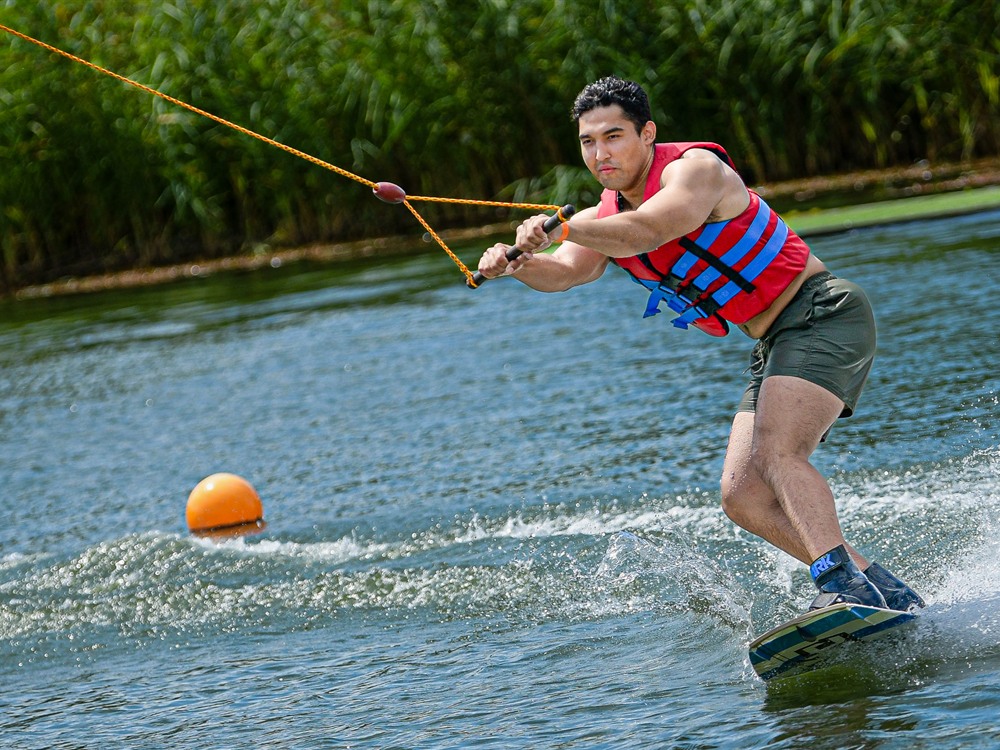
Water sport where participants ride a board across the surface of the water while being pulled by a motorboat, combining elements of surfing, snowboarding, and waterskiing.
General Information
Overview
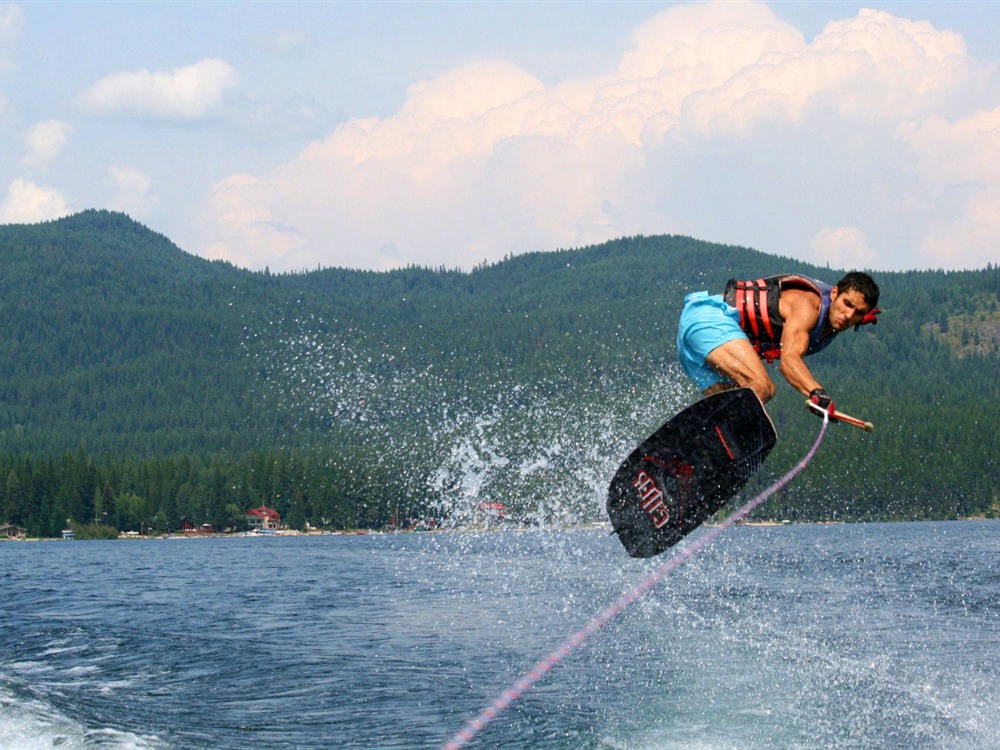
Wakeboarding is a water sport that combines aspects of surfing, snowboarding, and waterskiing. Participants stand on a specially designed board while being pulled across the water by a motorboat or cable system, using the boat's wake as a ramp for jumps, tricks, and maneuvers. Since its introduction in the late twentieth century, wakeboarding has grown into a popular recreational and competitive activity across the United States, attracting participants of all ages and skill levels.
The sport is commonly enjoyed on lakes, reservoirs, and calm waterways where conditions are suitable for creating consistent wakes. Dedicated wake parks and cable parks have expanded access to the activity by allowing riders to participate without the need for a private boat. Beginners often start with professional instruction and basic riding techniques, while experienced wakeboarders progress to advanced tricks such as spins, flips, and aerial maneuvers. Equipment rentals and lessons are widely available at major watersports destinations throughout the country.
Wakeboarding is generally considered a moderate-difficulty activity because it requires balance, coordination, and some physical effort to rise from the water and maintain control of the board. Most participants learn the fundamentals relatively quickly, making it accessible to newcomers while still offering long-term challenges for advanced riders. The activity is most popular during warmer months when water temperatures are comfortable, and sessions often last one to three hours. With its blend of speed, athleticism, and outdoor recreation, wakeboarding remains one of the most exciting tow sports available in the United States.
This article uses material from the Wikipedia articles and official watersports, wake park, and tourism resources related to wakeboarding in the United States, which are released under applicable licenses including the Creative Commons Attribution-Share-Alike License 3.0.