Historic urban center defined by neoclassical architecture, cultural institutions, central plazas, and a strong artistic identity shaped by centuries of trade and civic life.
General Information
- Hours:
- Open daily
Public areas accessible at all hours - Fees:
-
Free public access
Individual attractions may charge admission - Pet Policy:
- Pets are allowed if leashed in public outdoor areas
- Closest cities with hotels:
- Ponce
- Seasons:
- All year
- Location:
- Ponce, PR
- Website:
- discoverpuertorico.com
How to Get There
From San Juan, PR: Drive south via PR‑52 through the central mountains until reaching the southern coast, then follow city access roads into the historic urban core.
Overview
Ponce is the second-largest city in Puerto Rico, with about 130,000 residents, on the southern coast. Known as "La Perla del Sur" (the Pearl of the South), it is famous for its elegant historic center, its art museum, its Carnival with colorful vejigante masks, and its strong civic pride. It was named for Juan Ponce de León y Loayza, the great-grandson of the Spanish explorer Juan Ponce de León.
People come to Ponce to see the central plaza and the red-and-black striped fire station, visit the Museo de Arte de Ponce, tour the Castillo Serrallés mansion, stroll the boardwalk of La Guancha and enjoy the cultural life of a city that is often compared to a smaller, more traditional counterpart of San Juan. It is also the gateway to the mountains of the southern interior and to coffee haciendas.
History
Ponce was founded in 1692 and grew in the 19th century with sugar, coffee and shipping from its port, creating a wealthy class that built grand houses, theaters and schools. In 1898, during the Spanish-American War, U.S. troops landed nearby and the city surrendered. In 1937, on Palm Sunday, police fired on a Nationalist Party march in the Ponce massacre, killing at least 19 people, an event remembered in a museum. The city has been struck by hurricanes and earthquakes, including a series of earthquakes in January 2020 that damaged many historic buildings. Ponce continues to restore its center and to promote its culture and architecture.
Sightseeing and Popular Landmarks
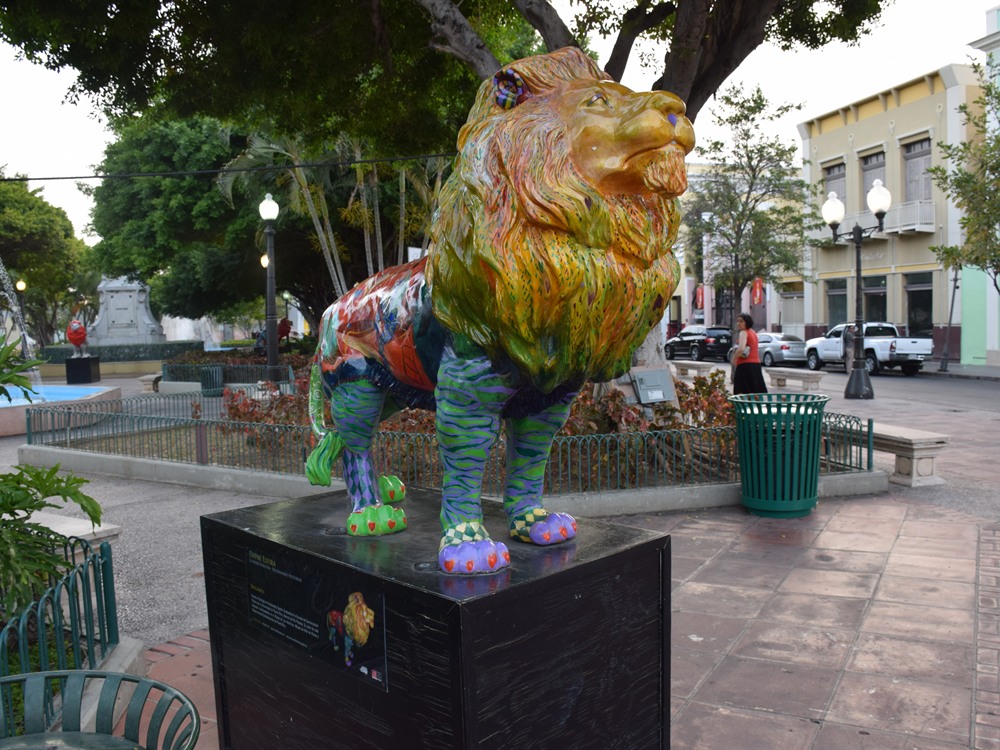
Plaza Las Delicias is the heart of the city, with fountains, lion statues and tall trees, and the Our Lady of Guadalupe Cathedral on one side. Facing it, the Parque de Bombas, a red-and-black striped Moorish-style pavilion built for an 1882 exhibition and later used as a fire station, is the symbol of Ponce. Castillo Serrallés, a 1930 Spanish-style mansion on a hill, belonged to the family that makes Don Q rum, and the Cruceta del Vigía, a cross-shaped tower, offers views of the city and the Caribbean. The La Guancha boardwalk along the sea has food kiosks and music, and Hacienda Buena Vista is a restored coffee plantation nearby.
Culture and Museums
The Museo de Arte de Ponce, founded in 1959 by Luis A. Ferré and designed by Edward Durell Stone, has one of the best art collections in the Caribbean, with European paintings, including works from the Pre-Raphaelites, and Latin American art. The Museo de la Masacre de Ponce remembers the 1937 events, and the Museo de la Música Puertorriqueña covers the island's musical heritage. The Teatro La Perla, an 1864 theater, hosts performances. Ponce's Carnival, held before Lent, features parades with vejigante masks, and the city is known for the food of the southern coast.
Parks
Beyond the plaza, Ponce has several green and outdoor spaces. The Tibes Indigenous Ceremonial Center, one of the most important pre-Columbian archaeological sites in the Caribbean, preserves ball courts and plazas of the Taíno and earlier peoples. The Paseo Tablado La Guancha is a waterfront park with a boardwalk and views of the Caribbean Sea. The mountains north of the city offer scenic drives, hiking and coffee haciendas, and the Caja de Muertos island nature reserve is reached by boat from Ponce.
Sports
Sports are a big part of life in Ponce. The Leones de Ponce (the Ponce Lions) play professional basketball in Puerto Rico's BSN league and are among the oldest and most successful teams, and the city also has a long baseball history, with games at Estadio Francisco Montaner. Ponce hosted the 1993 Central American and Caribbean Games.
Seasons and Weather
Ponce has a tropical climate, hotter and drier than San Juan, with highs in the upper 80s and low 90s °F all year. The wettest months are from August to November, and hurricane season runs from June to November. Winter is the best time to visit, with the driest and most comfortable weather and the festivals around Carnival. The city sits on an earthquake-prone part of the island, and some historic buildings may be closed for repairs after the 2020 quakes.
This article uses material from the Wikipedia articles and official tourism pages for Ponce, Puerto Rico, which are released under the Creative Commons Attribution-Share-Alike License 3.0. Additional information from Discover Puerto Rico, the Museo de Arte de Ponce, National Weather Service San Juan and the official websites of the attractions and teams mentioned.