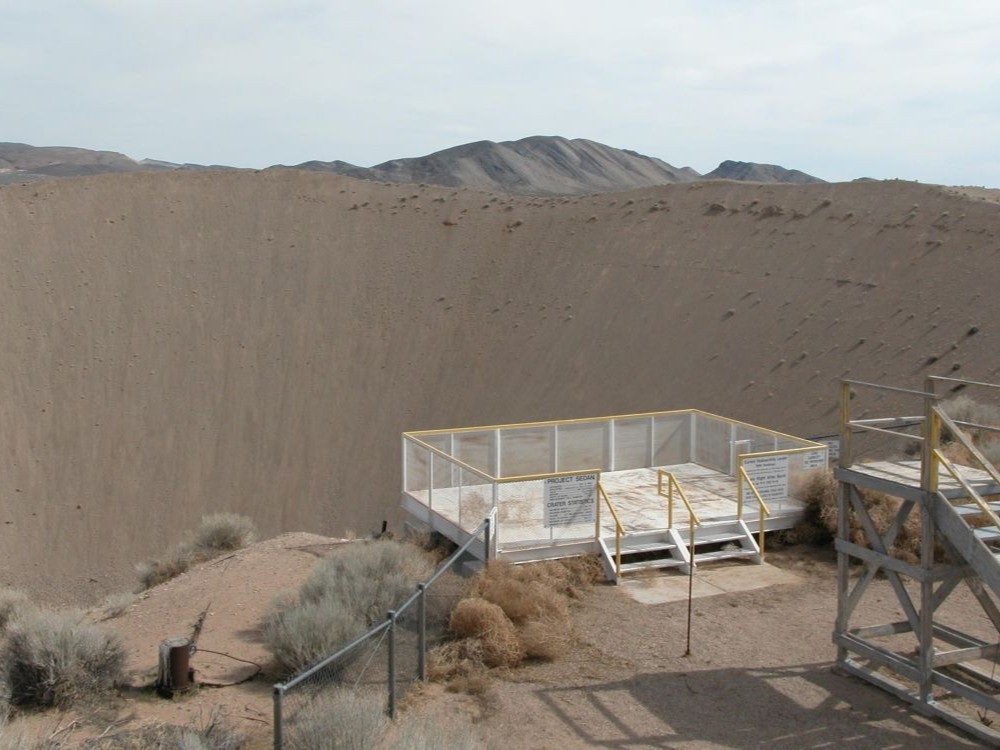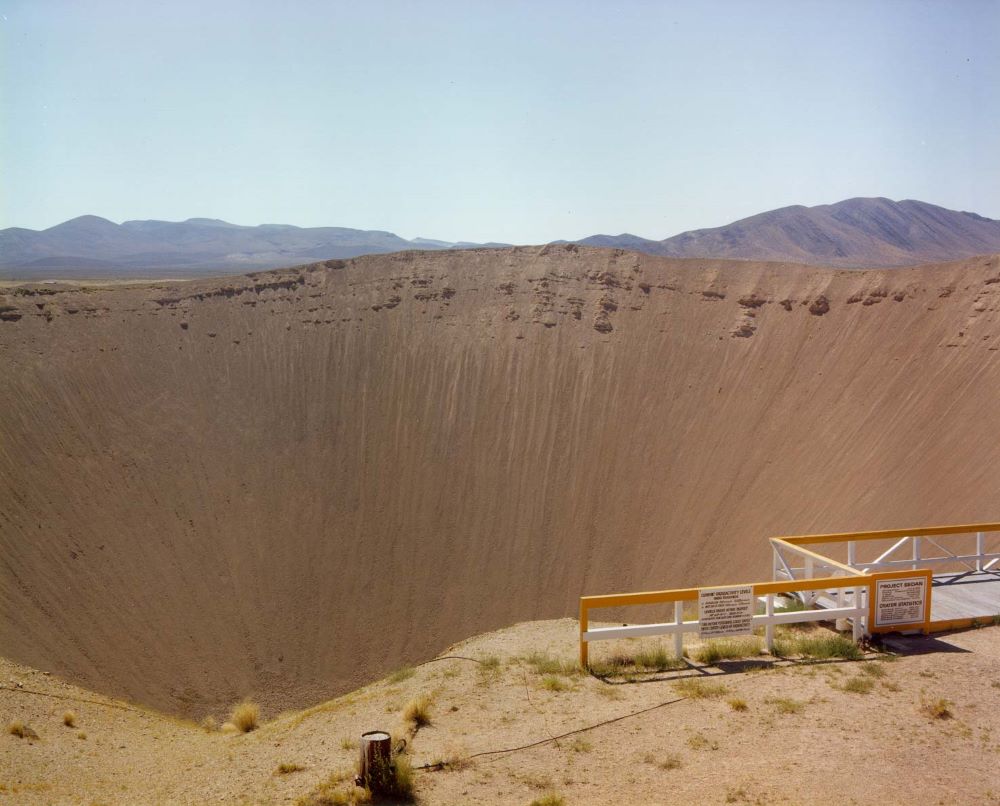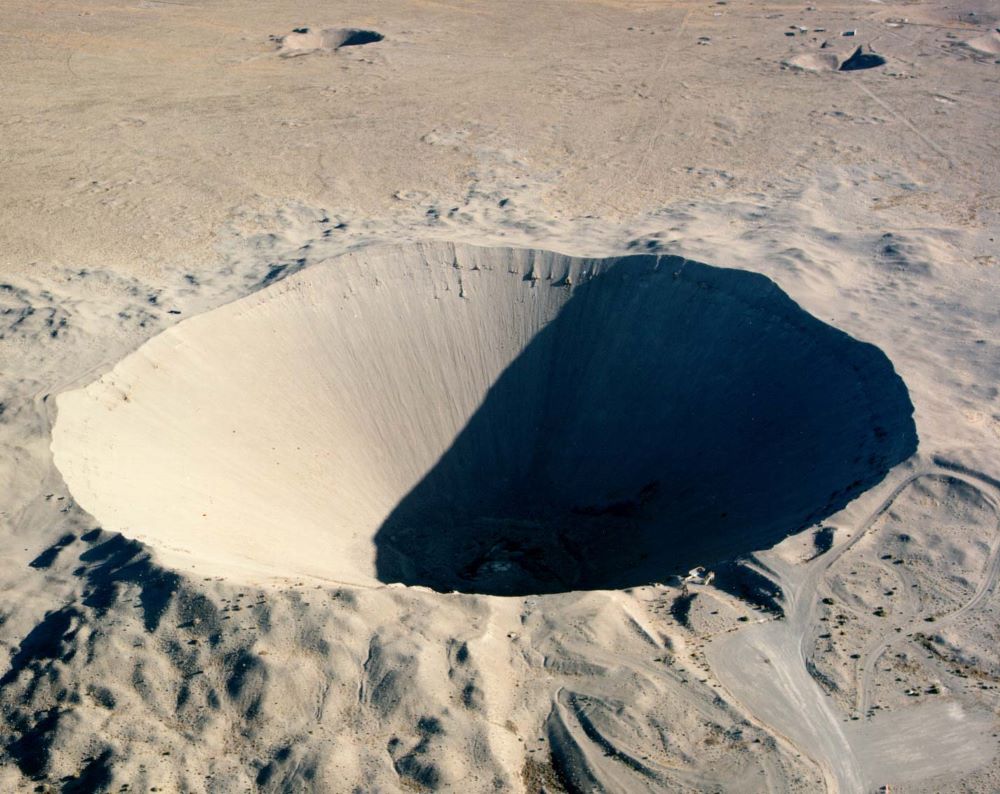

Massive subsidence crater formed by an underground nuclear test, showcasing the scale and impact of Cold War-era atomic experiments.
General Information
- Hours:
-
Accessible only via guided tours through the Nevada National Security Site
Tours typically operate once per month and must be booked in advance - Fees:
-
Tours are free but require registration and security clearance
Participants must be U.S. citizens and at least 14 years old - Pet Policy:
- Pets are not allowed on the Nevada National Security Site
- Closest cities with hotels:
- Las Vegas (65 mi)
- Seasons:
- Spring and Fall are ideal due to moderate temperatures; Summer can be extremely hot
- Location:
- Sedan Crater, Nevada National Security Site, NV
- Website:
- nnss.gov
How to Get There
From Las Vegas (65 mi): Take US-95 N toward Mercury, then follow signs to the Nevada National Security Site; access to Sedan Crater is only available via pre-arranged guided tours departing from Las Vegas.
Overview
The Sedan Crater is the largest man-made crater in the United States, created in 1962 by the detonation of a 104-kiloton nuclear device as part of Operation Plowshare. This Cold War-era program aimed to explore peaceful uses of nuclear explosions, such as large-scale earthmoving. The resulting crater measures 1,280 feet in diameter and 320 feet deep, displacing over 12 million tons of earth. Today, it stands as a haunting and awe-inspiring reminder of the atomic age, located within the secure boundaries of the Nevada National Security Site (NNSS).
Though not open to the public on a daily basis, the Sedan Crater can be visited through guided tours organized by the U.S. Department of Energy. These tours offer a rare glimpse into the history of nuclear testing in America and include stops at other significant test sites within the NNSS. Visitors must undergo a security screening and adhere to strict safety protocols. The stark desert landscape, combined with the crater’s immense scale, makes for a surreal and sobering experience that draws history buffs, scientists, and curious travelers alike.
History
Sedan Crater was created on July 6, 1962, when a 104-kiloton nuclear device was detonated 635 feet below the desert floor at what was then the Nevada Test Site. The test was part of Operation Plowshare, a program that studied whether nuclear explosions could be used for peaceful projects such as digging harbors and canals. The blast lifted a dome of earth into the air, displaced about 12 million tons of soil and sent radioactive dust drifting across several states. Plowshare was eventually abandoned, and in 1994 the crater was listed on the National Register of Historic Places.
Tour Overview
Sedan Crater can only be visited on free public tours of the Nevada National Security Site, which are typically offered about once a month and fill up months in advance. Participants must register ahead of time, pass a background check, be U.S. citizens and be at least 14 years old, and must bring a valid government-issued photo ID on the day of the tour. Tours depart early in the morning from Las Vegas by bus and last most of the day, visiting the crater and other historic test sites. Cameras, cell phones, binoculars, laptops and other recording devices are not allowed on the site, so leave them at home or in your vehicle. Bring water and a lunch, wear comfortable shoes and dress for desert conditions.
This article uses material from the Wikipedia articles and official tourism pages for the nnss.gov/, which are released under the https://creativecommons.org/licenses/by-sa/3.0/.