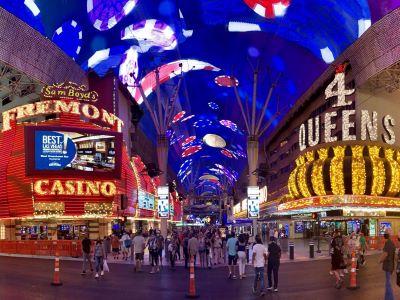
Street in downtown Las Vegas, Nevada that is the most famous street in the Las Vegas Valley, and Nevada, besides the Las Vegas Strip is today, or was, the address for many famous casinos
Overview
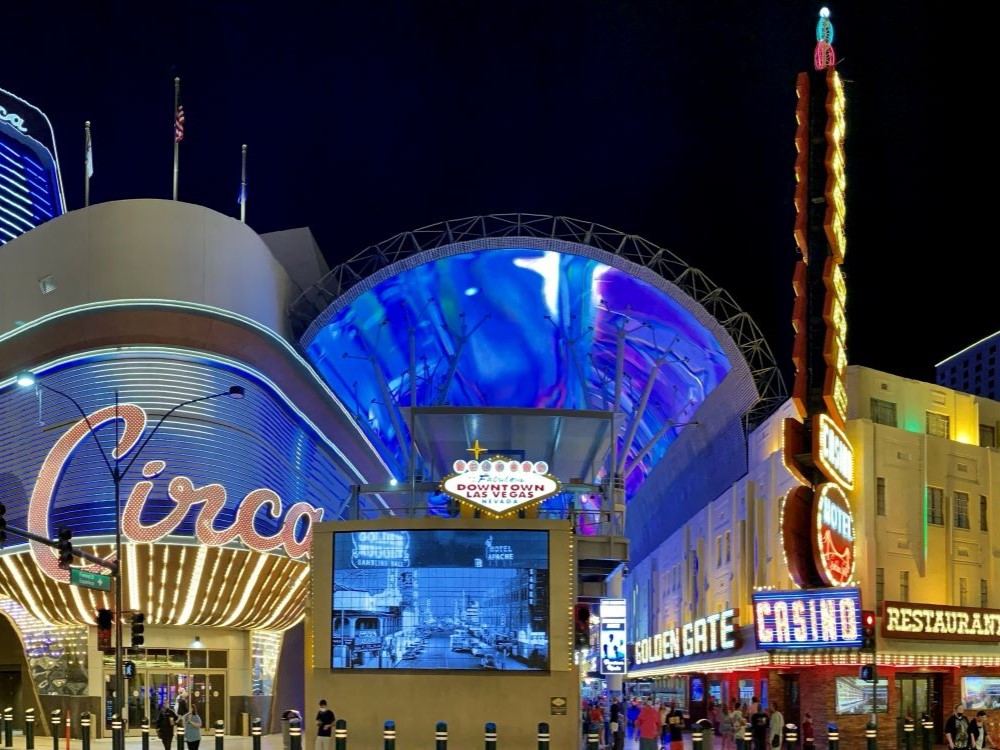
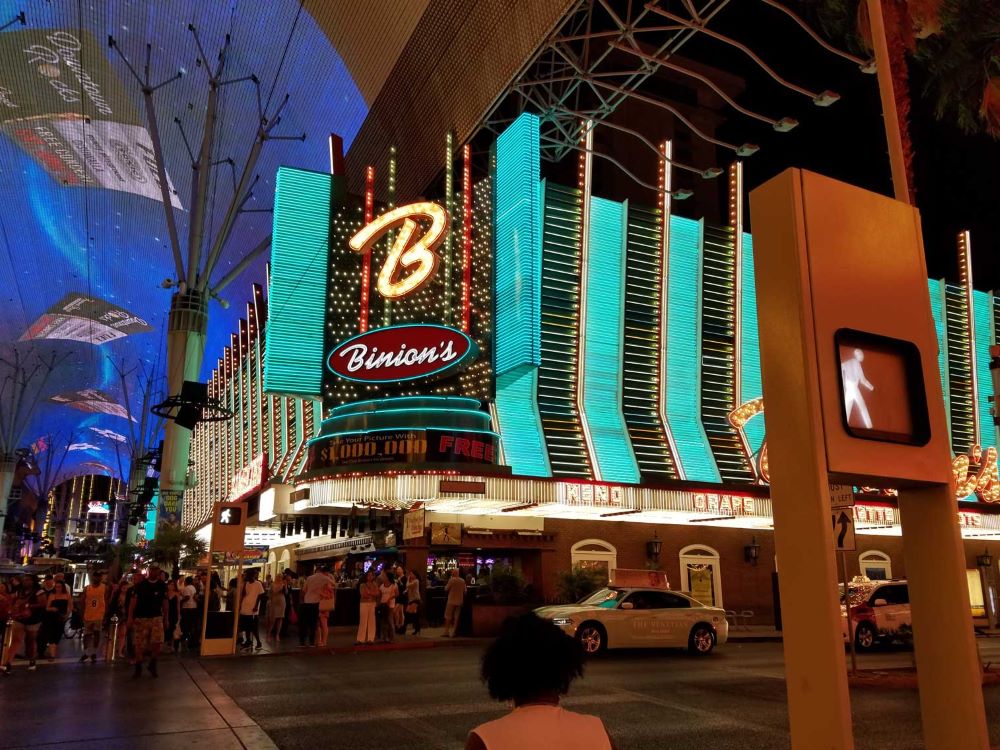
Fremont Street is a street in downtown Las Vegas, Nevada that is the most famous street in the Las Vegas Valley, and Nevada, besides the Las Vegas Strip. Named in honor of explorer John Charles Frémont and located in the heart of the downtown casino corridor, Fremont Street is today, or was, the address for many famous casinos such as Binion's Horseshoe, Eldorado Club, Fremont Hotel and Casino, Golden Gate Hotel and Casino, Golden Nugget, Four Queens, The Mint, and the Pioneer Club.
Prior to the construction of the Fremont Street Experience, the western end of Fremont Street was the representative scene for Las Vegas that was included in virtually every television show and movie that wanted to depict the glittery lights of Las Vegas. The abundance of neon signs, like cowboy Vegas Vic, earned the street the nickname of "Glitter Gulch".
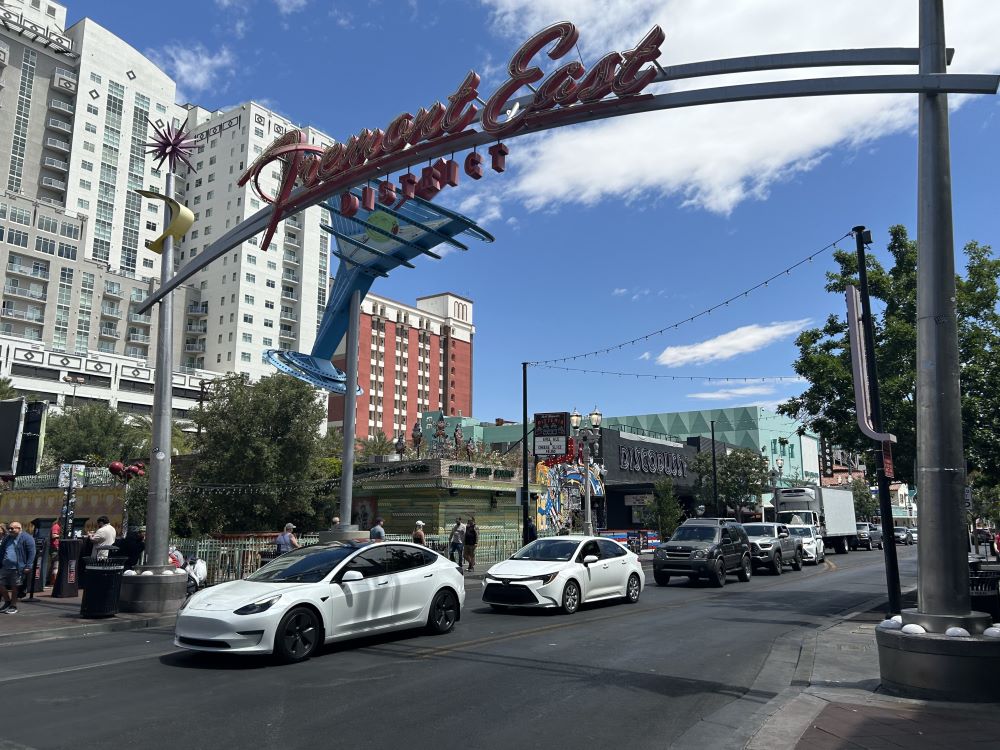
In 2002 the city of Las Vegas created the Fremont East Entertainment District (FEED), an entertainment district in the heart of downtown Las Vegas. In 2004 the city announced plans to redevelop a three block section of Fremont Street east of the Fremont Street Experience as an arts and entertainment area within FEED. The area was redesigned to increase the draw to downtown, with a compact entertainment area of bars and clubs.
The three-block renovation included pedestrian-friendly street redesign, landscaping, and retro-looking new neon signage. It also included 4 vintage Vegas neon signs in the street median, built new but reminiscent of classic Las Vegas signs. Fremont East street improvements opened officially in the summer of 2007.
Currently, the Fremont East Entertainment District comprises a total of six blocks. The boundaries are from Las Vegas Boulevard East to 8th Street, and then from Ogden Street South to Carson. The historic El Cortez hotel and casino are within the district as well as the staple cocktail bar Downtown Cocktail Room.
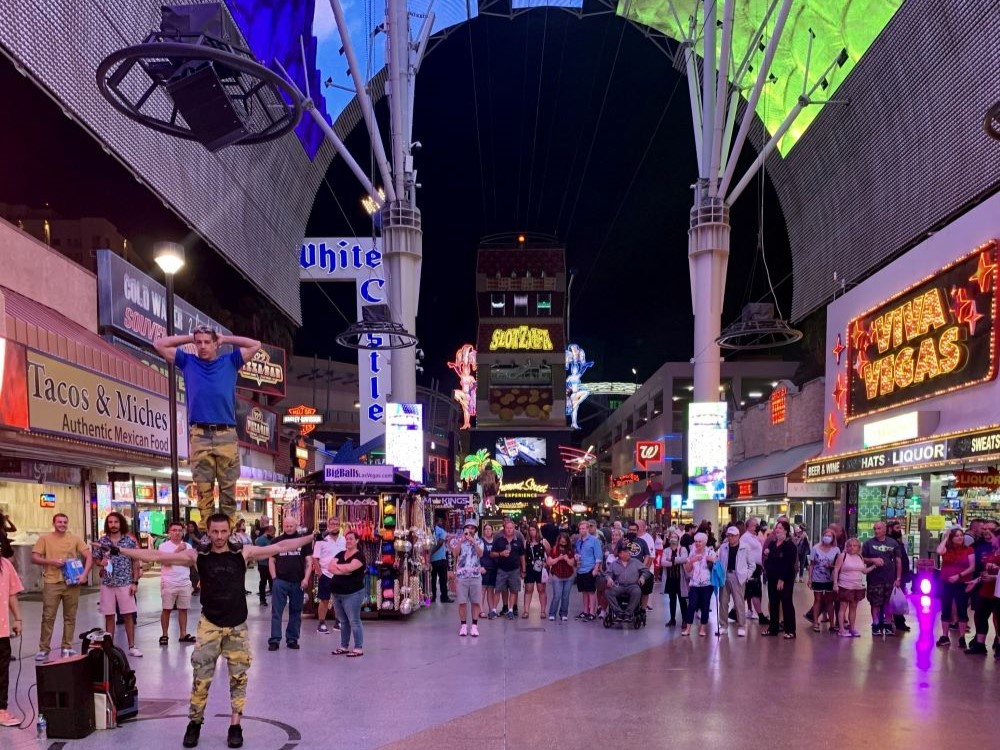
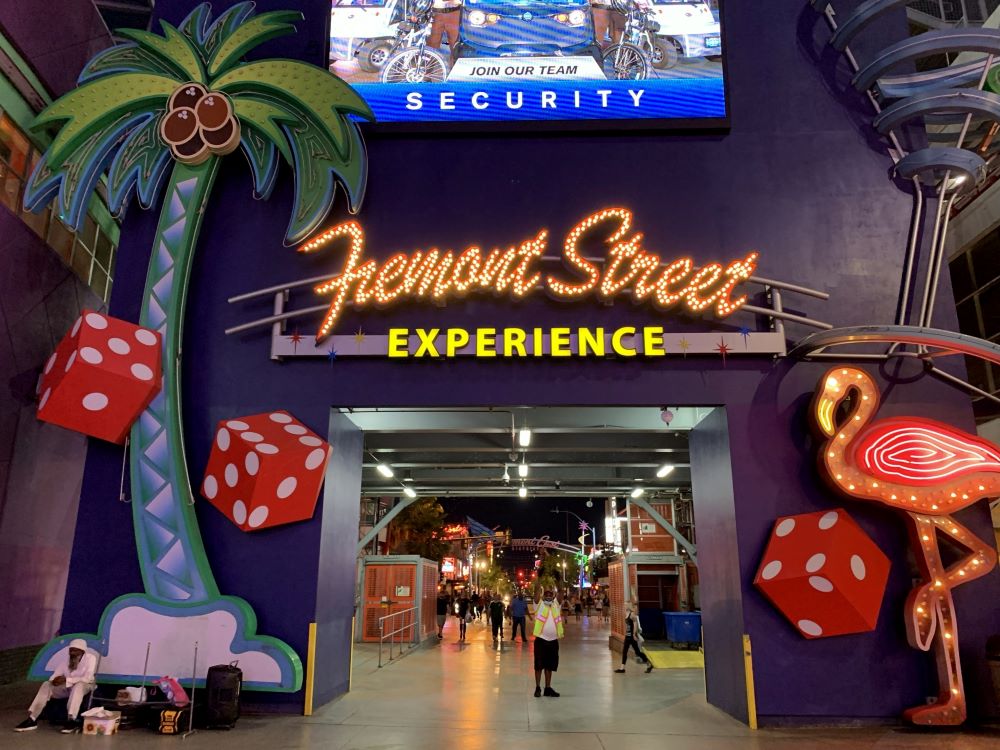
The Fremont Street Experience (FSE) is a pedestrian mall and attraction in downtown Las Vegas. The FSE occupies the westernmost five blocks of Fremont Street, including the area known for years as "Glitter Gulch," and portions of some other adjacent streets.
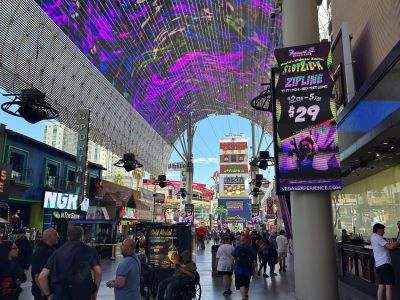
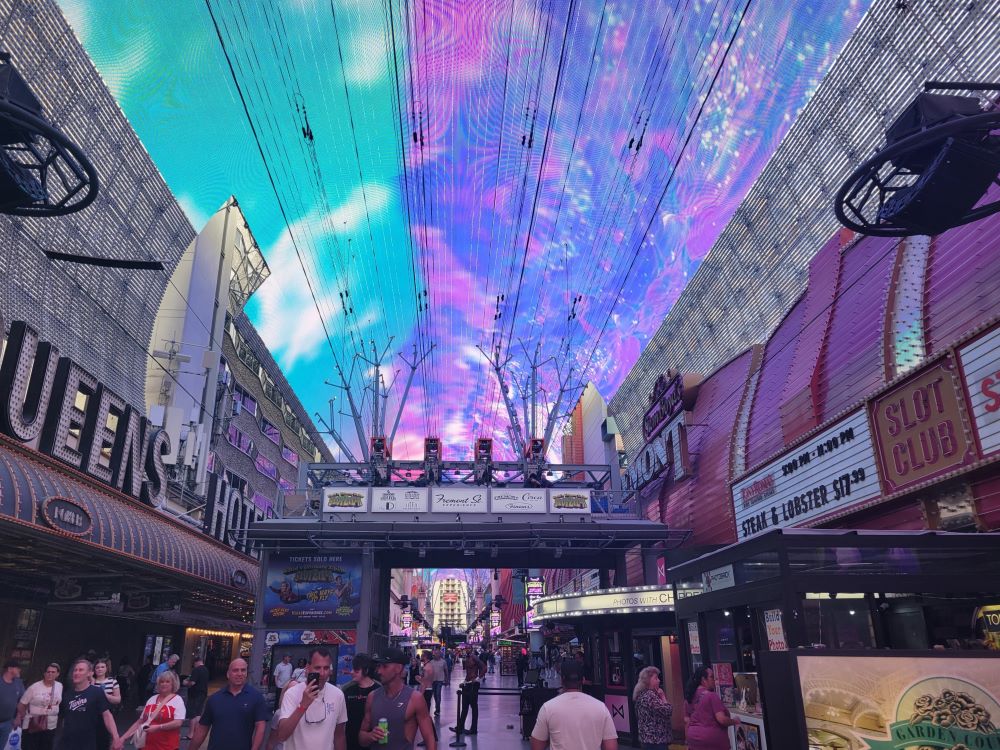
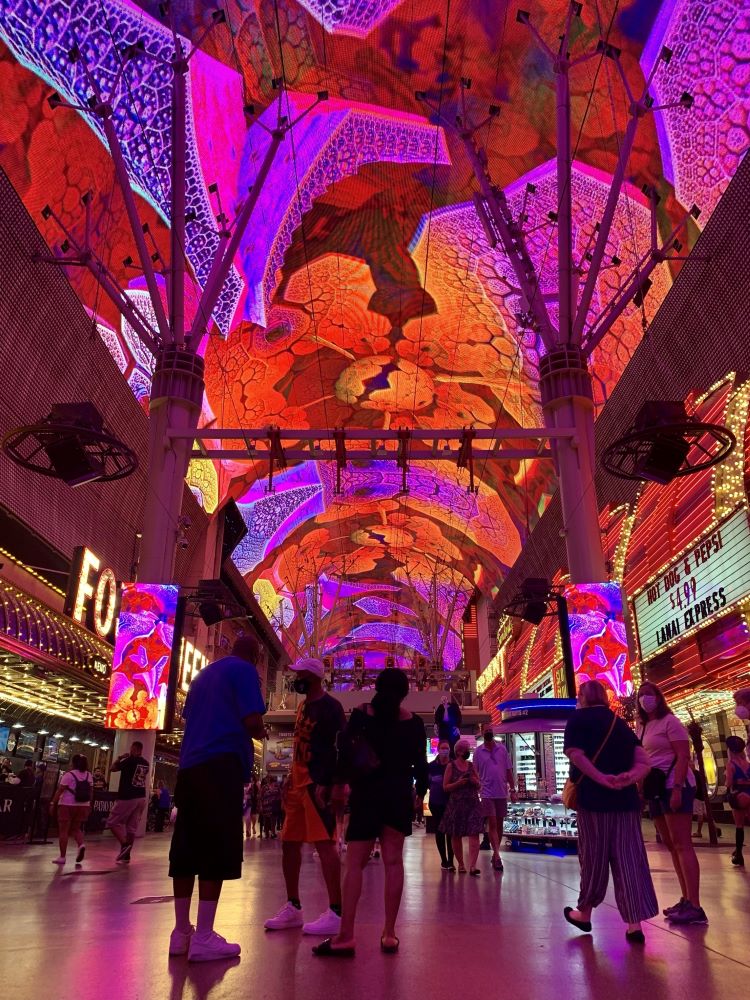
The central attraction is a barrel vault canopy, 90 ft (27 m) high at the peak and four blocks, or approximately 1,375 ft (419 m), in length.
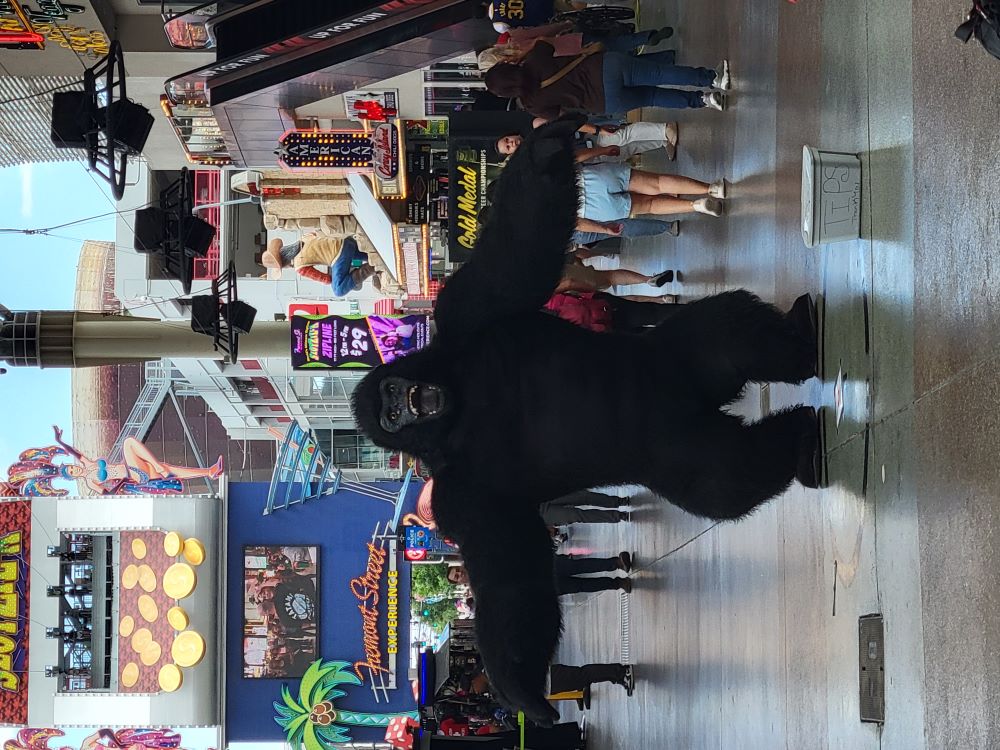
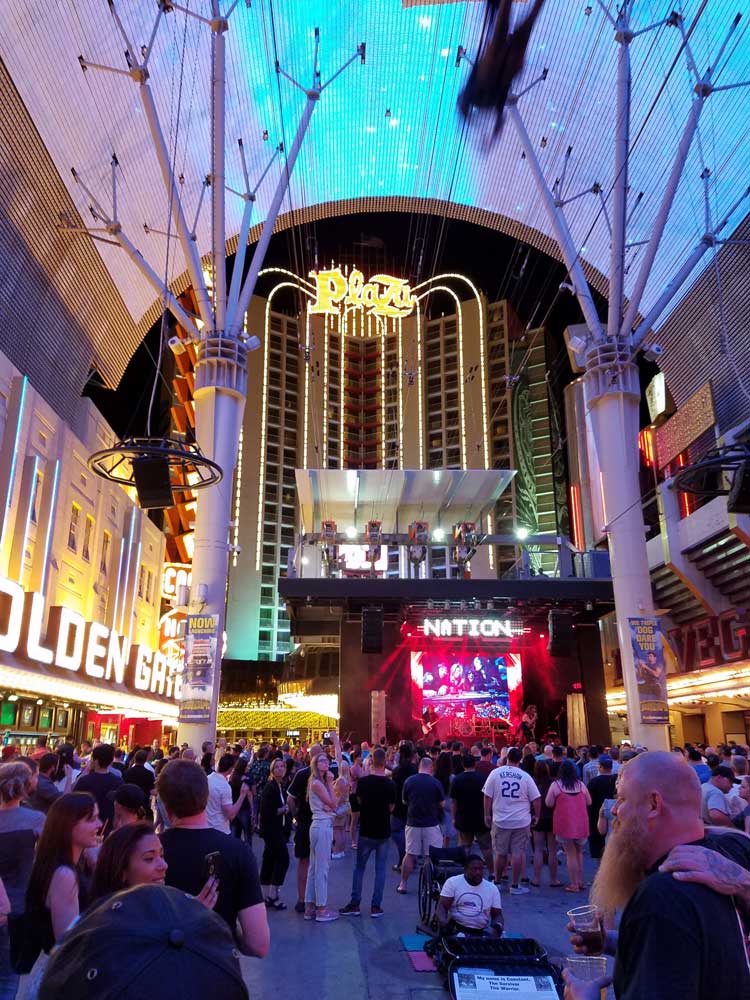
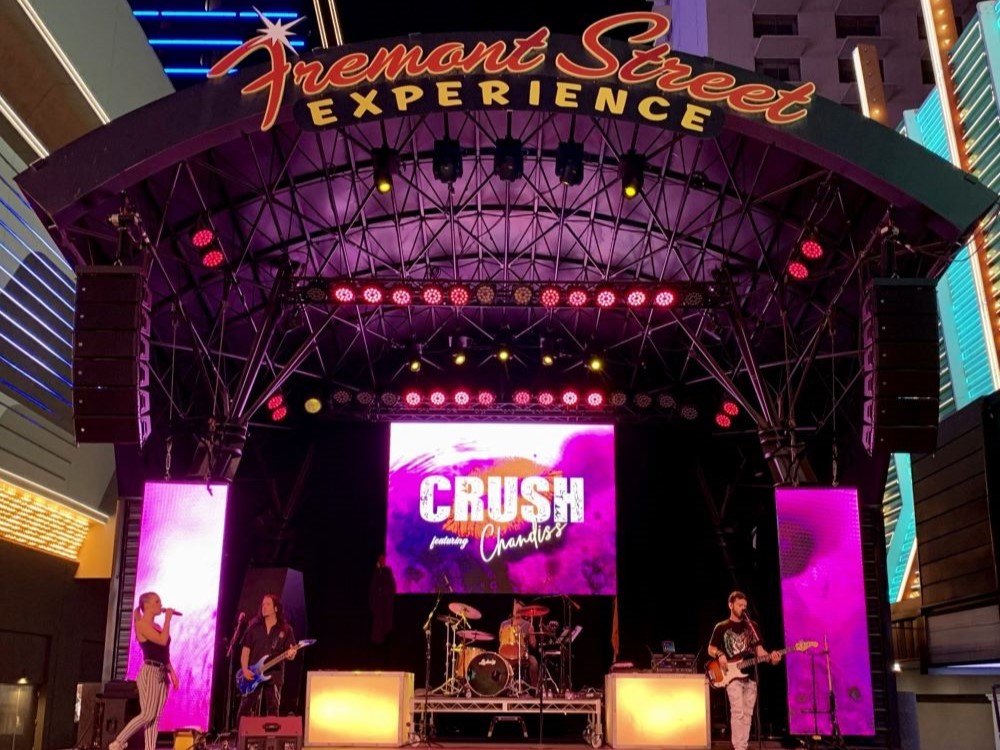
Concerts, usually free, are also held on three stages. The venue has become a major tourist attraction for downtown Las Vegas, and is also the location of the SlotZilla zip line attraction and the city's annual New Year's Eve party, complete with fireworks on the display screen.
Fremont Street had Las Vegas' first hotel (the Hotel Nevada in 1906, present day Golden Gate), first telephone (1907), first paved street (1925), first Nevada gaming license — issued to the Northern Club at 15 E. Fremont St, first traffic light, first elevator (the Apache Hotel in 1932), and the first high-rise (the Fremont Hotel in 1956). The Horseshoe was the first casino to install carpeting, while the Golden Nugget was the first structure designed from the ground up to be a casino.
For many years, the western end of Fremont Street was the area most commonly portrayed whenever producers wanted to display the lights of Las Vegas. The large number of neon signs earned the area the nickname "Glitter Gulch."
By 1992, 80 percent of the Las Vegas casino market was on the Las Vegas Strip. Downtown Las Vegas hotels and casinos sought to build an attraction that would lure more visitors to their businesses. After Paramount Pictures head Stanley Jaffe refused to approve a proposal to build a life-sized Starship Enterprise, the Fremont Street Experience was chosen as the project. FSE, LLC is a cooperative venture, owned and operated by a group of downtown hotel/casino companies (comprising eight hotel/casinos) as a separate corporation, responsible for financing, developing, and managing the Fremont Street Experience.
It was the second Las Vegas project of architect Jon Jerde, whose firm was paid approximately $900,000 by the City of Las Vegas to create a show concept for the downtown area. Jerde's design included a floating sky parade which was to be suspended from the canopy. The concept was accepted by the Fremont Street Experience as well as the City of Las Vegas. Ultimately Jerde's sky parade concept was scrapped, but the architectural design for the canopy was carried through.
The concept for the show as it now exists was conceived by architect Mary Kozlowski who had grown up in Las Vegas and knew and loved Fremont Street. It was a light show on the underside of the canopy — the world's largest and most spectacular.
Kozlowski's concept was to use a combination of four colored light bulbs per "light" which allowed a full spectrum of colors. The Young Electric Sign Company assisted in creating the test panels and in the final installation. After the Fremont Street Experience opened, the light bulbs were checked nightly to ensure that all were functioning properly. To accomplish this massive undertaking, the length of the canopy was divided into panels. Each panel was checked by separately turning on each of the four colored light bulbs. A maintenance worker on a lift would then replace any bulbs that were out. The most expensive bulb cost nearly $15 to replace.
On September 7, 1994, a five-block section of Fremont Street was closed to automobile traffic for good, and groundbreaking was held on September 16.
The LED display "canopy," runs along the Fremont Street Experience promenade from Main Street to Fourth Street. Holding the canopy aloft are 16 columns, each weighing 26,000 pounds and can hold up 400,000 pounds, and 43,000 struts.
Light and sound shows are presented nightly beginning at dusk on the Viva Vision video screen.
SlotZilla at Fremont Street Experience is a 12-story, slot machine-inspired zip line attraction. SlotZilla offers "flyers" two levels of lines, the lower "Zipline" (77 feet up) and upper "Zoomline" (114 feet up). The lower lines travel halfway down the Fremont Street Experience pedestrian mall. The upper lines go the entire length of the mall (1,750 feet). Guests on the upper "Zoomline" travel prone, or "superhero-style." SlotZilla cost $17 million to construct and features a launch tower with over-sized dice, a martini glass, a pink flamingo, simulated video reels, a giant arm and two 37-foot-tall showgirls. One of the towers also bears a "Welcome to Fabulous Downtown Las Vegas" sign.
Created when Fremont Street was closed permanently to vehicular traffic in September 1994. When the light and sound shows are not being presented, music is played throughout the mall. Nightly free entertainment is also provided, on three stages throughout the mall.
A parking plaza is located at the eastern end of Fremont Street, owned and operated by Fremont Street Experience. The parking structure has roughly 1,430 spaces.
This article uses material from the Wikipedia article "Fremont Street", and "Fremont Street Experience", which is released under the Creative Commons Attribution-Share-Alike License 3.0
Featured Attractions