Downtown Honolulu Travel Guide
Urban district combining historic landmarks, government institutions, cultural venues, and diverse architectural styles from neoclassical to modernist.
Places to See in Downtown Honolulu
Coolcaesar, CC BY-SA 4.0, via Wikimedia Commons; Image Size Adjusted
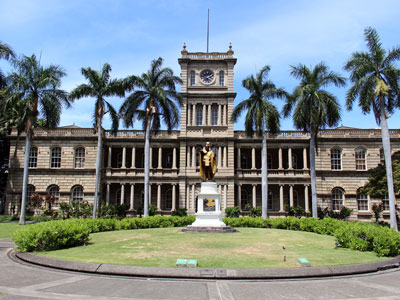
Ali'iōlani Hale
Historic government building featuring Italian Renaissance architecture, a law library, and exhibits on Hawaii’s judicial history.
Bernard Spragg. NZ from Christchurch, New Zealand, CC0, via Wikimedia Commons; Image Size Adjusted
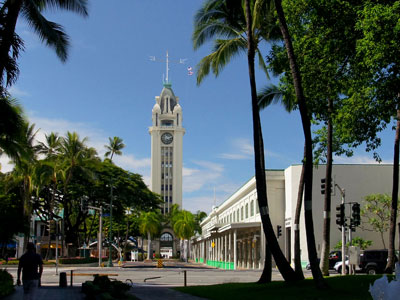
Aloha Tower
Historic maritime tower featuring early 20th-century architecture, a waterfront marketplace, and panoramic harbor views.
Farragutful, CC BY-SA 4.0, via Wikimedia Commons; Image Size Adjusted
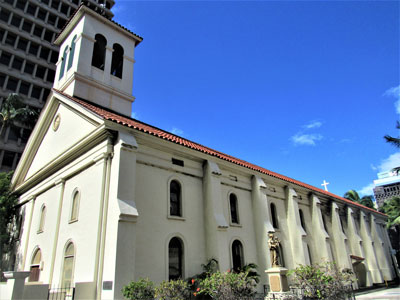
Cathedral Basilica of Our Lady of Peace
Historic Catholic church known for its neoclassical architecture, daily Mass services, and status as the oldest cathedral in continuous use in the United States.

Xpixupload, Public domain, via Wikimedia Commons; Image Size Adjusted
Cathedral Church of Saint Andrew
Gothic-style Episcopal cathedral offering multilingual worship services, historic royal connections, and a tranquil garden setting in the heart of the city.
Joel Bradshaw, Public domain, via Wikimedia Commons; Image Size Adjusted
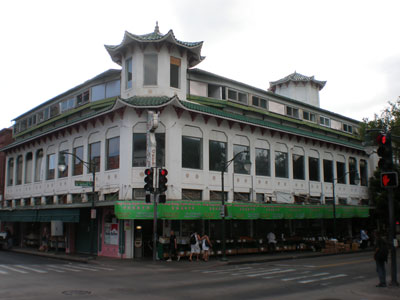
Chinatown Honolulu
Bustling historic district blending traditional markets, herbal shops, and Asian eateries with contemporary art galleries and nightlife.
Peter Gill | UK, CC BY 3.0, via Wikimedia Commons; Image Size Adjusted
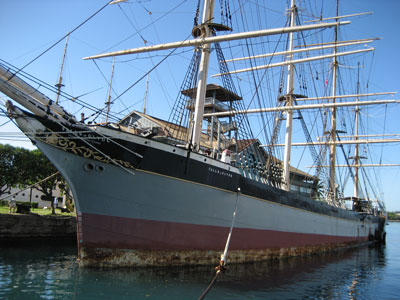
Falls of Clyde
Historic four-masted iron-hulled sailing ship and former oil tanker now docked as a maritime museum exhibit.
Gerald Watanabe, CC BY-SA 4.0, via Wikimedia Commons; Image Size Adjusted
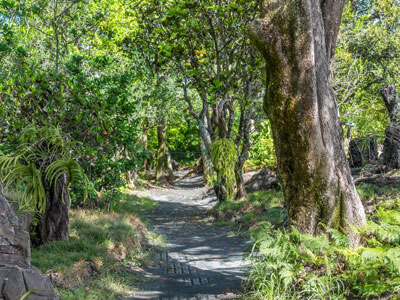
Foster Botanical Garden
Lush 14-acre botanical garden showcasing rare tropical plants, historic trees, and themed collections in a peaceful urban oasis.
Wmpearl, CC0, via Wikimedia Commons; Image Size Adjusted
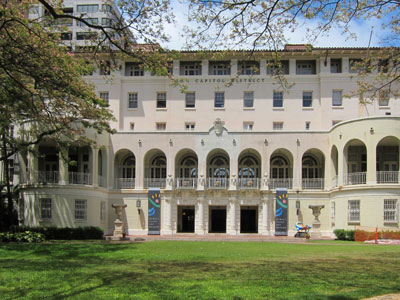
Hawaii State Art Museum
Contemporary art museum featuring works by local artists, rotating exhibitions, and community events in a historic downtown building.
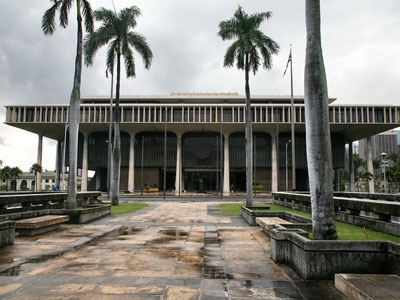


Hawaii State Capitol
Modernist open-air government building symbolizing Hawaii’s natural elements and housing the state’s legislative chambers and executive offices.
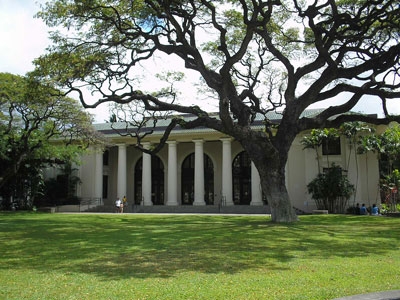
Joel Bradshaw, Public domain, via Wikimedia Commons; Image Size Adjusted

Hawaii State Library
Historic public library offering extensive collections, reading rooms, and cultural programming in a neoclassical building near Iolani Palace.
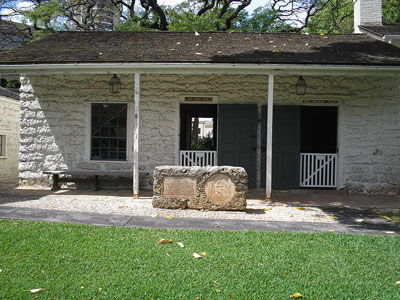
Joel Bradshaw, Public domain, via Wikimedia Commons; Image Size Adjusted

Hawaiian Mission Houses Historic Site and Archives
Museum and archival site preserving 19th-century missionary homes, artifacts, and documents that illuminate early Hawaiian and missionary life.
Phil Uhl, CC BY-SA 3.0, via Wikimedia Commons; Image Size Adjusted

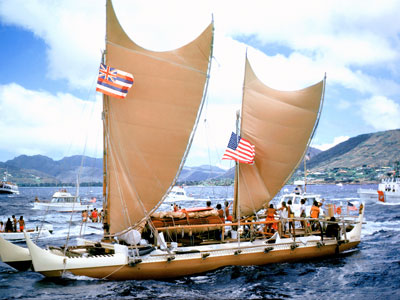
Hōkūle'a
Traditional Polynesian double-hulled voyaging canoe used for cultural education, celestial navigation, and global outreach by the Polynesian Voyaging Society.
Joel Bradshaw, Public domain, via Wikimedia Commons; Image Size Adjusted

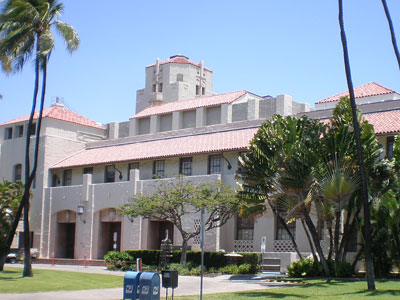
Honolulu Hale / Honolulu City Hall
Spanish Colonial Revival-style civic building serving as the seat of government for the City and County of Honolulu and a venue for public events and exhibitions.
Shawn Rossi from Jackson, MS, US, CC BY 2.0, via Wikimedia Commons; Image Size Adjusted

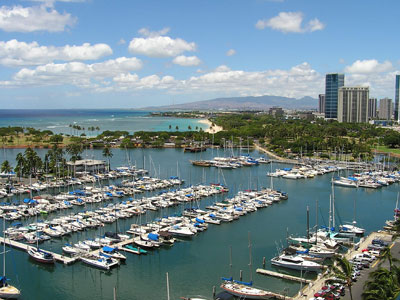
Honolulu Harbor
Major commercial and cruise ship port featuring scenic waterfront views, maritime activity, and access to historic landmarks and downtown attractions.
Arjunkrsen, CC BY-SA 3.0, via Wikimedia Commons; Image Size Adjusted

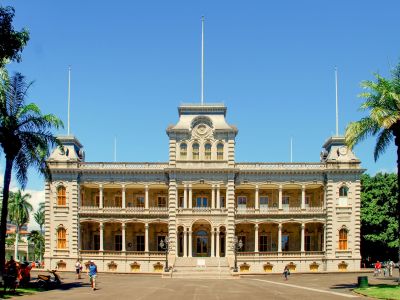
'Iolani Palace
Restored 19th-century royal residence showcasing Hawaiian monarchy history, ornate architecture, and cultural exhibits in the heart of Honolulu.
Mark Miller, CC BY-SA 4.0, via Wikimedia Commons; Image Size Adjusted

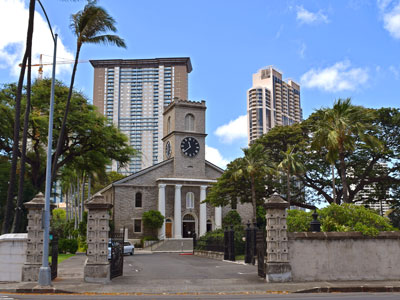
Kawaiaha'o Church
Historic coral block church known as the “Westminster Abbey of the Pacific,” offering Hawaiian-language services and deep cultural significance.
CaesarGJ, Public domain, via Wikimedia Commons; Image Size Adjusted

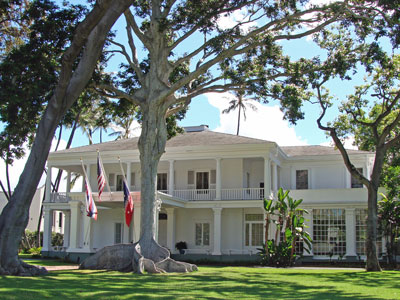
Washington Place
Greek Revival-style mansion and former royal residence of Queen Liliʻuokalani, now a historic site offering guided tours and cultural exhibits.
Overview
Downtown Honolulu is the historic, governmental and business heart of Hawaii’s capital, set between Honolulu Harbor and Nuʻuanu Stream. Its compact, walkable core combines the only royal palace on U.S. soil, the State Capitol, historic churches and missionary houses with Chinatown’s markets and galleries and the skyscrapers of the financial district. Many of its historic buildings are National Historic Landmarks, making it the best place to learn about the Hawaiian Kingdom and the islands’ path to statehood.
Downtown grew up around Honolulu Harbor, which became the kingdom’s capital in 1850 under Kamehameha III. Later monarchs built ʻIolani Palace and Aliʻiōlani Hale, and the overthrow of the monarchy in 1893 played out here. Chinatown, one of the oldest in the United States, grew alongside the harbor’s bustling trade.
Downtown has four main districts. The Capitol District holds ʻIolani Palace, the Hawaiʻi State Capitol, Honolulu Hale, Aliʻiōlani Hale with the gold-leaf Kamehameha statue, Kawaiahaʻo Church, the Mission Houses, Washington Place and the Hawaiʻi State Art Museum. The Central Business District, around Bishop Street and Fort Street Mall, has most of Hawaii’s corporate headquarters. Chinatown offers the open-air Oʻahu Market, restaurants, lei shops and the arts district around the Hawaiʻi Theatre. The Waterfront centers on the landmark Aloha Tower and the historic ship Falls of Clyde.
This article uses material from the Wikipedia article "Downtown Honolulu", which is released under the Creative Commons Attribution-Share-Alike License 3.0.