Historic government building featuring Italian Renaissance architecture, a law library, and exhibits on Hawaii’s judicial history.
General Information
- Hours:
-
Monday to Friday: 8am to 4:30pm
Closed on holidays
Reservations required for group tours - Fees:
-
Admission is free
Call ahead for group tour pricing - Pet Policy:
- Pets are not allowed
- Closest cities with hotels:
- Honolulu, HI
- Seasons:
- All year
- Location:
- 417 S King St, Honolulu, HI 96813
- Website:
- discoverhawaiitours.com
How to Get There
From Honolulu, HI: Located in downtown Honolulu, the site is easily accessible by car, bus, or on foot from most central locations including Waikiki and the Capitol District.
Overview
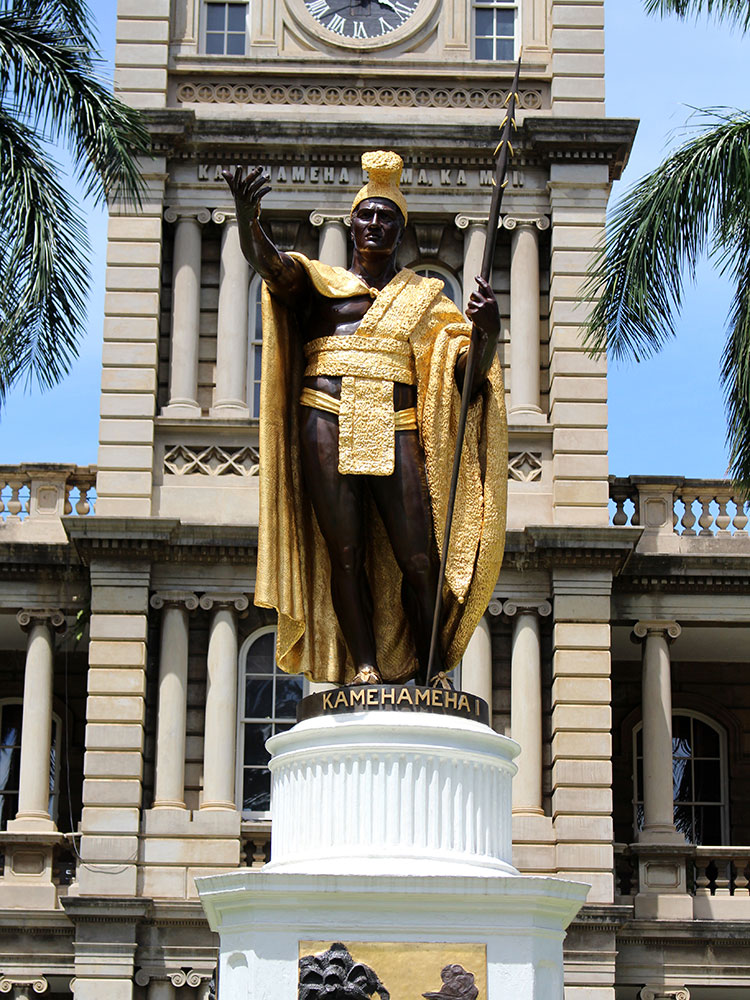
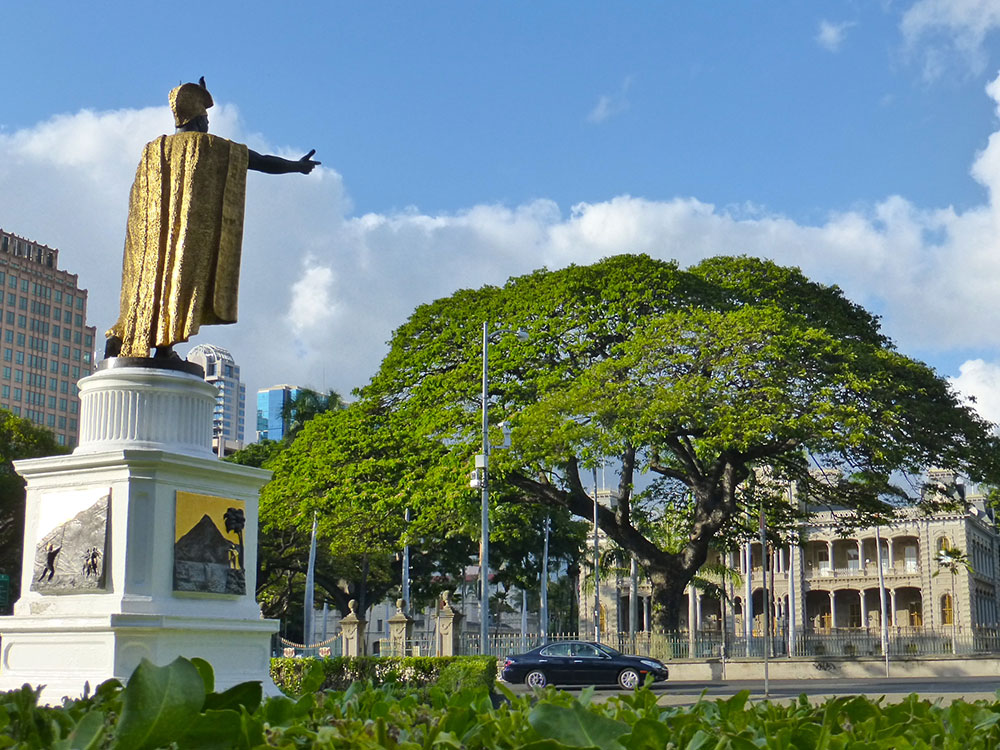
Aliʻiōlani Hale (“House of Heavenly Kings”) in downtown Honolulu is the home of the Hawaiʻi State Supreme Court and the former seat of government of the Kingdom and Republic of Hawaiʻi. Designed by Australian Thomas Rowe in an Italian Renaissance Revival style, it was intended as a palace for Kamehameha V, who instead had it built as a government office building. He laid the cornerstone on February 19, 1872, and King David Kalākaua dedicated it in 1874. In the courtyard stands the famed gold-leaf statue of Kamehameha the Great.
What to See
- King Kamehameha V Judiciary History Center: a museum with a multimedia presentation on Hawaiʻi’s judiciary, a restored historic courtroom and exhibits on landmark court cases.
- Nearby: ʻIolani Palace, the State Capitol, the State Library, Honolulu Hale, Kawaiahaʻo Church, the Territorial Building and Washington Place are all within walking distance.
History
- Until 1893 it held most of the government’s executive departments, the legislature and the courts.
- In 1893, the Committee of Safety under Lorrin A. Thurston deposed Queen Liliʻuokalani by public proclamation from Aliʻiōlani Hale. It then became primarily a judicial building.
- It was extensively renovated in 1911, and a new wing was added in the 1940s.
- In 2005, ground-penetrating radar located a time capsule buried by Kamehameha V at the cornerstone laying, holding photos, the Kingdom’s constitution, stamps, coins and newspapers. It was left in place to protect the building.
This article uses material from the Wikipedia article "Ali'iōlani Hale", which is released under the Creative Commons Attribution-Share-Alike License 3.0