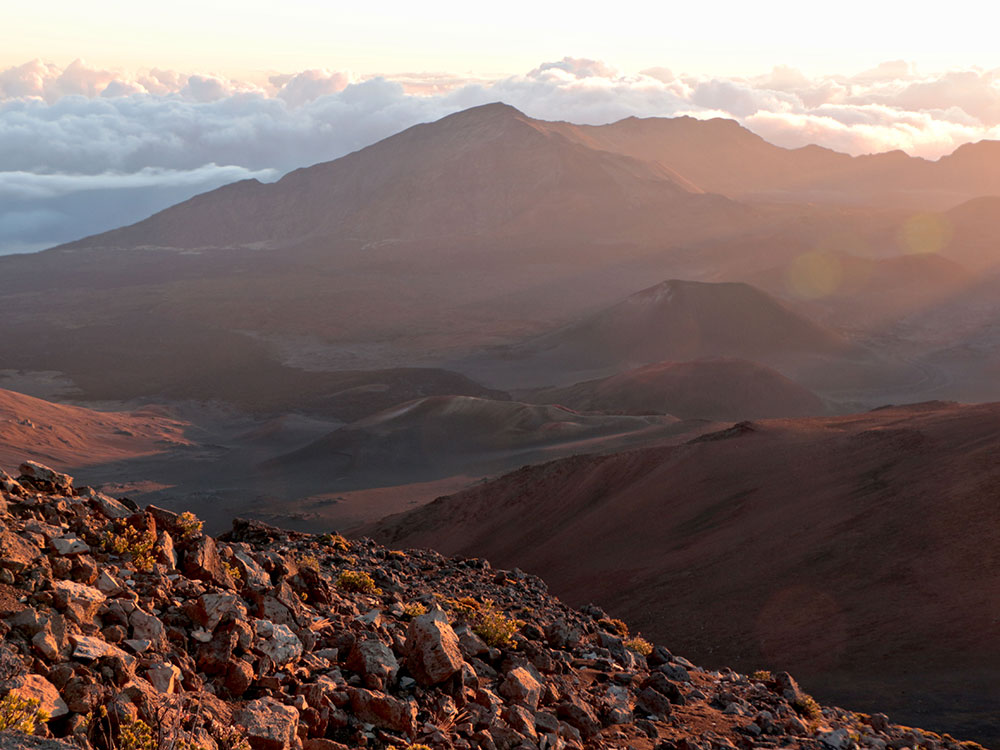
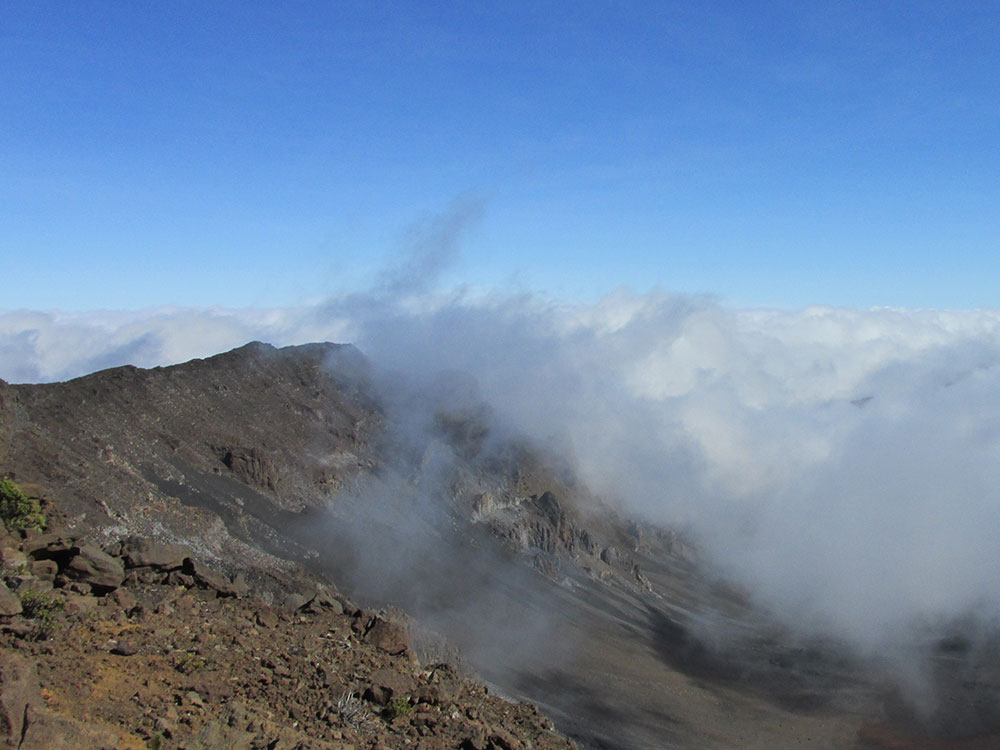
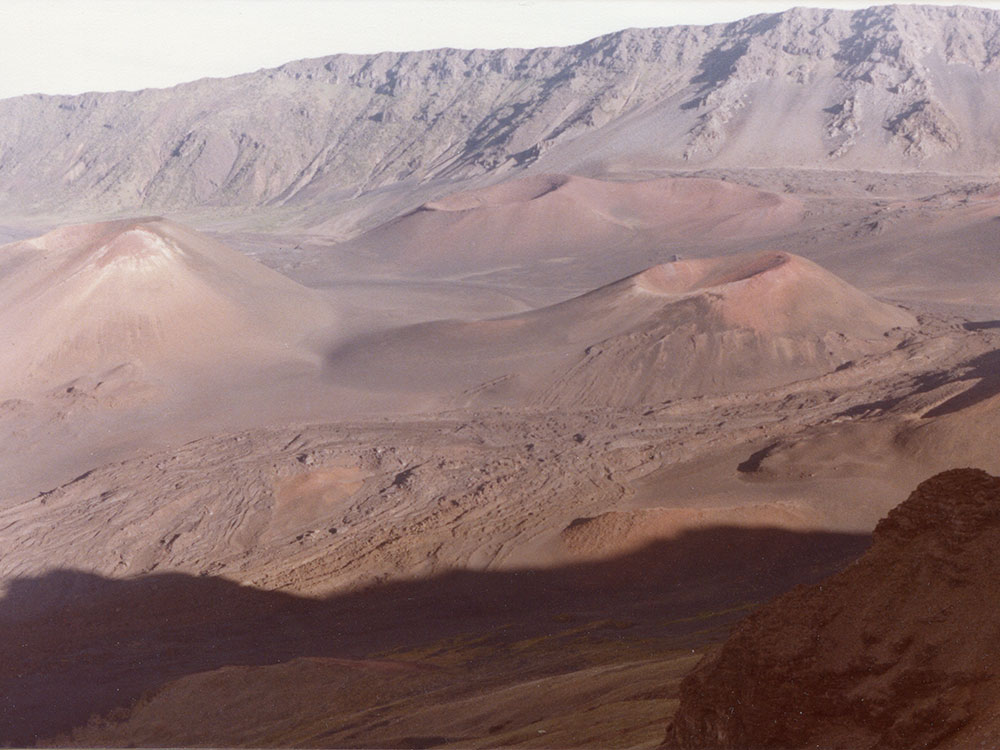
A dramatic breach in the crater wall formed by erosion, offering a natural corridor from the summit basin to the lush northeast coast.
General Information
- Hours:
-
Accessible year-round via backcountry trails
No vehicular access - Fees:
-
Included with Haleakalā National Park entrance fee:
Private vehicle: $30 (valid 3 days)
Motorcycle: $25
Individual (on foot or bicycle): $15 - Pet Policy:
- Pets are not allowed
- Closest cities with hotels:
- Kula (25 mi)
- Seasons:
- All year
- Location:
- Koʻolau Gap, Haleakala National Park, HI
- Website:
- nps.gov
How to Get There
From Haleakalā Visitor Center (7.4 mi): Hike down the Sliding Sands Trail to Hōlua Cabin, then continue northeast toward the Koʻolau Gap along the crater floor.
Overview
The Koʻolau Gap is a striking geological feature on the northeast side of Haleakalā Crater, where millennia of erosion carved a deep valley through the crater wall. This natural breach opens the summit basin to the lush windward coast, creating a dramatic contrast between the arid alpine desert and the verdant rainforest below. The gap serves as a vital ecological corridor, allowing native species to migrate between elevations and ecosystems. It also channels clouds and moisture into the crater, contributing to the unique microclimates found within.
Accessible only by foot, the Koʻolau Gap is a destination for experienced hikers seeking solitude and immersion in the park’s backcountry. The route passes through ancient lava flows, native shrubland, and panoramic vistas of the crater floor. While there are no formal trails through the gap itself, it is visible from several points along the Halemauʻu Trail and from Hōlua Cabin. The area is rich in cultural history and natural beauty, offering a glimpse into the dynamic forces that shaped Maui’s volcanic landscape.
This article uses material from the Wikipedia articles and official tourism pages for the Koʻolau Gap, which are released under the Creative Commons Attribution-Share-Alike License 3.0.