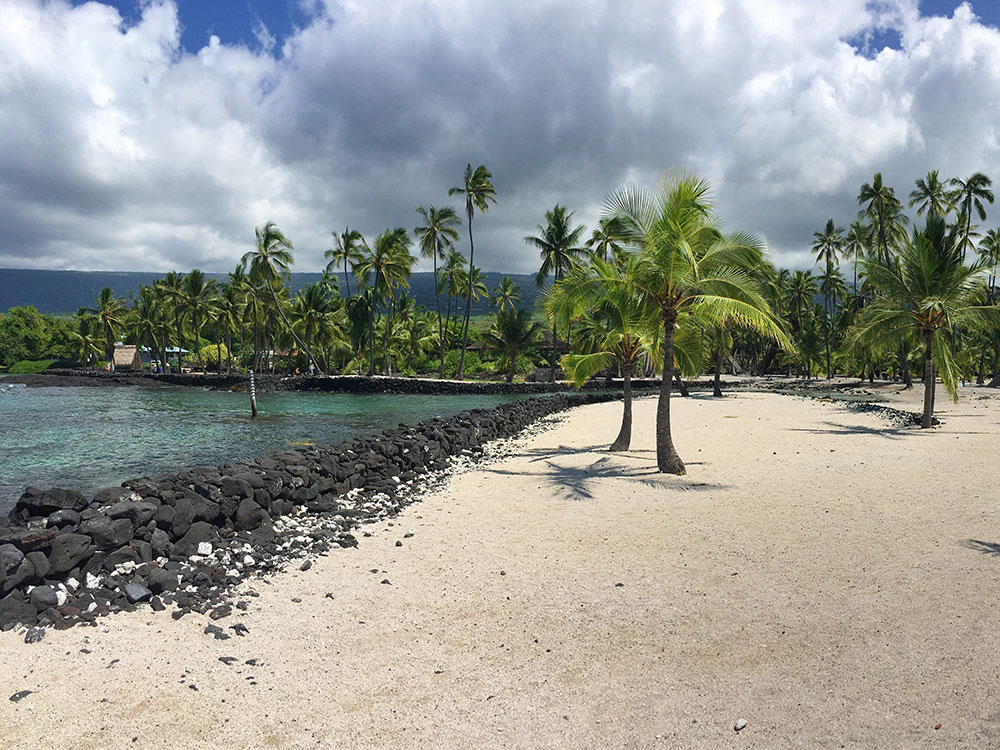
Sacred coastal sanctuary preserving ancient Hawaiian law, royal grounds, and cultural traditions within a lava rock landscape.
General Information
- Hours:
-
Daily: 8:15am to sunset
Visitor center open 8:30am to 4:30pm - Fees:
-
Private Vehicle (7-day pass): $20
Individual (walk-in or bicycle): $10
Motorcycle: $15
Annual Pass: $40 - Pet Policy:
- Pets are not allowed on trails or in historic areas
- Closest cities with hotels:
- Captain Cook (4 mi), Kailua-Kona (22 mi)
- Seasons:
- All year
- Location:
- State Hwy 160, Honaunau, HI 96726
- Website:
- nps.gov/puho
How to Get There
From Kona, HI (22 mi): Drive south on HI-11 for about 45 minutes, turn right onto Hōnaunau Beach Road, and follow signs to the park entrance.
Overview
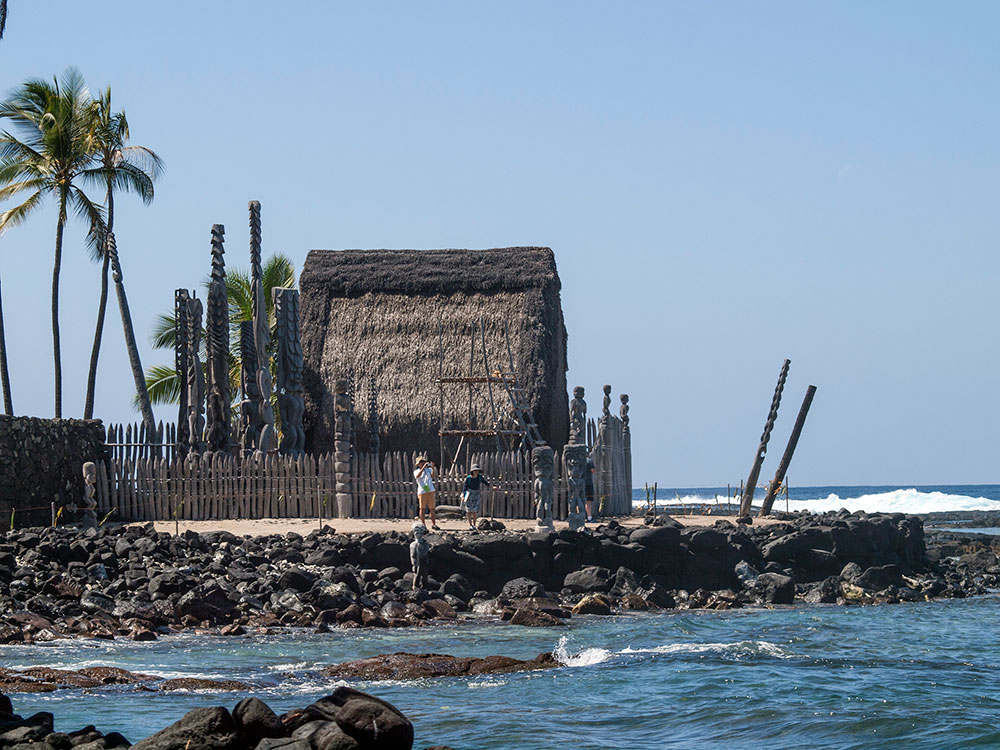
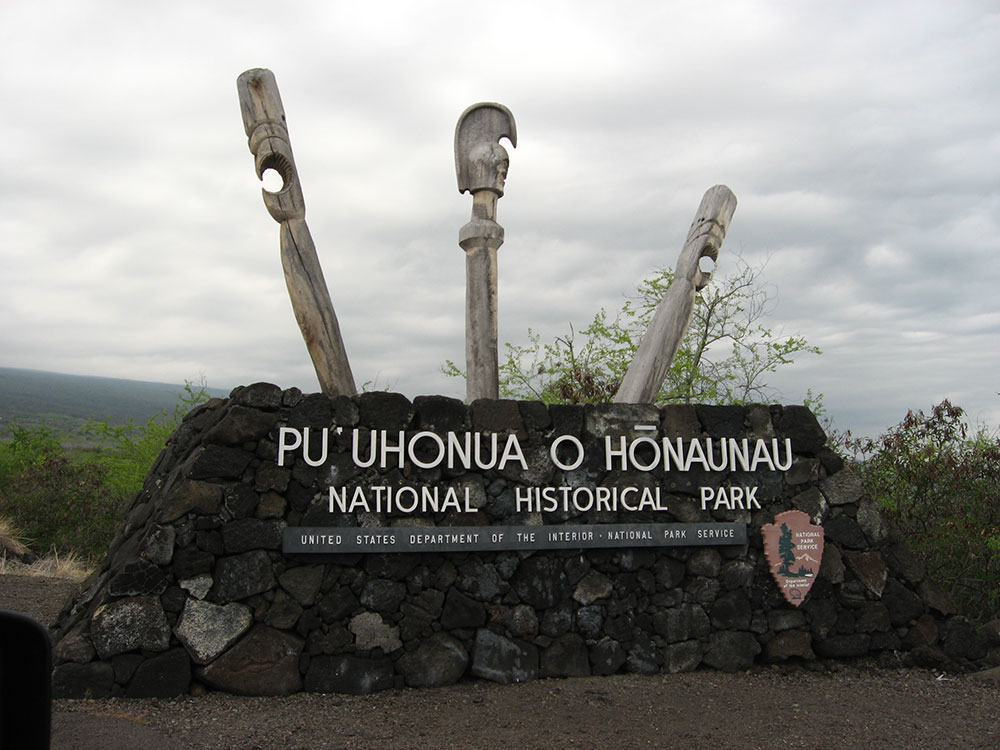
Puʻuhonua o Hōnaunau National Historical Park, known as the Place of Refuge, preserves a sacred sanctuary where Hawaiians who had broken kapu, or sacred laws, could find safety and forgiveness. The 420-acre park on the Kona coast holds the Great Wall, a massive stone wall about 1,000 feet long, as well as Haleʻo Keawe Heiau, where the bones of chiefs were kept, along with fishponds, canoe landings and reconstructed buildings. Park staff and cultural practitioners keep the traditions of the ahupuaʻa alive, and the setting by the ocean is especially beautiful. People come to see one of Hawaiʻi's most important cultural sites, to walk among the tide pools and to snorkel nearby at Two Step.
Access
The park is on the southern Kona coast, about 20 miles south of Kailua-Kona, and is reached by driving south on Highway 11 and turning onto Highway 160 toward the ocean. The route is paved and the drive takes about 35 to 45 minutes from Kona. The park has a parking lot near the visitor center, and the surrounding area has small villages and coffee farms. Nearly all visitors arrive by car, and public transportation is very limited.
Seasons
The park is open year-round, and the dry Kona coast makes it a good all-season destination. Summer provides calm seas for tide pooling and snorkeling nearby, while winter surf can be strong along the shore. The park is hot and sunny with little shade, so mornings are more comfortable. Special cultural events are sometimes held at certain times of the year, and the park closes at sunset, so plan to arrive well ahead of closing time.
Things to Do
Walk the Grounds of the Place of Refuge
Puʻuhonua o Hōnaunau National Historical Park's grounds include the sacred refuge enclosure and the royal grounds of the Hawaiian chiefs. A self-guided tour leads visitors through the major features.
See the Great Wall
Built in the mid-1500s, the Great Wall is a huge stone structure that separates the refuge from the royal grounds. Its size and careful construction are impressive.
Visit Haleʻo Keawe Heiau
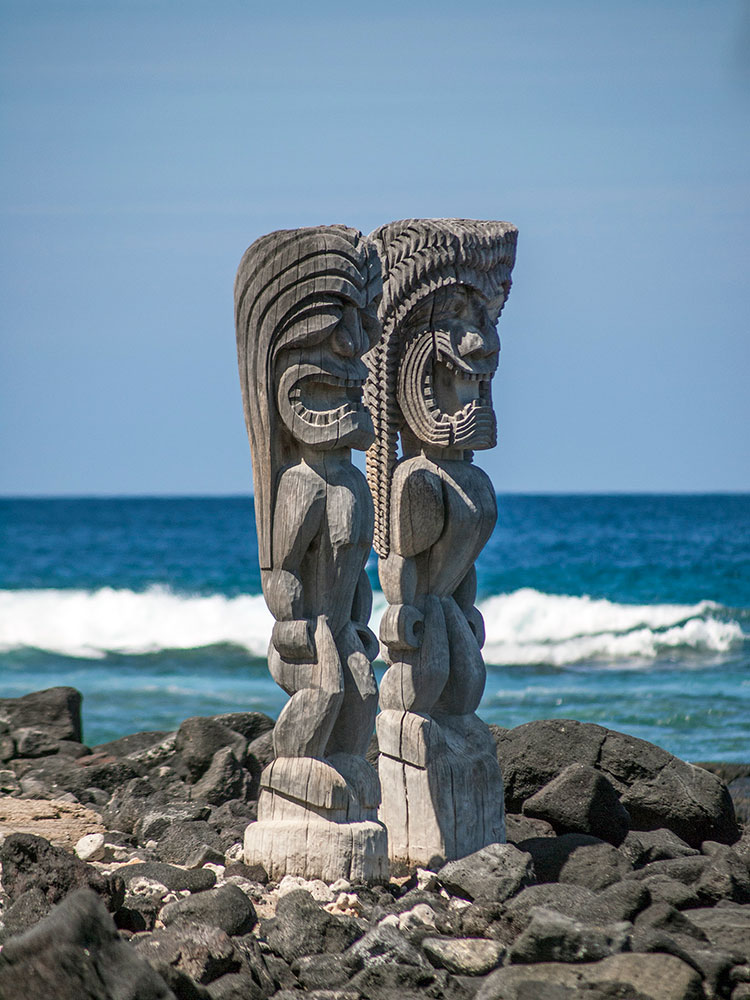
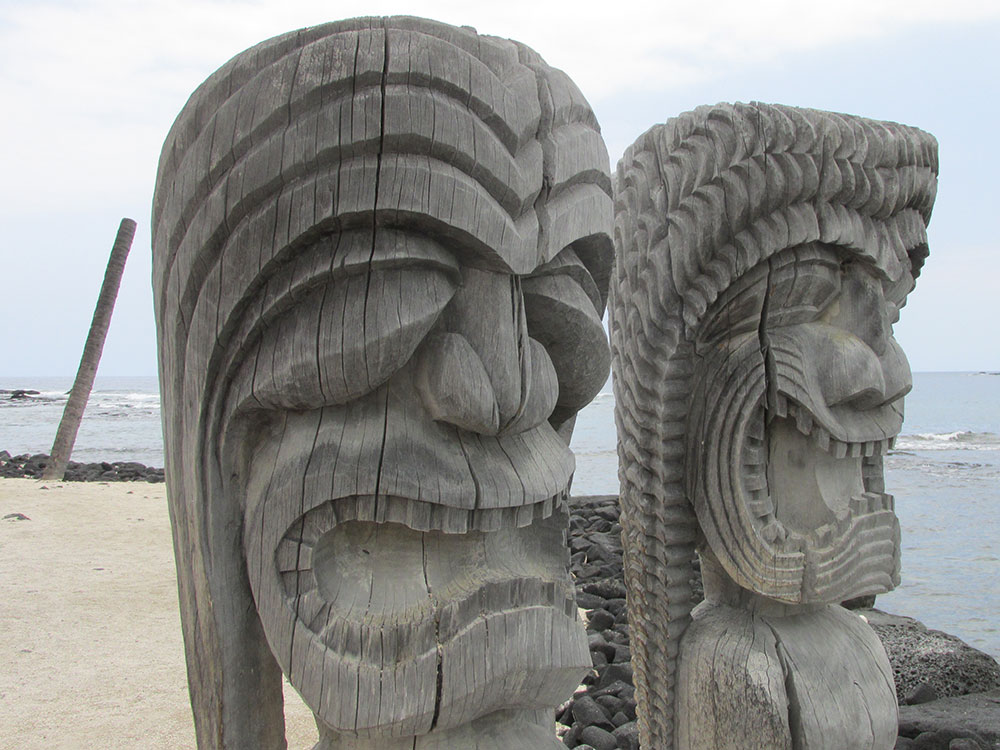
This restored temple holds carved wooden figures, or kiʻi, that guard the site where the remains of chiefs were kept. It is the spiritual center of the park.
Explore Tide Pools and the Coast
The lava shoreline has tide pools and coves where visitors may spot fish, urchins and sea turtles. Nearby, the Two Step snorkeling area outside the park boundaries is famous for coral and sea life.
Experience Living Culture
Cultural demonstrations, such as woodcarving, canoe building and fishing traditions, are offered at times. They bring ancient practices to life and give context to the park's story.
Top Trails
Puʻuhonua Self-Guided Walk
Length: Approximately 1 mile loop
Elevation Gain: Minimal
Difficulty: Easy
This main route passes the Great Wall, Haleʻo Keawe, the fishponds and the tide pools, with interpretive signs along the way. The path is mostly flat and open, so bring sun protection.
1871 Trail
Length: Approximately 2 miles round trip
Elevation Gain: Minimal to Moderate
Difficulty: Easy to Moderate
This historic trail follows the coast across lava, past old Hawaiian sites and views of the ocean. The surface is rough and uneven, and the route is exposed, so wear sturdy shoes and carry water.
Visitor Centers
The park's visitor center is near the entrance and is the best first stop. It has exhibits on the history and cultural meaning of the Place of Refuge, a short film, a bookstore, restrooms and rangers who can provide a map and details on activities and cultural programs. The center is typically open daily during the day, while the park grounds are open from morning until sunset, so check the National Park Service website for current hours.
Camping and Lodging
There is no camping or lodging inside the park. Nearby, Captain Cook and Hōnaunau have a handful of small inns, bed-and-breakfasts and vacation rentals among the coffee farms, and the county's Hoʻokena Beach Park, about 10 miles south, allows camping with a permit. Kailua-Kona, about 35 to 45 minutes north, has the widest range of lodging, including the Royal Kona Resort, Kona Seaside Hotel and Courtyard King Kamehameha's Kona Beach Hotel, and the Keauhou area offers resorts such as the Outrigger Kona Resort and Spa. Resorts along the Kohala Coast are about 1.5 hours north. Check each property's website for current availability.
This article uses material from the Wikipedia article and official pages for Puʻuhonua o Hōnaunau National Historical Park, National Park Service: Puʻuhonua o Hōnaunau National Historical Park, released under the Creative Commons Attribution-Share-Alike License 3.0.