
Historic industrial site preserving the remains of a nineteenth-century borax processing operation that helped support mining and transportation across the Mojave Desert.
General Information
- Hours:
- Open daily, year-round
Accessible from sunrise to sunset as part of Death Valley National Park - Fees:
-
Death Valley National Park entrance fees apply
Private Vehicle: $30
Motorcycle: $25
Individual (on foot or bicycle): $15
Annual and interagency passes accepted - Pet Policy:
- Pets are permitted in developed areas on a leash but are not allowed on trails or in designated wilderness areas
- Closest cities with hotels:
- Furnace Creek (1 mi)
- Seasons:
- October through April; summer temperatures are often extreme
- Location:
- Harmony Borax Works, Death Valley, CA 92328
- Website:
- nps.gov/places/harmony-borax-works.htm
How to Get There
From Furnace Creek (1 mi): Take CA-190 west from Furnace Creek, travel a short distance toward the park entrance, and follow signs to the Harmony Borax Works parking area and interpretive trail.
Overview
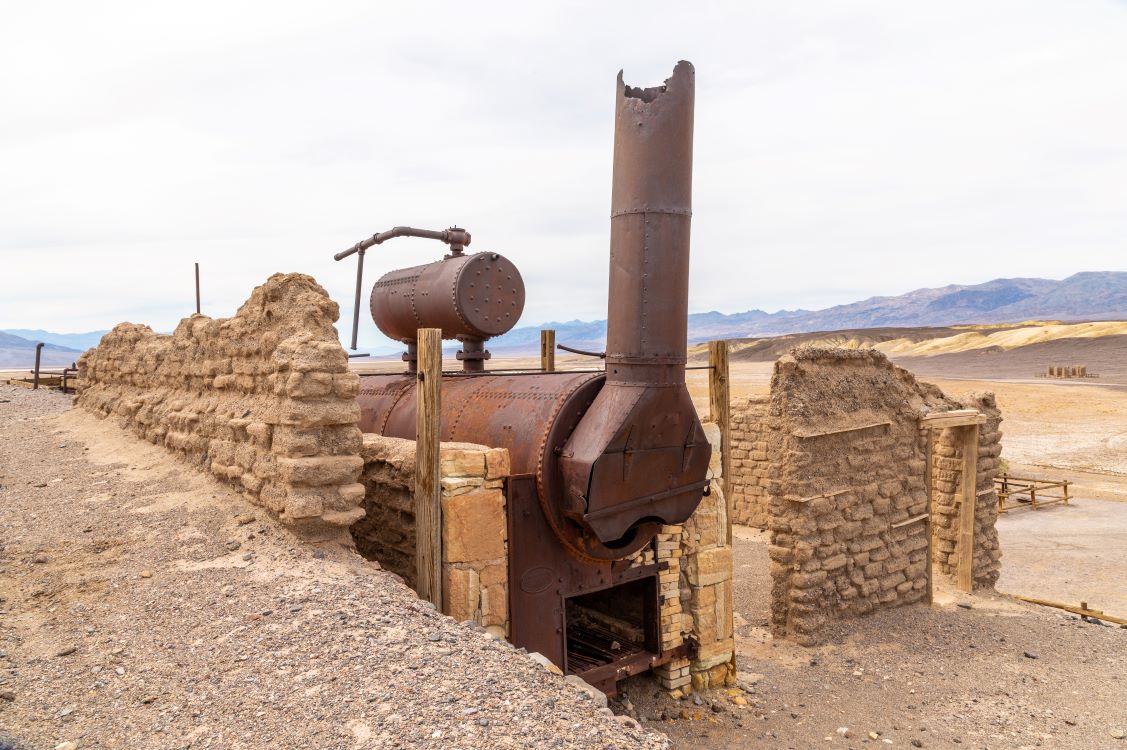
The Harmony Borax Works preserves one of the most important chapters in the industrial history of Death Valley. Established in 1883, the site processed borax extracted from nearby salt flats before it was transported across the desert to distant rail connections. Although the operation functioned for only a few years, it became legendary through the story of the massive twenty-mule teams that hauled borax wagons across some of the harshest terrain in North America. Today, visitors can walk a self-guided interpretive trail that passes the remains of refining equipment, foundations, and historic structures while learning about the challenges faced by workers in the desert environment.
Surrounded by the dramatic landscapes of Death Valley National Park, the site provides a fascinating glimpse into the ingenuity and determination required to build industry in one of the world's hottest climates. Interpretive panels explain the chemistry of borax, the economics of desert mining, and the transportation systems that connected this remote region to national markets. Against a backdrop of colorful mountains and expansive desert basins, the ruins offer both a historical lesson and a striking photographic destination. For travelers exploring Death Valley, Harmony Borax Works serves as an essential stop that helps explain how human ambition shaped the region's history.
History
Borax was discovered on the floor of Death Valley in 1881, and in 1883 businessman William T. Coleman began operating the Harmony Borax Works. Chinese laborers gathered the borax-rich “cottonball” from the salt flats, and the refined borax was hauled 165 miles to the railroad at Mojave by the famous twenty-mule teams. Because the borax would not crystallize in summer heat, operations moved to the Amargosa Borax Works near Shoshone during the hottest months. Coleman's business collapsed in 1888, and the works closed, but the twenty-mule-team image lived on as one of the most famous trademarks in American advertising.
Things to Do
Walk the Interpretive Trail
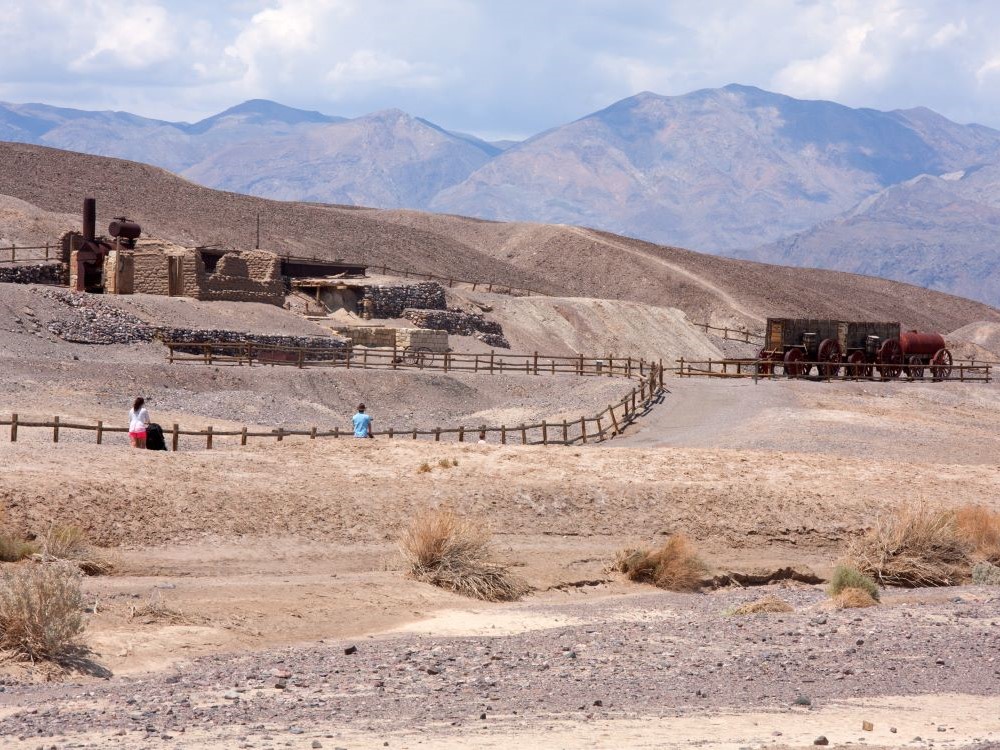
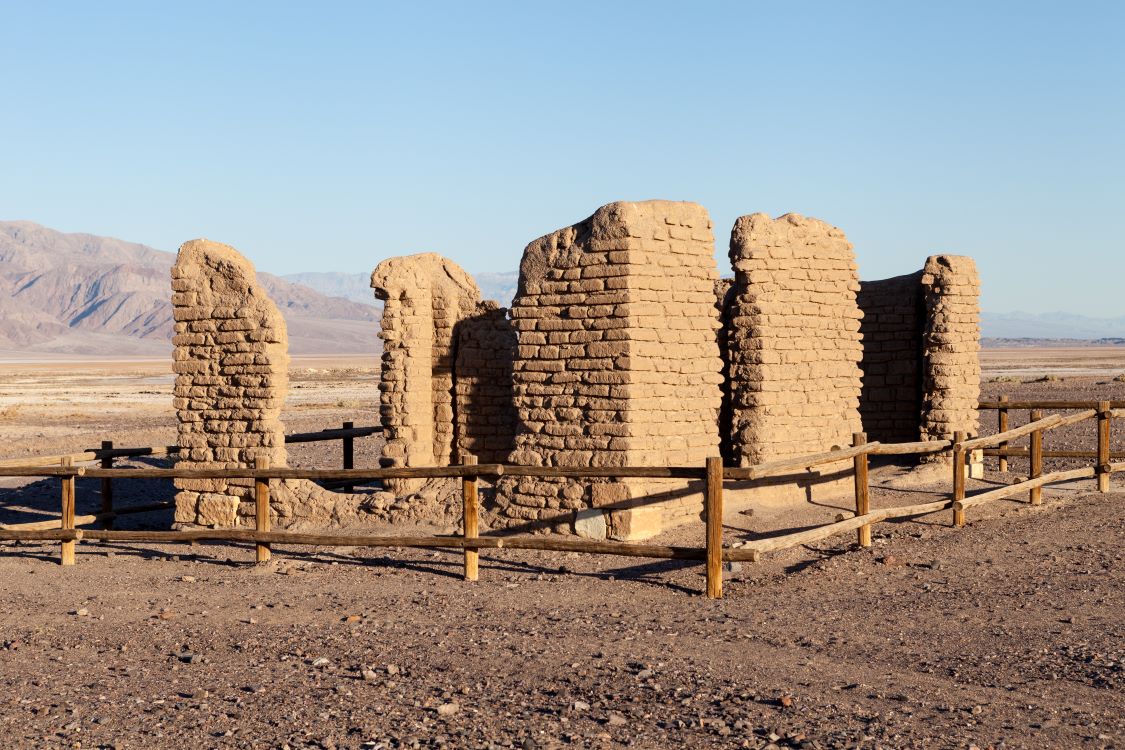
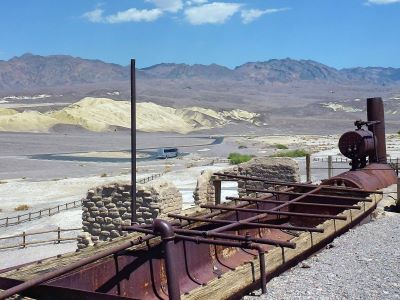
A short paved and gravel loop leads past the adobe ruins of the refinery, with signs explaining how borax was processed.
See an Original Twenty-Mule-Team Wagon
A restored wagon set, with its two ore wagons and water tank, shows the scale of the rigs that crossed the desert.
Drive Mustard Canyon
A short, unpaved road near the site winds through the bright yellow walls of Mustard Canyon.
Visit the Borax Museum
Continue to the Borax Museum at Furnace Creek for more equipment and history from the borax era.
This article uses material from the Wikipedia articles and official tourism pages for the Harmony Borax Works, which are released under the Creative Commons Attribution-Share-Alike License 3.0.