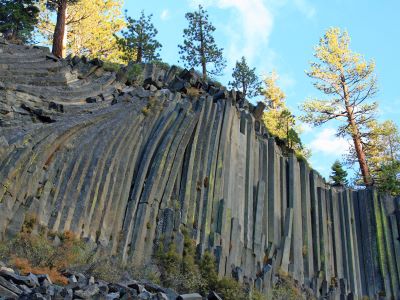

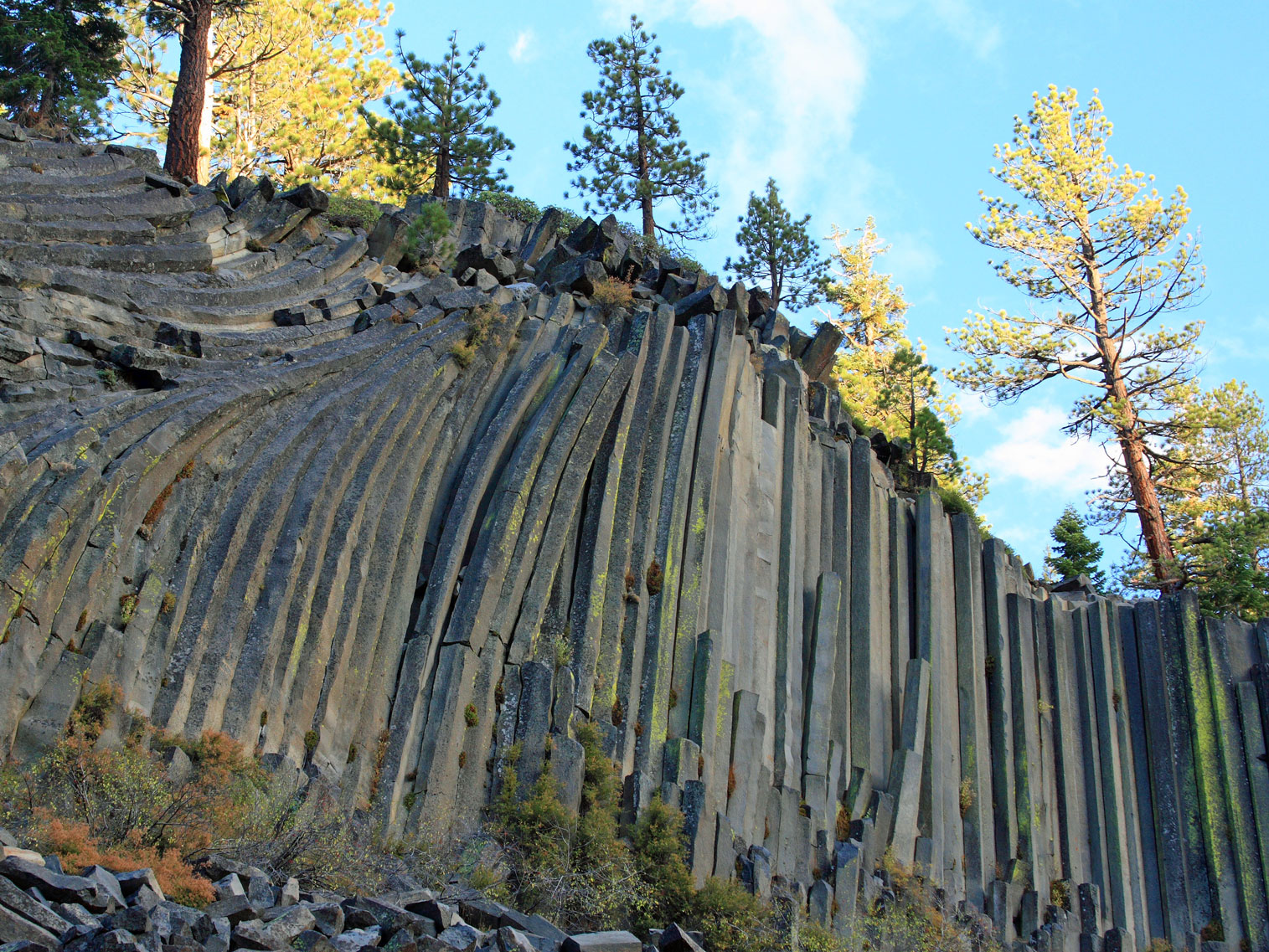
Encompasses two main attractions: the Devils Postpile formation, an unusual rock formation of columnar basalt, and Rainbow Falls, a waterfall on the Middle Fork of the San Joaquin River.
General Information
- Hours:
- 24/7
- Fees:
-
Adults Ages 13-55: $13.00
Children Ages 3 to 12: $11.00
Seniors and Military: $10.00
TICKETS ARE ONLY AVAILABLE AT THE DOOR - Pet Policy:
- Pets allowed
Dogs are allowed on the shuttle buses. All dogs riding the shuttle buses must also wear muzzles. Muzzles are available at local pet stores in Mammoth Lakes and at the Mammoth Mountain Adventure Center near the shuttle bus boarding area - Closest cities with hotels:
- Mammoth Lakes, 13 miles
- Seasons:
- All year
- Location:
- Devils Postpile National Monument, US Route 395, CA
- Website:
- nps.gov/depo/index.htm
How to Get There
Continue to Main St. Follow Minaret Rd to Lookout Point Rd/Postpile Rd. Follow Lookout Point Rd/Postpile Rd and Minaret Summit Rd to John Muir Trail in Madera County.
Overview
Devils Postpile National Monument near Mammoth Lakes protects a remarkable 60-foot wall of hexagonal basalt columns and, a short hike beyond, the 101-foot Rainbow Falls on the San Joaquin River. The 798-acre monument sits in the Ansel Adams Wilderness, and the John Muir Trail and Pacific Crest Trail join as they pass through it. In summer, a mandatory shuttle bus from Mammoth Mountain carries visitors to the monument, followed by a quarter-mile walk to the Postpile.
The monument was once part of Yosemite National Park, and a plan to dynamite the Postpile for a hydroelectric dam was stopped when John Muir and others convinced the federal government to protect it, and President William Howard Taft made it a national monument in 1911. Wildlife includes black bears, mule deer and pine martens, with aspens and wildflowers along the trails.
History
The columns formed when a lava flow filled the valley and cooled slowly less than 100,000 years ago, cracking into tall, mostly six-sided columns. Glaciers later moved over the formation, exposing the columns and polishing their tops. In the early 1900s a plan to blast the Postpile to build a dam threatened the formation, and President William Howard Taft protected it as a national monument in 1911.
Things to Do
See the Postpile
A short walk leads to the base of the columns.
Walk on Top of the Columns
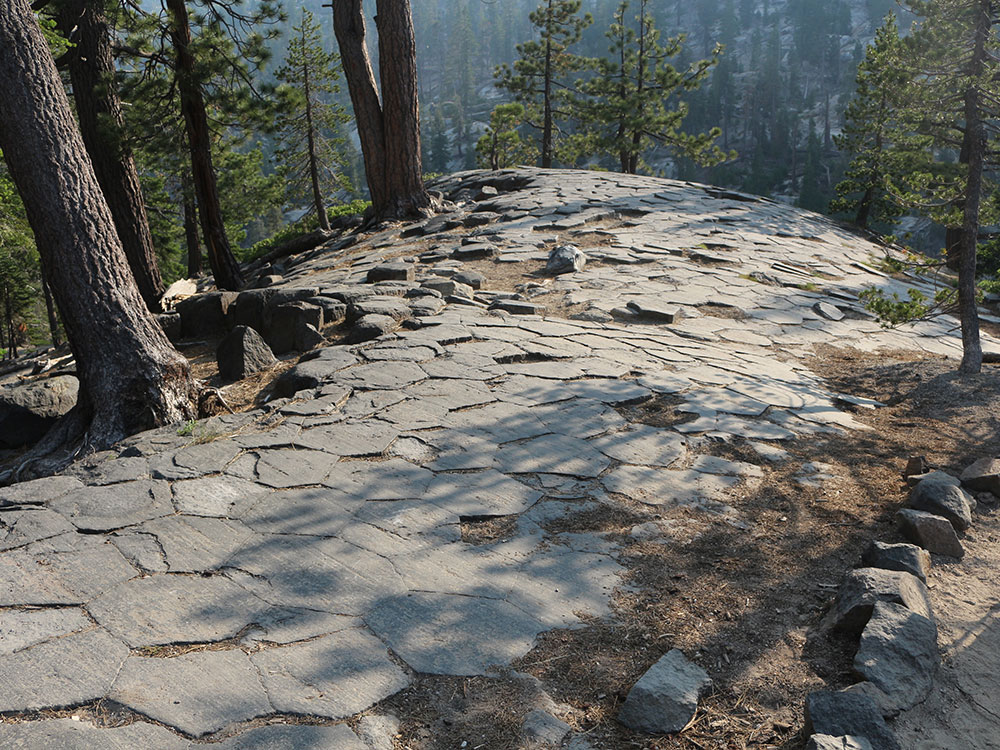
A trail climbs to the top of the Postpile, where the glacier-polished tops look like tiles.
Hike to Rainbow Falls
A trail leads to the 101-foot Rainbow Falls, where rainbows often form in the mist.
Ride the Shuttle
In summer, a shuttle from Mammoth Mountain carries visitors into the valley.
Hike the John Muir Trail
The John Muir Trail and Pacific Crest Trail pass through the monument.
Top Trails
Devils Postpile Trail
Length: Approximately 0.8 miles round trip
Elevation Gain: Minimal
Difficulty: Easy
A short walk from the ranger station to the base of the basalt columns, with a short climb to the glacier-polished top of the formation.
Rainbow Falls Trail
Length: Approximately 5 miles round trip
Elevation Gain: Approximately 500 feet
Difficulty: Moderate
This trail passes the Postpile and continues through forest regrowing after fire to the 101-foot Rainbow Falls, where rainbows appear in the mist on sunny afternoons.
Minaret Falls
Length: Approximately 3 miles round trip
Elevation Gain: Approximately 200 feet
Difficulty: Easy to Moderate
A walk along the John Muir and Pacific Crest trails leads to a tall cascade on the slopes west of the river.
This article uses material from the Wikipedia article "Devils Postpile National Monument", and "Rainbow Falls (California)", which is released under the Creative Commons Attribution-Share-Alike License 3.0. Additional information from National Park Service.
Featured Trails
Rainbow Falls Trail
4.9 mi round trip, 534 ft elevation
Trailhead: Devil's Postpile Ranger Station
Highest waterfall on the Middle Fork of the San Joaquin river, plunging 101-feet down, the falls are aptly named for the many rainbows that appear in its mist on sunny summer days